Is Ceramic Cookware Safe? What Healthy Home Cooks Should Know
Is Ceramic Cookware Safe? What Healthy Home Cooks Should Know
If you are wondering is ceramic cookware safe, the honest answer is: usually, yes, ceramic cookware can be a sensible choice when it comes from a reputable brand, is used as directed, and is replaced once the surface is badly scratched, chipped, or flaking. But “ceramic” is not a magic safety label. It can mean a ceramic-coated nonstick pan, a sol-gel coating, or, less commonly, solid ceramic cookware. Those are not all the same.
That difference matters because many shoppers buy ceramic pans to avoid traditional nonstick concerns, only to run into confusing claims about PFAS, PTFE, lead, cadmium, overheating, and scratched coatings. This guide gives you a practical, non-alarmist answer so you can decide whether ceramic cookware belongs in your healthy kitchen and how to use it more safely if you already own it.
Disclosure: This article may contain affiliate links. If you buy through them, Healthy Kitchen Reviews may earn a commission at no extra cost to you.
Quick Answer: Is Ceramic Cookware Safe?
Ceramic cookware is generally considered a reasonable home-cooking option when the pan is intact, sold by a trustworthy manufacturer, and used within the temperature and care limits listed by the brand. Ceramic-coated pans are often marketed as PFAS-free or PTFE-free alternatives to traditional nonstick cookware. That can be useful, but you should still treat them as coated pans with a limited lifespan, not as indestructible cookware.
The main safety rule is simple: do not keep cooking on ceramic cookware that is visibly flaking, deeply scratched, or losing its coating. Also avoid dry preheating at high heat, abrasive scrubbing, and metal utensils unless the manufacturer specifically says they are acceptable. The coating may be ceramic-based, but poor use can still shorten its life quickly.
Ceramic Cookware Safety at a Glance
| Situation | Safety Takeaway | What to Do |
|---|---|---|
| New ceramic-coated pan from a reputable brand | Usually a reasonable choice when used as directed | Use moderate heat, avoid metal utensils, and follow the maker’s care instructions. |
| Scratched or flaking ceramic coating | Replace it | Damage can reduce performance and raises avoidable food-contact concerns. |
| Very high heat or dry preheating | Avoid | Overheating can shorten coating life and may make any nonstick pan less predictable. |
| Claims like “100% toxin-free” | Treat cautiously | Look for specific material information instead of broad marketing language. |
| Decorative ceramic or older imported cookware | Be careful | Lead and cadmium concerns are more relevant for some ceramic glazes and foodware. |
What “Ceramic Cookware” Usually Means
Most ceramic cookware sold for everyday kitchens is not a solid ceramic pot or pan. It is usually a metal pan, often aluminum or stainless steel, with a ceramic-style nonstick coating applied to the cooking surface. That coating is commonly described as a sol-gel ceramic coating. It gives the pan a smooth, easy-release surface without using the same PTFE coating found on many traditional nonstick pans.
Solid ceramic cookware also exists, but it is less common for daily stovetop cooking. It can behave differently, heat differently, and may have separate care rules. When a brand simply says “ceramic cookware,” read the product description carefully. You want to know whether you are buying ceramic-coated nonstick, enameled ceramic-style cookware, or true ceramic material.
Ceramic Coating vs Traditional Nonstick
The biggest reason shoppers consider ceramic is that they want a nonstick-like pan without traditional PTFE-based nonstick coatings. Ceramic coatings are often promoted as PFAS-free. That is a meaningful shopping criterion, but it should not be the only one. You still need to know how the pan handles heat, how long the coating is likely to last, and whether the brand gives clear material and care information.
If your main goal is avoiding PFAS, compare ceramic options with the site’s guide to best cookware without PFAS. If you are specifically trying to avoid older Teflon-style associations, the guide to best cookware without Teflon is also a useful next step.
The Main Safety Concerns to Understand
PFAS and PTFE Claims
PFAS is a broad family of chemicals, and consumers often use the term loosely when talking about nonstick cookware. Ceramic-coated cookware is commonly sold as a PFAS-free or PTFE-free alternative, but you should look for clear brand documentation rather than relying only on front-of-box language. For background, the U.S. Environmental Protection Agency explains PFAS as a large group of human-made chemicals used in many product categories.
For the broader food-safety frame, cookware surfaces fall under food-contact material concerns rather than simple marketing categories. The U.S. Food and Drug Administration explains food contact substances, which is a useful reminder to judge cookware by its actual material and intended use, not just by a single label on the box.
A cautious buyer does not need to panic. The practical move is to choose brands that state what the cooking surface is, avoid vague “toxin-free” promises, and retire damaged pans instead of trying to stretch them for years.
Overheating
Ceramic pans are often used for eggs, fish, vegetables, and other lower-to-medium heat cooking. They are not the best tool for aggressive high-heat searing. Dry preheating on high heat can age many coated pans quickly, and once a ceramic surface loses its slick feel, people tend to use more oil, scrape harder, or keep a damaged pan in rotation. None of that helps.
Use low to medium heat unless the manufacturer says otherwise. If you want a pan for repeated high-heat searing, carbon steel, cast iron, or stainless steel may be a better fit than ceramic-coated nonstick.
Scratches, Chips, and Flaking
A light surface mark is not the same as a coating peeling into food, but visible flaking or deep damage is a clear replacement sign. Ceramic coatings are not meant to last forever. They can lose release performance over time even with careful use. Once food starts sticking badly and the surface looks damaged, replacing the pan is the cleaner decision.
Lead and Cadmium
Lead and cadmium concerns are usually more relevant to ceramic glazes, decorative foodware, older dishes, and some imported pottery than to mainstream ceramic-coated nonstick pans. Still, it is a real food-contact issue worth understanding. The U.S. Food and Drug Administration discusses lead in food and foodwares, and buyers should be especially cautious with handmade, antique, decorative, or uncertified ceramic items used for food.
For everyday cookware, choose products intended for food cooking from recognizable brands, and avoid using decorative ceramic pieces for hot food unless they are clearly labeled as food-safe.
How to Use Ceramic Cookware More Safely
- Cook mostly on low to medium heat unless the manufacturer gives a higher safe range.
- Avoid dry preheating on high heat, especially with empty pans.
- Use silicone, wood, nylon, or other gentle utensils.
- Wash with a soft sponge instead of abrasive pads.
- Let the pan cool before washing to reduce thermal shock.
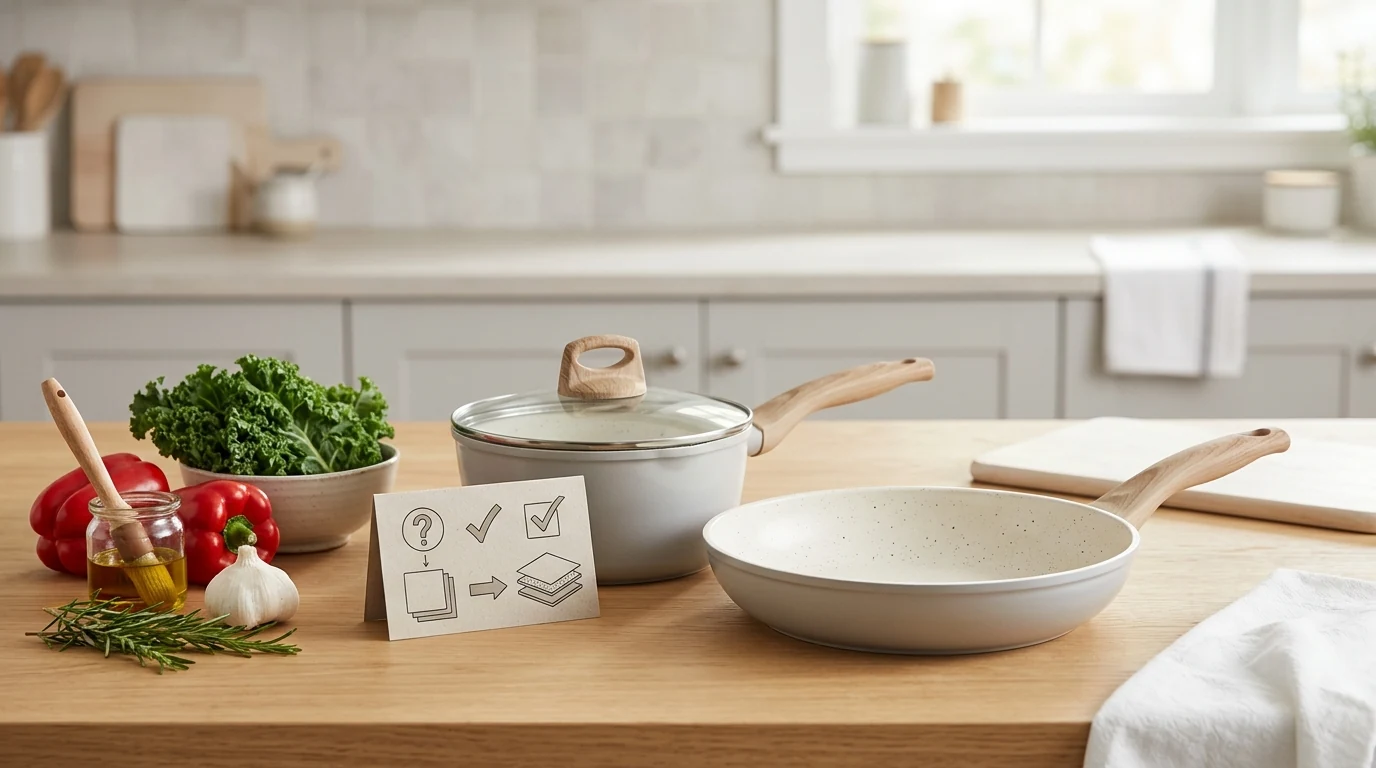
- Do not stack ceramic pans without a protector between surfaces.
- Replace the pan when the coating flakes, chips, or stops performing in a way that encourages scraping.
When Ceramic Cookware Makes Sense
Ceramic cookware makes the most sense for people who want easy-release cooking for eggs, pancakes, fish, reheating, and lower-oil vegetable dishes. It can support healthier cooking habits because cleanup is easy and food is less likely to stick when the pan is in good condition. That convenience can help people cook at home more often, which is the real benefit.
If you are shopping now, start with a focused buying guide like best ceramic cookware sets. If you are still deciding between materials, the comparison of ceramic vs stainless steel cookware explains the daily-use trade-offs more directly.
When Ceramic Cookware Is Not the Best Choice
Ceramic is not ideal if you want one pan for everything. It is not my first pick for steakhouse searing, constant metal utensil use, broiler exposure, or long-term durability. It is also not the best answer if you hate replacing pans every few years. In that case, stainless steel, cast iron, or carbon steel may be more honest choices even if they require more technique.
For shoppers who want durable alternatives, the broader guide to best non-toxic cookware sets may be more helpful than focusing only on ceramic. If you cook on induction, also confirm compatibility and compare options in the best cookware for induction stoves guide.
What to Look for Before Buying Ceramic Cookware
Clear Material Claims
Look for specific claims such as PFAS-free, PTFE-free, coating type, base material, oven limit, and compatible stovetops. Broad words like “clean,” “green,” or “non-toxic” are less useful unless the brand explains what they mean.
Reasonable Heat Guidance
A trustworthy product page should tell you how to use the pan. If the instructions recommend low or medium heat, take that seriously. Ceramic cookware often performs best when treated gently.
A Shape You Will Actually Use
Safety and health value are not only about chemistry. If the pan is too small, too delicate, or too awkward, it will not help your routine. Pick a size and shape that suits the food you cook most often.
Replacement Expectations
Ceramic-coated cookware should be viewed as a convenience tool with a finite coating life. If you want a pan you can keep for decades, a coated ceramic skillet may disappoint you. If you want easier cooking for delicate foods, it can be a good fit.
Frequently Asked Questions
Is ceramic cookware safer than Teflon?
Ceramic cookware is often chosen by shoppers who want a PTFE-free or PFAS-free nonstick alternative. That can make it appealing, but “safer” depends on the specific product, how it is used, and whether the surface remains intact. A high-quality ceramic pan used gently is a reasonable option. A damaged ceramic pan is not something I would keep using just because the label says ceramic.
Can ceramic cookware release toxins when heated?
Use cautious, practical thinking here. Reputable ceramic-coated cookware used within the manufacturer’s heat guidance is generally treated as suitable for normal cooking. Problems are more likely when a coated pan is overheated, abused, or damaged. Avoid high dry heat and follow the care instructions.
Is scratched ceramic cookware dangerous?
A tiny cosmetic mark is not the same as active flaking, but deep scratches, chips, peeling, or visible coating loss are good reasons to replace the pan. Once the surface is compromised, performance drops and the pan becomes harder to use cleanly.
Does ceramic cookware contain PFAS?
Many ceramic-coated pans are marketed as PFAS-free, but you should confirm the claim from the brand rather than assuming every ceramic-looking pan is the same. Look for clear material disclosures and avoid vague marketing claims when possible.
Is ceramic cookware good for healthy cooking?
It can be. Ceramic cookware can make eggs, vegetables, fish, and lower-oil cooking easier while cleanup is still simple. But no pan makes food healthy by itself. Ingredients, cooking habits, and portion choices still matter more than the cookware label.
How long does ceramic cookware last?
It varies by brand, coating quality, heat habits, utensils, and cleaning routine. Ceramic-coated pans usually do not last as long as stainless steel, cast iron, or carbon steel. Treat them as medium-term convenience cookware rather than lifetime cookware.
Conclusion
So, is ceramic cookware safe? For most healthy home kitchens, yes, ceramic cookware can be a sensible choice when it is intact, clearly labeled, and used with moderate heat and gentle utensils. It is especially useful for eggs, fish, vegetables, and lower-effort weeknight cooking.
The mistake is treating ceramic as a permanent, risk-free, all-purpose material. It is better understood as a coated convenience pan that can support healthier cooking habits when you use it correctly and replace it when it is worn out. Buy from a reputable brand, avoid overheated or damaged surfaces, and choose the cookware material that fits the way you actually cook.