Carbon Steel vs Cast Iron: Which Skillet Is Better for Healthy Home Cooking?
Carbon Steel vs Cast Iron: Which Skillet Is Better for Healthy Home Cooking?
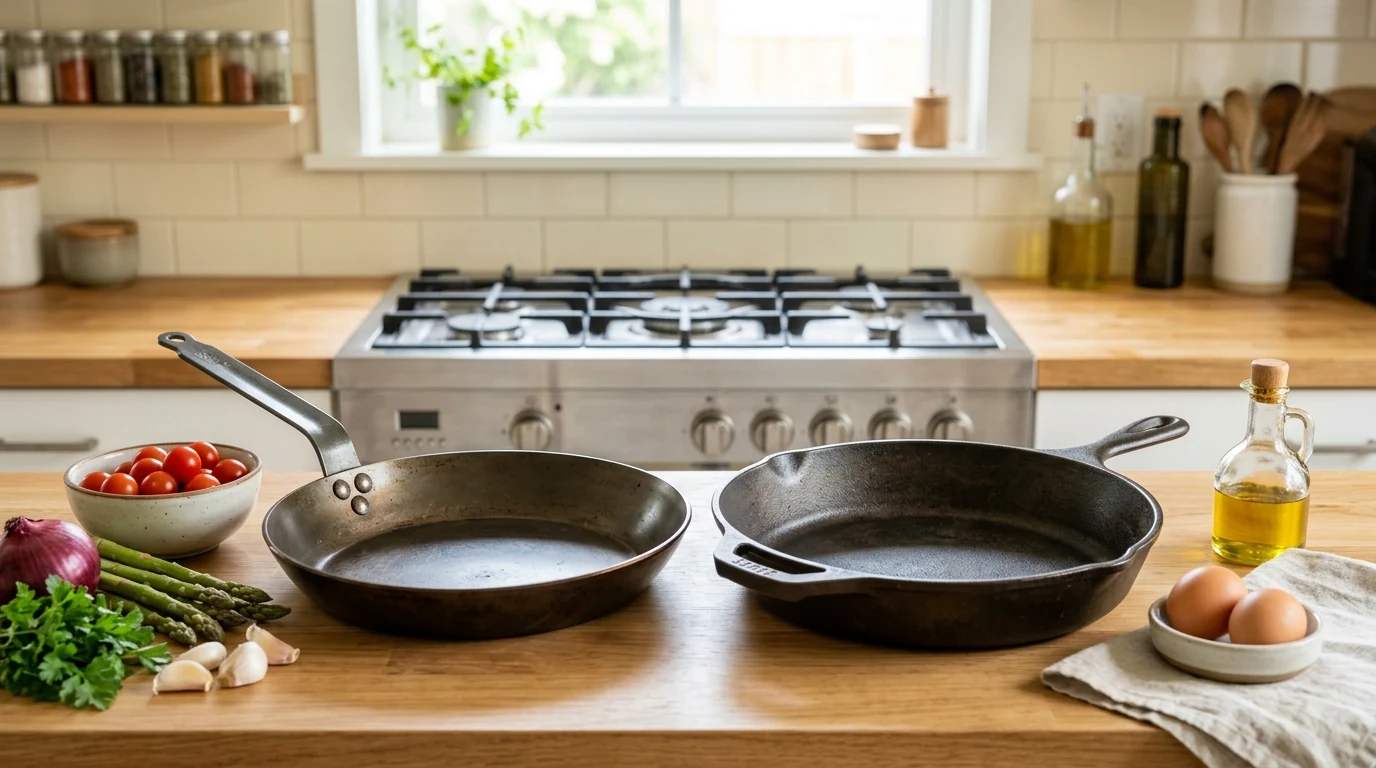
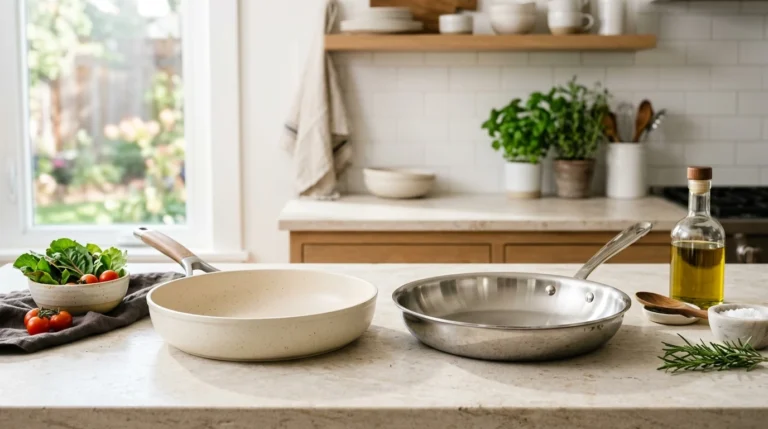
If you are comparing carbon steel vs cast iron, you are probably looking for a skillet that feels safer, tougher, and more useful than a typical short-lived nonstick pan. Both materials can fit a healthy kitchen because neither depends on a slick disposable coating, but they do not cook the same way. Carbon steel is usually lighter and more responsive. Cast iron is heavier, slower, and excellent at holding heat.
That difference matters in real life. A pan can look beautiful online and still become the one you avoid because it is too heavy, too fussy, or too slow for your weeknight routine. This guide compares carbon steel and cast iron through the lens that actually matters: eggs, vegetables, searing, cleanup, seasoning, stovetop fit, and whether the pan will help you cook at home more often.
Disclosure: This article may contain affiliate links. If you buy through them, Healthy Kitchen Reviews may earn a commission at no extra cost to you.
Quick Verdict: Carbon Steel vs Cast Iron
For most home cooks, carbon steel is the better everyday skillet if you want something lighter, quicker to adjust, and easier to move around the stove. Cast iron is the better choice if you want maximum heat retention, excellent searing, old-school durability, and a lower-cost entry point. Neither one is automatically healthier. The healthier choice is the pan that helps you cook real meals consistently without relying on fragile coating claims.
My practical recommendation: choose carbon steel if you cook eggs, vegetables, stir-fry-style meals, or quick weeknight dinners often. Choose cast iron if you love deep browning, skillet cornbread, oven finishing, thick proteins, or a pan that can sit on the stove and take abuse for years.
Carbon Steel vs Cast Iron Comparison Table
| Feature | Better Pick | Why It Matters |
|---|---|---|
| Best everyday healthy cooking fit | Carbon steel | Lighter, responsive, and easier to toss with once seasoned. |
| Best heat retention | Cast iron | Holds heat extremely well once fully preheated. |
| Best for eggs after seasoning | Carbon steel | Often smoother and lighter, though still not true nonstick. |
| Best for searing steak or thick vegetables | Cast iron | Mass and heat retention help when food hits the pan. |
| Best for small wrists or frequent lifting | Carbon steel | Usually easier to maneuver than a similar-size cast iron skillet. |
| Best budget starter pan | Cast iron | Basic cast iron skillets are widely available at approachable prices. |
What Carbon Steel Cookware Is Like
Carbon steel is often described as a middle ground between stainless steel and cast iron. It is usually made mostly from iron with a small amount of carbon, but it is formed into a thinner, lighter pan than traditional cast iron. That thinner body is the reason carbon steel heats and cools more quickly. If you turn the burner down, the pan responds faster. If you need to lift, tilt, or toss food, it feels less punishing.
This is why carbon steel has become popular with cooks who want a more serious alternative to nonstick but do not want a heavy skillet for every meal. If you are shopping by product type, the site’s guide to best carbon steel pans is a useful next step after this comparison.
Carbon Steel Pros
- Usually lighter than cast iron in similar skillet sizes
- More responsive to burner changes, which helps with vegetables, eggs, and quick meals
- Can build a naturally slicker seasoned surface over time
- Works well for sautéing, browning, stir-fry-style cooking, and everyday skillet meals
- Does not rely on a conventional nonstick coating
Carbon Steel Cons
- Still needs seasoning and proper drying after washing
- Can look blotchy or imperfect as seasoning develops
- May warp more easily than thick cast iron if abused with sudden temperature changes
- Not as beginner-friendly as a fresh ceramic or traditional nonstick pan
- Usually costs more than a basic cast iron skillet
What Cast Iron Cookware Is Like
Cast iron is heavier, thicker, and slower to respond than carbon steel. That can sound like a weakness until you understand the trade-off. Once a cast iron skillet is hot, it holds heat with real stubbornness. Put a steak, potatoes, mushrooms, or thick vegetable slices in the pan and it is less likely to lose heat instantly. That is why cast iron has such a strong reputation for searing and hearty cooking.
Cast iron also fits shoppers who like simple, coating-free cookware. If you are comparing broader material options, the recent guide to cast iron vs stainless steel cookware covers another common decision point.
Cast Iron Pros
- Excellent heat retention once fully preheated
- Great for searing, oven finishing, cornbread, roasted vegetables, and sturdy skillet meals
- Often affordable, especially for basic skillets
- Very durable when cared for properly
- Can move from stovetop to oven without feeling delicate
Cast Iron Cons
- Heavy, especially in larger sizes
- Slower to heat and slower to cool down
- Seasoning care can frustrate buyers who want low-maintenance cleanup
- Can feel awkward for eggs or delicate foods until the cook knows the pan well
- Acidic foods and long wet soaks are not ideal for the seasoning layer
Detailed Comparison by Real Kitchen Use
Heat Control and Responsiveness
Carbon steel wins for responsiveness. If you are cooking onions, greens, eggs, or thin vegetables and need to adjust heat quickly, carbon steel gives you more immediate feedback. That makes it easier to correct the pan before food overcooks. Cast iron is slower. Once it is hot, it stays hot, which is excellent for searing but less forgiving for delicate cooking.
Searing and Browning
Cast iron has the edge for heavy searing because its heat retention is so strong. A properly preheated cast iron skillet can keep delivering heat after cold food hits the surface. Carbon steel can sear well too, especially with good preheating, but it usually feels a little more nimble than forceful. For steaks, thick vegetables, smashed potatoes, and oven-finished dishes, cast iron still feels hard to beat.
Eggs and Delicate Foods
Carbon steel is usually the friendlier long-term choice for eggs once the seasoning has matured. It is not magic, and it is not the same as a new nonstick pan, but the smoother feel and lighter handling help. Cast iron can cook eggs beautifully in the right hands, but it asks for more patience: enough fat, enough preheating, and a well-maintained seasoning layer.
Weight and Handling
This is the category many buyers underestimate. A cast iron skillet may sound like the more durable choice, but if you hate lifting it, you will avoid using it. Carbon steel is often better for cooks who toss vegetables, move pans around the stove, or have wrist or grip concerns. Cast iron is better if you mostly let the pan sit and do its work.
Cleaning and Maintenance
Both pans need basic care. Wash, dry thoroughly, and add a light oil film when needed. The difference is emotional as much as technical. Carbon steel seasoning can look uneven, especially early on, which bothers some buyers. Cast iron seasoning feels more familiar to many people, but the pan’s weight can make cleanup physically annoying. Neither material should be treated like dishwasher-safe nonstick.
Stovetop Fit
Carbon steel usually feels more flexible on responsive gas burners, while cast iron can be excellent when you want a steady heat reservoir. If you cook on gas, the guide to best cookware for gas stoves may help with broader cookware choices. If you cook on induction, check manufacturer compatibility before buying either material and compare options in the best cookware for induction stoves guide.
Which Is Better for a Healthy Kitchen?
Both carbon steel and cast iron can make sense in a healthy kitchen because they push you toward home cooking, high-heat vegetable cooking, simple proteins, and fewer disposable coated pans. But it is important not to exaggerate. A pan does not make a meal healthy by itself. The ingredients, cooking fat, portion size, and routine matter more than the material alone.
If your main concern is avoiding certain coating claims, it may help to compare this decision with broader guides on cookware without PFAS and cookware without Teflon. The safest buying mindset is not panic. It is clarity: know what surface you are buying, how it should be used, and what maintenance it requires.
For factual background on cookware and food-contact materials, it is worth reviewing official resources from the U.S. Food and Drug Administration on food contact substances. For cast iron specifically, people with medical concerns about iron intake should ask a qualified clinician rather than relying on cookware marketing claims.
Who Should Choose Carbon Steel?
Choose carbon steel if you want a serious skillet that still feels agile. It is the better match for frequent sautéing, eggs, vegetables, quick lunches, and weeknight meals where you need more control than brute heat. It is also the better pick if cast iron’s weight makes you hesitate. The trade-off is that carbon steel can feel less polished at first. You need to season it, accept that the surface may change color, and learn how much heat and fat your pan likes.
Carbon steel is not the best pick if you want a pan that looks perfect forever. It develops character. That is part of the appeal for some cooks and part of the frustration for others.
Who Should Choose Cast Iron?
Choose cast iron if you love the idea of a durable, affordable, heat-holding skillet that can handle searing, oven finishing, and sturdy meals. It is especially good for people who do not mind weight and actually enjoy the ritual of seasoning and care. A cast iron skillet can become a trusted kitchen tool, but it is not low effort in the same way a coated nonstick pan is low effort.
Cast iron is not the best pick if you mainly cook delicate foods, dislike heavy cookware, or want quick burner response. It rewards patience more than speed.
Buying Recommendation
If I were buying one pan for a health-focused everyday kitchen, I would choose carbon steel for most people because it is lighter, more responsive, and easier to use often. That regular use matters. A pan that makes vegetables, eggs, and simple skillet meals easier is more valuable than a theoretically superior pan that sits in the cabinet.
If the buyer loves searing, wants the lowest-cost durable option, or already enjoys cast iron care, I would choose cast iron without hesitation. It is still one of the best values in cookware when the weight and maintenance do not bother you. The real answer is not that one material is universally better. Carbon steel is the better daily driver for many cooks. Cast iron is the better heat-retention workhorse.
Frequently Asked Questions
Is carbon steel healthier than cast iron?
Not automatically. Carbon steel and cast iron are both coating-free cookware materials that can support home cooking, but the health value depends more on what you cook and how often the pan helps you prepare balanced meals. If you are concerned about iron intake, seasoning oils, or cookware materials for a specific medical reason, ask a qualified healthcare professional. For most shoppers, the practical choice is the pan they will use consistently and care for properly.
Does carbon steel become nonstick like cast iron?
Carbon steel can become more naturally slick as seasoning builds, and many cooks find it easier for eggs than cast iron once broken in. But it is not the same as a modern nonstick coating. You still need heat control, enough fat, and reasonable expectations. If you want eggs to slide with almost no technique, neither carbon steel nor cast iron is the easiest starting point.
Is cast iron too heavy for everyday cooking?
For some people, yes. Weight is one of the most practical reasons to choose carbon steel instead. A cast iron skillet can be wonderful if it mostly stays on the burner, but it can feel annoying if you lift, tilt, wash, or store it often. Buyers with wrist, grip, or mobility concerns should take weight seriously before buying a large cast iron pan.
Which pan is better for vegetables?
Carbon steel is usually better for quick vegetable cooking because it responds faster and is easier to move. Cast iron is excellent for vegetables that benefit from strong browning, such as potatoes, mushrooms, Brussels sprouts, onions, and peppers. If you cook delicate greens or quick sautéed vegetables often, carbon steel feels more flexible.
Can carbon steel and cast iron go in the oven?
Many carbon steel and cast iron pans are oven-suitable, but you should always check the specific product’s handle material and manufacturer guidance. Bare cast iron is famously oven-friendly. Carbon steel often is too, but some pans may have handle coatings or design details that change the safe temperature range. Do not assume every model has the same limit.
Which one should beginners buy first?
Beginners who want easier daily handling should start with carbon steel. Beginners who want a cheaper, nearly indestructible skillet and do not mind weight should start with cast iron. The more honest question is what kind of beginner you are: convenience-oriented or durability-oriented. That answer matters more than cookware tradition.
Conclusion
The carbon steel vs cast iron decision comes down to how you actually cook. Carbon steel is usually the better everyday skillet for responsive heat, lighter handling, vegetables, eggs, and frequent weeknight use. Cast iron is better for heat retention, searing, oven cooking, budget value, and cooks who like sturdy traditional cookware.
For a healthy home kitchen, I would not frame either material as a miracle. I would frame them as tools that can make home cooking more satisfying when they match your routine. Choose carbon steel if you want a daily driver. Choose cast iron if you want a heat-holding workhorse. Either can be a smart buy when you understand the trade-off before it lands on your stove.