Does Juicing Remove Fiber? What Actually Happens to Pulp
If you have ever looked at the dry pulp left behind after making juice, you have probably wondered: does juicing remove fiber? The short answer is yes, juicing removes much of the insoluble fiber because the machine separates liquid from pulp. That does not make fresh juice useless, but it does change how the fruit or vegetable behaves in your body compared with eating it whole.
This matters because many people buy a juicer hoping to build a healthier routine. Fresh juice can be a pleasant way to use produce, especially if it helps you drink more vegetable-heavy blends. But it should not quietly replace whole fruits, vegetables, beans, grains, nuts, and seeds as your main fiber sources. The smarter approach is to understand what a juicer removes, what it leaves behind, and where juice fits into a balanced kitchen routine.
Disclosure: This article may contain affiliate links. If you buy through them, Healthy Kitchen Reviews may earn a commission at no extra cost to you.
At a glance
- Best for: readers deciding whether juice, smoothies, or whole produce fits their healthy kitchen routine.
- Not ideal if: you only need a product ranking and do not want nutrition context.
- What this guide focuses on: what happens to pulp, soluble and insoluble fiber, fullness, sugar context, and smarter juicer buying.
- Primary topic: does juicing remove fiber in the Juicers category.
Direct Answer: Does Juicing Remove Fiber?
Yes. Juicing removes most of the pulp, and that pulp contains a meaningful amount of the insoluble fiber from fruits and vegetables. Some soluble fiber and plant compounds may remain in the liquid, depending on the produce and the juicer, but juice is still not the same as eating the whole apple, carrot, cucumber, orange, beet, or bunch of greens.
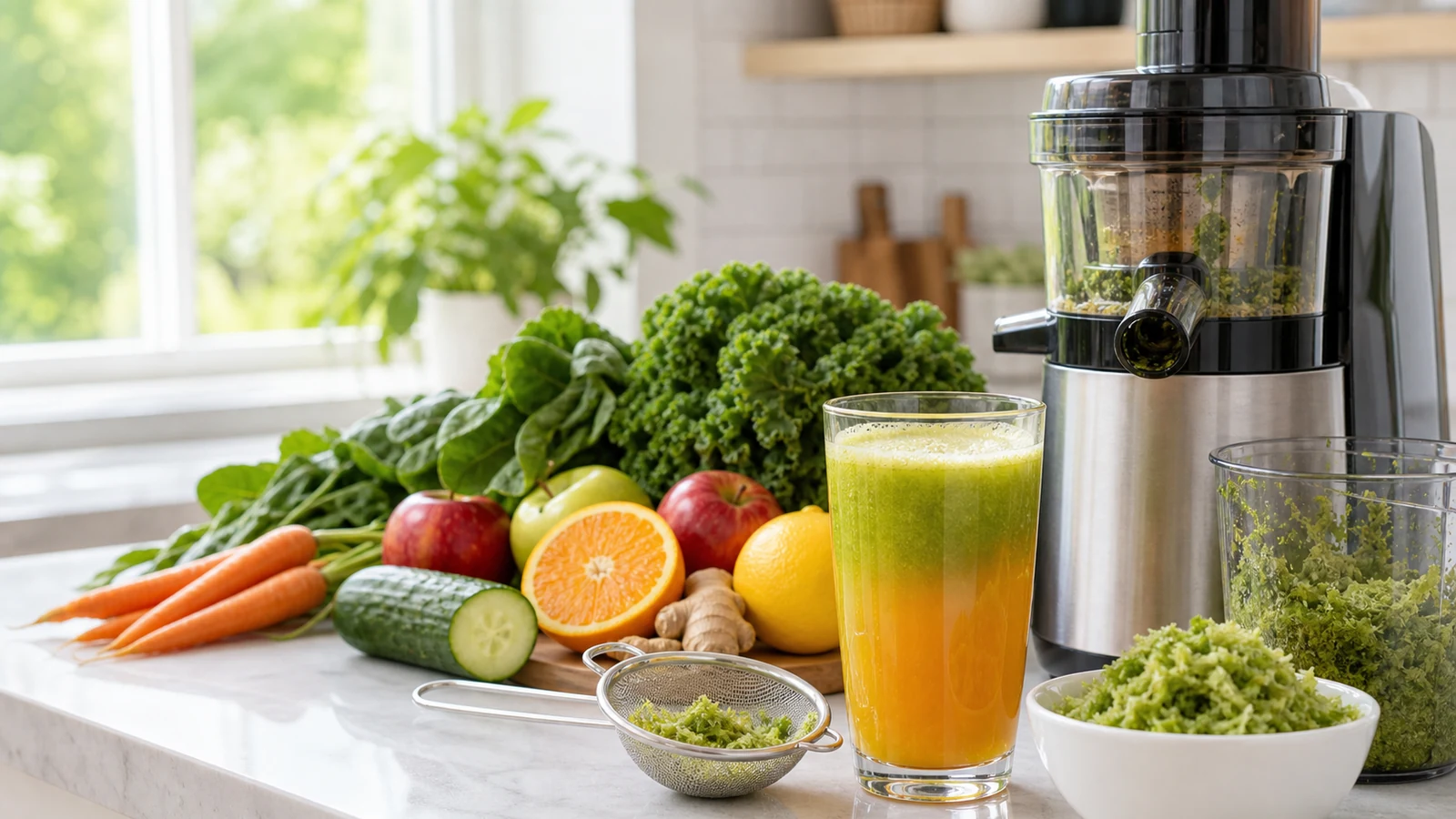
The easiest way to understand it is visual. If your juicer leaves a container full of pulp, that is not waste from a nutrition standpoint. It is the fibrous structure that gave the produce bulk, texture, and much of its chewing quality. The juice carries water, flavor, natural sugars, some vitamins, minerals, and plant compounds, but it is lighter on the fiber that helps slow the eating process and contributes to fullness.
What Happens to Pulp When You Juice?
Most home juicers are designed to extract liquid and push pulp into a separate container. Centrifugal juicers do this with fast-spinning cutting and straining. Masticating or slow juicers crush and press produce more gradually. The mechanics differ, but the basic result is similar: liquid goes one way, pulp goes another.
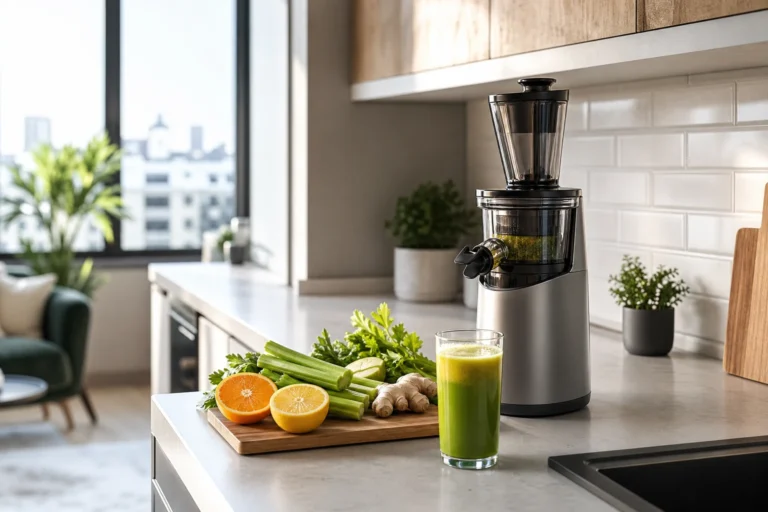
That separated pulp includes peel fragments, membranes, seed-area fibers, vegetable strands, and other solid plant material. It is especially obvious with celery, carrots, ginger, leafy greens, apples, and beets. A slow juicer may produce drier pulp than a basic centrifugal model, which can suggest better liquid extraction, but drier pulp does not mean fiber stayed in the juice. It usually means the machine squeezed more liquid out of the fibrous material.
Soluble Fiber vs Insoluble Fiber
Fiber is not one single thing. Insoluble fiber adds bulk and structure. It is the kind you notice in pulp, peels, skins, stems, and fibrous vegetable strands. Soluble fiber dissolves or disperses more easily in water and may partly remain in juice, depending on the ingredient and filtering level.
That distinction is why the answer is not “all fiber disappears.” A cloudy juice may contain more fine particles than a very clear strained juice. But from a practical buyer perspective, a juicer still removes a large share of the intact plant fiber you would get by eating the produce whole. If fiber intake is your main goal, whole produce or a smoothie is usually a better fit than clear juice.
Juice vs Smoothies vs Whole Produce
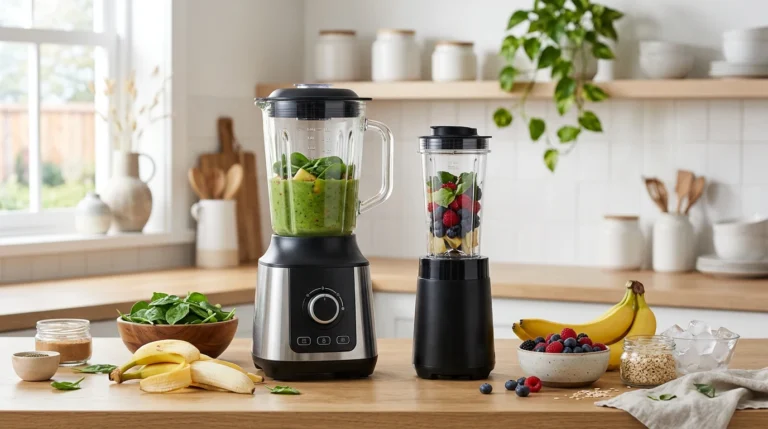
Juice is the most filtered option. It can be refreshing and easier to drink, but it is also easier to consume quickly. A smoothie keeps the blended plant material in the drink, so it usually retains more fiber. Whole produce gives you the most chewing, structure, and natural eating pace.
| Option | Fiber Level | Best Fit | Main Trade-Off |
|---|---|---|---|
| Fresh juice | Lower, because pulp is removed | Vegetable-heavy drinks, lighter texture, quick servings | Less filling than whole produce |
| Smoothie | Higher, because blended pulp stays in the drink | More filling drinks, fruit and greens, meal-style blends | Can become calorie-heavy if loaded with extras |
| Whole produce | Highest practical choice | Daily fiber, chewing, snacks, meals, salads | Less convenient if you dislike prep |
This comparison is not about making juice the villain. It is about matching the tool to the job. A juicer can help you enjoy ginger-carrot juice or cucumber-celery-green blends. A blender is better when you want the fiber-rich body of the produce to stay in the drink. A cutting board and bowl still win when the goal is a high-fiber snack or meal.
Why Fiber Matters in a Healthy Kitchen
Fiber helps make meals feel more substantial. It changes the pace of eating, adds bulk, and is one reason whole fruit often feels more satisfying than a glass of fruit juice. Harvard T.H. Chan School of Public Health notes that fiber is linked with digestive and metabolic health, while USDA MyPlate encourages whole fruits as part of fruit intake. Those are broad dietary ideas, not a promise that one appliance creates a healthy diet.
For a kitchen buyer, the takeaway is simple. If a juicer encourages you to use more vegetables, that can be useful. If it leads you to replace whole produce with large glasses of sweet fruit juice, that may not support the routine you had in mind. The habit around the appliance matters as much as the appliance itself.
What This Means for Sugar and Fullness
When fiber is reduced, juice is easier to drink quickly. That matters most with fruit-heavy recipes. Several oranges, apples, or grapes can become one fast glass, but eating the same produce whole would usually take longer and feel more filling. Vegetable-heavy juices with cucumber, celery, leafy greens, lemon, ginger, and a smaller fruit portion are often a more balanced way to use a juicer.
This does not mean you need to fear every glass of fresh juice. It means the portion and recipe matter. A small glass alongside a meal is different from drinking a large fruit-heavy juice as a daily replacement for breakfast. If you have medical nutrition needs, blood sugar concerns, or a specific dietary plan, it is worth asking a qualified health professional how juice fits for you.
Can You Put Pulp Back Into Juice?
You can stir some pulp back into juice if you like a thicker texture, but it may not feel pleasant with every recipe. Carrot, apple, and beet pulp can make juice gritty. Celery and leafy-green pulp can feel stringy. If you want the full fiber texture, a blender usually does the job more naturally than juicing and adding pulp back afterward.
That said, pulp does not have to go straight into the trash. Some home cooks use clean vegetable pulp in soups, veggie patties, muffins, quick breads, broth, compost, or freezer scraps. Use common sense: pulp from strongly flavored ingredients like ginger, beet, or celery can take over a recipe quickly.
Buyer Guidance: Choosing a Juicer When Fiber Matters
If you are buying a juicer while thinking about fiber, focus less on marketing promises and more on your actual routine. A juicer will not keep whole-produce fiber intact. What it can do is make fresh juice easier, cleaner, and more appealing, which may support a healthier kitchen if you use it thoughtfully.
Choose a Juicer for the Recipes You Will Actually Make
For celery, greens, ginger, carrots, and beets, many shoppers prefer slow juicers because they handle fibrous produce more deliberately. For fast apple, citrus, carrot, and cucumber juice, a centrifugal juicer may feel more realistic. The best choice is not the one with the most dramatic claim. It is the one you will clean and use.
Look Closely at Cleanup
Fiber shows up at the sink. Screens, strainers, pulp bins, augers, and feed chutes collect plant material. If cleanup is frustrating, the juicer may become a storage item. Easy-clean parts, sensible brush access, and a pulp container that is simple to empty matter more than many buyers expect.
Keep a Blender in the Conversation
If your main goal is preserving fiber, a blender may be a better first purchase than a juicer. Smoothies keep the plant material in the drink. You can still use a juicer for lighter vegetable-forward drinks, but a blender is usually the stronger tool for fiber-focused beverages.
Practical Ways to Use Juice Without Losing the Big Picture
- Use juice as a small drink, not as your only produce serving.
- Build recipes around vegetables first, then add fruit for flavor.
- Keep eating whole fruits, salads, cooked vegetables, beans, and whole grains.
- Consider smoothies when you want a more filling fiber-retaining drink.
- Clean the juicer right away so fibrous pulp does not dry onto the parts.
This is the balanced middle ground. Juice can be part of a healthy kitchen, but it should not carry the whole nutrition job by itself. Whole produce still deserves a regular place on the plate.
Frequently Asked Questions
Does cold press juicing remove fiber too?
Yes. Cold press juicing still separates liquid from pulp, so it removes much of the insoluble fiber. A slow juicer may squeeze produce more efficiently and leave drier pulp, but that does not mean the fiber stayed in the drink. If your goal is to keep the plant fiber, a smoothie or whole produce is the more direct choice.
Is juice unhealthy because it has less fiber?
Not automatically. Fresh juice can fit into a healthy routine, especially when it is vegetable-heavy and served in a reasonable portion. The issue is that juice is less filling than whole produce and can be easy to drink quickly. It works best as one part of the routine, not as a replacement for fiber-rich foods.
Do smoothies keep more fiber than juice?
Usually, yes. Smoothies blend the whole edible portion of fruits and vegetables, so the pulp and much of the fiber remain in the drink. The texture is thicker and more filling. The trade-off is that smoothies can become heavy if you add too many calorie-dense ingredients, so recipe balance still matters.
Can I use leftover juicer pulp for fiber?
You can use some clean pulp in recipes, but it depends on the ingredients and texture. Carrot or apple pulp may work in muffins or quick breads, while celery or ginger pulp can be more intense. Treat pulp as a kitchen extra, not as a perfect replacement for eating whole produce.
Which juicer is best if I care about fiber?
No juicer is best for keeping all fiber because removing pulp is part of what juicers do. If you still want juice, choose based on produce type, cleanup, counter space, and how often you will use it. If keeping fiber is the top priority, compare blenders alongside juicers before buying.
Related Guides
- Is Juicing Healthy?
- Best Juicers for Beginners
- Best Easy-to-Clean Juicers
- Best Juicers for Leafy Greens
- Best Compact Juicers for Small Kitchens
Helpful References
- Mayo Clinic on juicing and fiber
- Harvard T.H. Chan School of Public Health on fiber
- USDA MyPlate fruit guidance
Conclusion
So, does juicing remove fiber? Yes, juicing removes much of the pulp and insoluble fiber from fruits and vegetables. That is why juice feels lighter and smoother than whole produce or a smoothie. It can still be useful, but it should sit beside fiber-rich foods rather than replacing them.
The best kitchen routine is practical: drink juice when it helps you enjoy produce, use whole fruits and vegetables for daily fiber, and choose a juicer only if the cleanup, recipe style, and counter fit make sense for your real life.