Ninja vs NutriBullet: Which Blender Brand Is Better for Smoothies?
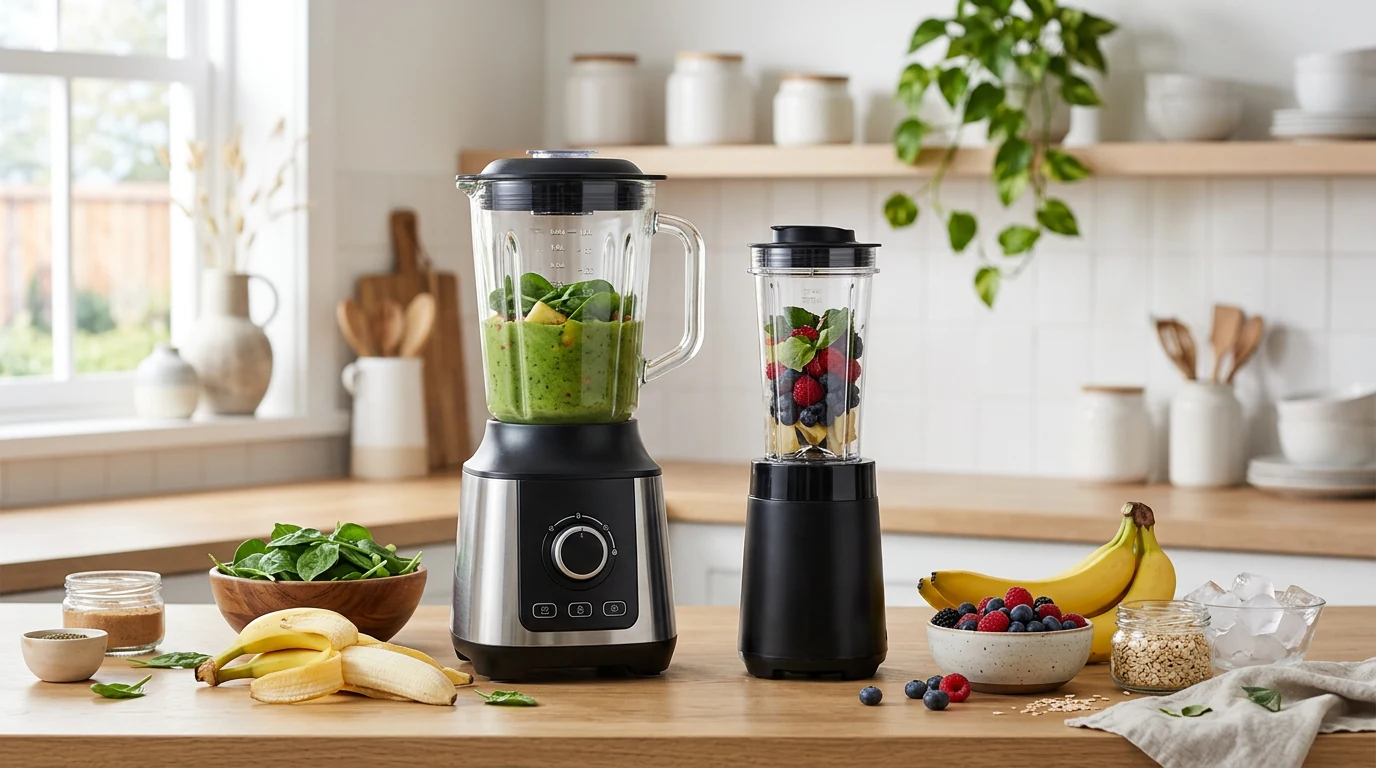
If you are comparing ninja vs nutribullet, you are probably deciding between two very different smoothie habits. Ninja tends to make sense for shoppers who want more power, pitcher capacity, and broader kitchen-system flexibility. NutriBullet is usually more appealing if you want a compact personal blender that makes daily smoothies feel easy instead of like a cleanup project.
This comparison keeps the decision practical. I am not treating every Ninja or NutriBullet model as identical, because both brands sell multiple blender styles. Instead, the goal is to help you understand which brand direction fits your kitchen, then what to check before you buy a specific model.
Disclosure: This article may contain affiliate links. If you buy through them, Healthy Kitchen Reviews may earn a commission at no extra cost to you.
Ninja vs NutriBullet: Quick Verdict
Choose Ninja if you want a blender that can handle bigger batches, thicker frozen blends, smoothie bowls, chopped mixtures, and family-style use. Choose NutriBullet if your main goal is a fast personal smoothie routine with less counter space, fewer parts, and simpler daily cleanup.
For most healthy-kitchen buyers, Ninja is the better fit when blending is part of meal prep. NutriBullet is the better fit when blending is a one-person habit you want to repeat every morning without thinking too hard.
Side-by-Side Comparison Table
| Category | Ninja | NutriBullet |
|---|---|---|
| Best overall fit | Families, thicker blends, smoothie bowls, frozen drinks, and broader kitchen use | Personal smoothies, compact kitchens, single servings, and simple routines |
| Product range | Includes pitcher blenders, single-serve models, portable blenders, hand blenders, and blender + processor systems on the official SharkNinja blender page | Official NutriBullet blender pages focus on blenders and smoothie makers, with a strong personal-blender identity |
| Kitchen footprint | Often larger if you choose a full-size pitcher or kitchen-system model | Often easier to keep on the counter when choosing a personal blender |
| Thick smoothie bowls | Usually the safer direction if you choose a suitable high-powered model with the right jar | Can work for softer smoothie blends, but thick bowl texture may depend heavily on the exact model and ingredient load |
| Meal prep | Better if you want batch blending or a system that may also handle chopping-style tasks | Better if you make one serving at a time and drink from the blending cup |
| Ease of cleaning | More parts on larger systems; simpler on single-serve models | Usually simple for personal blending, though gasket and blade care still matter |
| Buyer risk | Buying more machine than you need | Buying too little capacity or power for thicker recipes |
The Big Difference: Blender System vs Smoothie Routine
The easiest way to understand Ninja vs NutriBullet is to stop comparing brand names and compare routines. Ninja is often built around a broader kitchen-appliance idea. On SharkNinja’s blender and kitchen systems page, examples include blender + processor systems, single-serve blending, portable blending, hand blenders, and models with automatic programs. That tells you the brand is trying to cover more than one blending job.
NutriBullet has a different feel. Its public shop and blender pages are centered around blenders, smoothie makers, and the health-routine side of blending. That does not mean NutriBullet cannot make larger blenders, and it does not mean every Ninja model is powerful enough for every job. But as a buying shortcut, Ninja usually points toward versatility, while NutriBullet points toward simplicity.
Performance for Smoothies and Frozen Fruit
If your smoothie is mostly banana, protein powder, milk, soft fruit, and spinach, either brand can make sense when you choose a suitable model. The decision becomes more important when you blend frozen berries, ice, oats, nut butter, kale stems, or low-liquid smoothie bowls.
Ninja is usually the better direction for thicker textures because the brand offers full-size pitcher and kitchen-system designs. A larger jar gives ingredients more room to circulate, and a stronger model can be more forgiving when your recipe is dense. That is why Ninja often feels like the better path for readers who also care about thick smoothie bowls or meal replacement shakes.
NutriBullet is still attractive for classic smoothies because the cup-style workflow is convenient. Add ingredients, blend, remove the cup, and drink. If your recipes are usually moderate in thickness and you value speed over batch size, that workflow may matter more than raw blending ambition.
Capacity and Household Size
This is where many buyers make the wrong choice. A personal blender feels perfect until you want to make smoothies for two adults, prep multiple servings, or blend a thicker recipe that needs more space to move. NutriBullet can be excellent for one-person routines, but it may feel limiting if your kitchen habits grow beyond that.
Ninja makes more sense when you want one blender to serve several jobs. If you regularly blend for a household, make frozen drinks, prep sauces, or want enough volume for more than one serving, a full-size Ninja model is usually easier to justify. For single-serving portability, though, NutriBullet keeps the process cleaner and less bulky.
Cleanup and Daily Convenience
The best blender is often the one you will actually clean. A large blender may be more capable, but if it leaves you with a pitcher, lid, blade assembly, tamper, and accessories every morning, it can quietly become a weekend-only appliance.
NutriBullet has a real advantage here for simple smoothie routines. Personal cup blending reduces the number of pieces you deal with, and the drink-from-the-cup approach is convenient. Ninja can also be easy to clean, especially with single-serve models, but larger systems naturally ask for more space and more cleanup discipline.
Which Is Better for Healthy Kitchen Habits?
Neither brand makes a smoothie healthy by itself. The health value comes from what you blend and whether the appliance helps you stick with better habits. A blender that helps you make a simple breakfast instead of skipping one can be useful. A blender that makes home-prepped sauces, soups, and smoothies easier can also support a healthier routine.
For habit-building, NutriBullet may win if you need the lowest-friction option. For ingredient control and more varied prep, Ninja may win because a broader blender setup can handle more kitchen tasks. If you are making oat milk or nut milk, also compare jar size, straining workflow, and cleanup; our guide to blenders for oat milk and nut milk is a useful next read.
Pros and Cons of Ninja Blenders
Ninja Pros
- Better fit for families and larger blending jobs.
- More options for pitcher blending, single-serve blending, portable blending, and blender + processor systems.
- Usually the stronger choice for thick frozen blends when the model is chosen well.
- Good direction for buyers who want one appliance to cover more than morning smoothies.
Ninja Cons
- Larger models can take more counter and cabinet space.
- More accessories can mean more cleanup.
- Some shoppers may pay for functions they rarely use.
- Exact performance varies by model, so do not assume every Ninja blender is equal.
Pros and Cons of NutriBullet Blenders
NutriBullet Pros
- Strong fit for personal smoothies and simple daily routines.
- Compact style is easier for small kitchens, apartments, and quick breakfast habits.
- Cup-based blending can reduce friction between blending and drinking.
- Often easier to recommend for one-person smoothie use than a large blender system.
NutriBullet Cons
- Personal-style models may feel limiting for families or batch prep.
- Very thick frozen blends can be more demanding, depending on the exact model.
- Less attractive if you want one appliance for broader prep tasks.
- Buyers still need to check cup size, blade care, and replacement-part availability.
Who Should Choose Ninja?
Choose Ninja if you want a blender that feels more like a kitchen workhorse. It is the better direction if you make smoothie bowls, frozen drinks, sauces, larger batches, or blends for more than one person. It also makes more sense if you like the idea of a blender + processor system instead of a single-purpose personal blender.
Ninja is also the safer pick if you are still figuring out what you want to make. A larger, more flexible blender gives you room to experiment. The trade-off is that you need space for it, and you need to be honest about whether you will clean it often enough to justify the extra capability.
Who Should Choose NutriBullet?
Choose NutriBullet if your goal is simple: make a smoothie quickly, drink it, rinse the parts, and move on. It is especially appealing for one-person households, office routines, apartments, dorm-style kitchens, and people who know they do not want a bulky pitcher blender.
NutriBullet is also a good direction if your recipes are consistent. If you mostly blend soft fruit, greens, protein powder, yogurt, milk, and light frozen ingredients, you may not need a larger system. Just avoid underbuying if you want thick smoothie bowls or frequent family-size servings.
Buying Recommendation
For most buyers comparing ninja vs nutribullet, my recommendation is simple: buy Ninja if you want flexibility and thicker-blend confidence; buy NutriBullet if you want compact, repeatable smoothie convenience. The better brand is the one that removes friction from your real routine.
If you are still unsure, ask yourself one question: will you blend for one person most of the time, or do you want one machine for broader kitchen use? One-person smoothie habit points to NutriBullet. Family, batch, and texture flexibility point to Ninja.
External References Used
- SharkNinja official blender and kitchen systems page
- NutriBullet official blender shop page
- RTINGS Ninja vs NutriBullet comparison overview
Frequently Asked Questions
Is Ninja better than NutriBullet?
Ninja is usually better if you want more blending flexibility, larger batches, and thicker frozen recipes. NutriBullet is usually better if you want a compact personal blender for fast smoothies.
Is NutriBullet enough for daily smoothies?
For many single-serving smoothie routines, yes. It is most convincing when recipes are not extremely thick and when convenience matters more than batch size.
Which brand is better for smoothie bowls?
Ninja is usually the safer direction for smoothie bowls because thick frozen blends benefit from the right jar size, motor strength, and ingredient movement. Always check the specific model before buying.
Which is easier to clean?
NutriBullet-style personal blending is often simpler for daily cleanup. Ninja cleanup depends more on whether you choose a single-serve model or a larger blender system.
Which brand is better for families?
Ninja is usually the better fit for families because full-size pitcher and kitchen-system models make more sense for larger batches. NutriBullet is better when each person makes an individual smoothie.
Conclusion
The Ninja vs NutriBullet decision is really a choice between flexibility and simplicity. Ninja is the stronger direction for bigger jobs, thicker recipes, and households that want one blender to do more. NutriBullet is the cleaner choice for quick personal smoothies and compact healthy routines. Buy for the way you will use the blender on a normal Tuesday morning, not for the version of yourself who might use every attachment someday.