Vitamix vs Blendtec: Which Blender Is Better for Healthy Kitchens?
Vitamix vs Blendtec: Which Blender Is Better for Healthy Kitchens?
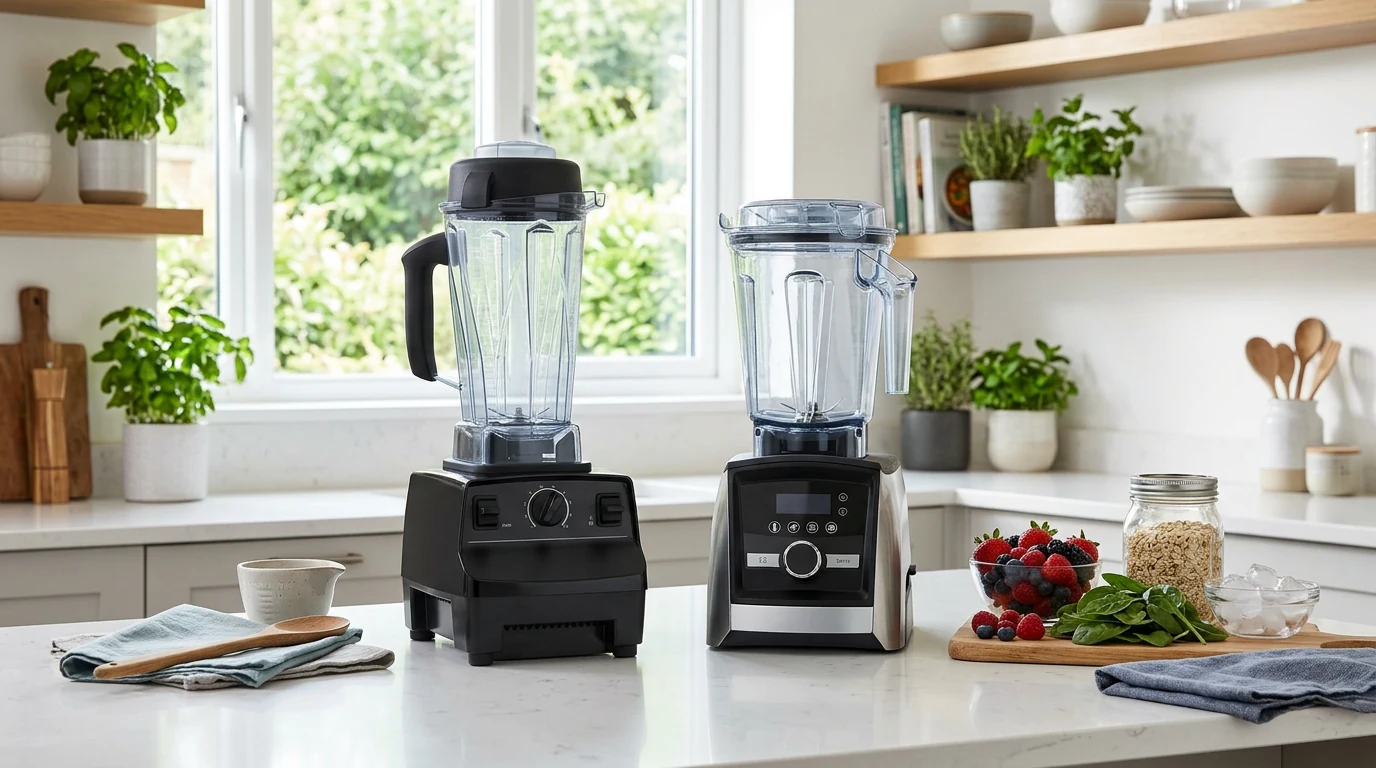
If you are comparing vitamix vs blendtec, you are probably past the cheap blender stage. Both brands are known for high-performance countertop blending, but they feel different in a real kitchen: Vitamix leans toward manual control and tamper-assisted thick blends, while Blendtec leans toward push-button cycles and a simpler jar-first workflow.
The better choice depends on what you make most. Smoothies, green drinks, frozen fruit, hot soup-style blends, nut butter, oat milk, and thick smoothie bowls all stress a blender in different ways. A machine that feels wonderful for one routine can feel oversized, too loud, too manual, or too automated for another.
This Vitamix vs Blendtec guide focuses on buyer-fit rather than fan loyalty. I am using cautious, source-based claims, and I am not pretending hands-on testing where none was provided. If you want a broader shortlist after this comparison, see our guide to the best premium blenders worth buying.
Disclosure: This article may contain affiliate links. If you buy through them, Healthy Kitchen Reviews may earn a commission at no extra cost to you.
Vitamix vs Blendtec: Quick Verdict
Choose Vitamix if you want maximum manual control, a tamper for thick mixtures, and a blender that rewards a hands-on cooking style. It is the stronger fit for nut butter, thick smoothie bowls, hummus-style blends, and people who like adjusting texture by feel.
Choose Blendtec if you prefer automated cycles, simple push-button operation, and less interaction during the blend. It is the better fit if you mainly make smoothies, shakes, soups, and everyday blended drinks and want the machine to handle timing with less fuss.
For many healthy kitchens, Vitamix is the safer premium recommendation because its variable speed control and tamper give you more ways to rescue difficult blends. Blendtec is still compelling if convenience and preset-driven blending matter more than tactile control.
Side-by-Side Comparison Table
| Feature | Vitamix | Blendtec |
|---|---|---|
| Best overall fit | Hands-on buyers who want control and thick-blend help | Buyers who want automated cycles and simple operation |
| Control style | Variable speed control is a major brand strength; some models also include programs | Preprogrammed or timed cycles are a major brand strength |
| Thick blends | Tamper support can help dense mixtures circulate | Often relies more on jar shape, blade design, and cycling |
| Smoothies | Excellent fit, especially for texture control | Excellent fit, especially for preset-style routines |
| Nut butter and dense recipes | Usually the easier recommendation because of tamper control | Can work, but may feel less direct for people who like hands-on texture management |
| Cleaning feel | Depends on model and container; self-cleaning routines are common in brand messaging | Smoother control surfaces and jar shape may feel easier to wipe for some buyers |
| Learning curve | More control means a little more user judgment | Preset cycles can reduce guesswork |
| Best buyer | Serious home cooks and thick-blend users | Convenience-first smoothie and drink makers |
Detailed Comparison by Features
Control and Texture
Vitamix has a strong advantage if you like to control texture manually. Vitamix explains that its variable speed dial lets you move through a wide speed range instead of being limited to basic low, medium, and high settings. In practical terms, that matters when you want a chunky salsa, a silky green smoothie, or a thicker blend that needs a gradual ramp-up.
Blendtec feels different. Blendtec product pages emphasize timed and preprogrammed cycles, including smoothie-friendly operation on models like the Classic 575. That can be ideal if you do not want to babysit the blender. Press a cycle, let it run, and move on with breakfast prep.
Thick Smoothie Bowls and Frozen Blends
For thick smoothie bowls, frozen fruit, nut butter, and dense dips, Vitamix is the cleaner recommendation. The reason is not just power. It is the tamper. Vitamix describes its tamper as a tool that helps move thick mixtures toward the blade, which is exactly the problem many buyers run into when frozen fruit sticks above the blade path.
Blendtec can still be a strong frozen-drink blender, but it asks you to trust the jar design and cycle logic more. That can work well for smoothies and shakes. If your goal is spoon-thick bowls several times per week, compare this article with our guide to the best blenders for thick smoothie bowls before buying.
Smoothies, Green Drinks, and Daily Use
For daily smoothies, both brands make sense. Vitamix gives you more control over how aggressively ingredients break down. Blendtec gives you more of a push-button rhythm. If you use the blender every morning while making coffee, packing lunch, or helping kids get ready, that difference matters more than a spec sheet.
If smoothies are your main use case, our best blenders for smoothies guide covers non-premium alternatives too. If you mostly blend frozen fruit or ice-heavy drinks, also compare our ice-crushing blender picks.
Nut Butter, Oat Milk, and Plant-Based Prep
Vitamix is usually the better fit for nut butter because dense recipes benefit from direct user control and tamper assistance. If that is one of your main reasons for upgrading, compare this with our guide to the best blenders for nut butter. For oat milk and nut milk, both brands can make sense, but technique matters. Oat milk should be blended briefly with cold water to reduce gumminess, while nuts often benefit from soaking and careful straining.
Blendtec is appealing if you make looser plant-based drinks and want repeatable timed blends. Vitamix is appealing if you move between plant milk, nut butter, cashew cream, hummus, and thick sauces. For a dedicated plant-milk angle, read our best blenders for oat milk and nut milk guide.
Hot Soup-Style Blending
Both brands are commonly associated with hot soup-style blending, but buyers should keep the claim practical. High-speed blending can warm ingredients through friction, but it is not the same as cooking raw food to a food-safe temperature. If you are blending cooked vegetables into soup, either brand can fit. If food safety is involved, follow normal cooking and storage guidance.
Noise, Counter Space, and Cleaning
High-performance blenders are not quiet appliances. They are designed to move tough ingredients quickly, and that usually means noise. The better question is whether the machine is easy enough to use and clean that you will accept the noise for the result.
Vitamix containers, tampers, and lids can feel more tool-like. Blendtec jars and controls may feel more streamlined to some buyers. Neither choice removes cleanup from the equation. Sticky nut butter, green smoothie residue, and oat milk foam still need prompt rinsing.
Pros and Cons of Each Option
Vitamix Pros and Cons
Pros:
- Excellent manual control for texture and speed changes.
- Tamper support can make thick mixtures easier to manage.
- Strong fit for nut butter, thick smoothie bowls, hummus-style blends, and serious meal prep.
- Good choice for buyers who want one premium blender for many kitchen jobs.
Cons:
- Usually expensive compared with mainstream blenders.
- Manual control requires more attention than a one-button preset routine.
- Tall containers on some models may be awkward under cabinets.
- The tamper is useful, but it is still one more accessory to store and clean.
Blendtec Pros and Cons
Pros:
- Preset and timed cycles can make blending feel simpler.
- Good fit for smoothies, shakes, soups, and everyday drinks.
- Appealing for buyers who dislike tamper-based blending.
- Streamlined controls may feel easier for busy kitchens.
Cons:
- Less tactile control for people who like adjusting texture by feel.
- Dense blends may require recipe technique and batch-size discipline.
- Some buyers prefer the confidence of tamper-assisted blending for thick foods.
- Still a premium purchase, so it needs to match your actual routine.
Who Should Choose Each One?
Choose Vitamix If…
- You make thick smoothie bowls, nut butter, dips, or dense sauces.
- You want manual control over texture.
- You do not mind using a tamper when the recipe calls for it.
- You want one premium blender for many healthy kitchen tasks.
- You already know you will use the blender often enough to justify the price.
Choose Blendtec If…
- You mostly make smoothies, shakes, and looser blends.
- You prefer automated cycles over manual speed control.
- You want less interaction during the blend.
- You dislike the idea of using a tamper.
- You want a powerful blender that feels more push-button than chef-tool.
Buying Recommendation
For most serious healthy-kitchen buyers, I would start with Vitamix. It gives you more control, more rescue options for difficult blends, and a better fit for thick recipes. That matters because premium blenders are often bought for the jobs cheaper blenders struggle with: frozen fruit, fibrous greens, nut butter, hummus, cashew cream, and thick smoothie bowls.
Blendtec is the smarter pick if you know your routine is simpler. If your blender life is mostly smoothies, shakes, soups, and repeatable drink cycles, you may appreciate its automated feel more than Vitamix’s hands-on control. The best Vitamix vs Blendtec decision is not about which brand wins every category. It is about which one you will use more often without friction.
Price, Value, and Long-Term Fit
Neither brand belongs in the impulse-buy category. A premium blender only makes sense if it solves a problem you actually have. If you mainly blend bananas, protein powder, and soft fruit, a less expensive smoothie blender may be enough. If you regularly burn through cheaper machines, dislike grainy green smoothies, or want to make thicker recipes without stopping constantly, the premium step-up becomes easier to justify.
Vitamix tends to feel like the better long-term value for cooks who keep asking more from the machine. It is the brand I would lean toward for someone who wants one blender to handle smoothies, sauces, dips, frozen bowls, nut butter, plant milk, and meal-prep extras. You are paying for control as much as raw blending ability.
Blendtec tends to feel like the better value for people who want fewer decisions. If you are buying a high-performance blender because you want easy repeatability, not a more involved cooking tool, Blendtec’s cycle-driven personality can be a better emotional fit. That matters. A technically capable blender that annoys you will not support healthier habits for long.
Common Mistakes When Choosing Between Vitamix and Blendtec
Buying Only for Peak Power Claims
Power matters, but it is not the only thing that determines results. Jar shape, blade behavior, speed control, ingredient order, batch size, and whether you can intervene during the blend all affect texture. A buyer who makes thick recipes should care more about circulation and control than a single headline number.
Ignoring Counter Height and Storage
Premium blenders are easier to use when they can stay on the counter. If a model is too tall for your cabinets or too heavy to move comfortably, you may use it less often. Before choosing, measure your counter-to-cabinet clearance and think about where the jar, lid, and tamper will live.
Assuming Presets Are Always Better
Presets are helpful when your recipes are predictable. They are less helpful when you frequently change ingredients, make very thick blends, or adjust texture by sight and sound. Blendtec’s automation is a strength for the right buyer, but Vitamix’s manual control can be more forgiving when recipes vary.
Assuming Manual Control Is Always Better
Manual control is powerful, but not everyone wants it. Some buyers want to press a button and walk away for a moment. If that describes your kitchen rhythm, Blendtec may make you happier even if Vitamix gives you more direct control.
Healthy Kitchen Use Cases: Which Brand Fits Best?
- Daily green smoothies: Either brand can work, but Vitamix gives more texture control and Blendtec gives a simpler cycle-based workflow.
- Thick smoothie bowls: Vitamix is the better starting point because the tamper can help frozen ingredients keep moving.
- Nut butter and dense spreads: Vitamix is the safer recommendation for most buyers because dense recipes benefit from hands-on control.
- Protein shakes and meal replacement drinks: Blendtec may be more convenient if you want repeatable timed cycles. Vitamix may be better if you add frozen fruit, greens, seeds, and ice often.
- Homemade plant milk: Both can work, but Vitamix is more flexible across oats, almonds, cashews, and thicker plant-based prep.
- Shared family kitchen: Blendtec can feel simpler for multiple users, while Vitamix may suit the person who does most of the cooking and likes more control.
Safety and Storage Notes
Blenders can support healthier habits by making home prep easier, but they do not make food automatically healthy or safe. Homemade smoothies and plant milks still depend on ingredient quality, portion size, cleaning, and refrigeration. For general cold-storage timing, use cautious food-safety guidance such as FoodSafety.gov cold food storage charts.
External Sources Used
Frequently Asked Questions
Is Vitamix better than Blendtec?
Vitamix is better for buyers who want manual control, tamper-assisted thick blending, and maximum flexibility. Blendtec is better for buyers who prefer automated cycles and a simpler push-button routine. Neither is automatically better for every kitchen.
Is Blendtec easier to use than Vitamix?
Blendtec can feel easier if you like preset or timed cycles. Vitamix can feel easier once you learn its speed control, especially for recipes where texture matters. The easier option depends on whether you prefer automation or hands-on control.
Which is better for smoothie bowls?
Vitamix is usually the better smoothie bowl choice because the tamper helps thick frozen mixtures move toward the blades. Blendtec can still work for frozen drinks, but very thick bowls may require more careful liquid ratios and batch sizing.
Which is better for nut butter?
Vitamix is the safer recommendation for nut butter because manual speed control and tamper assistance are useful with dense ingredients. Blendtec can be a strong blender, but nut butter buyers often benefit from the more hands-on Vitamix workflow.
Which blender is better for older adults?
Blendtec may appeal to older adults who want fewer manual adjustments, while Vitamix may appeal to people who value control and do not mind using a tamper. Weight, counter height, jar handling, button visibility, and cleanup matter as much as brand.
Conclusion
In the vitamix vs blendtec decision, Vitamix is the better all-around premium pick for serious blending control, thick recipes, and buyers who want one machine for many healthy kitchen jobs. Blendtec is the better fit for people who want powerful blending with more automation and less hands-on adjustment.
If your kitchen routine includes nut butter, smoothie bowls, hummus, cashew cream, and dense frozen blends, choose Vitamix. If your routine is mostly smoothies, shakes, soups, and repeatable drink cycles, choose Blendtec. The right blender is the one that makes healthy prep easier often enough to earn its counter space.