Best Blenders for Soup: 5 Smart Picks for Hot and Creamy Blends
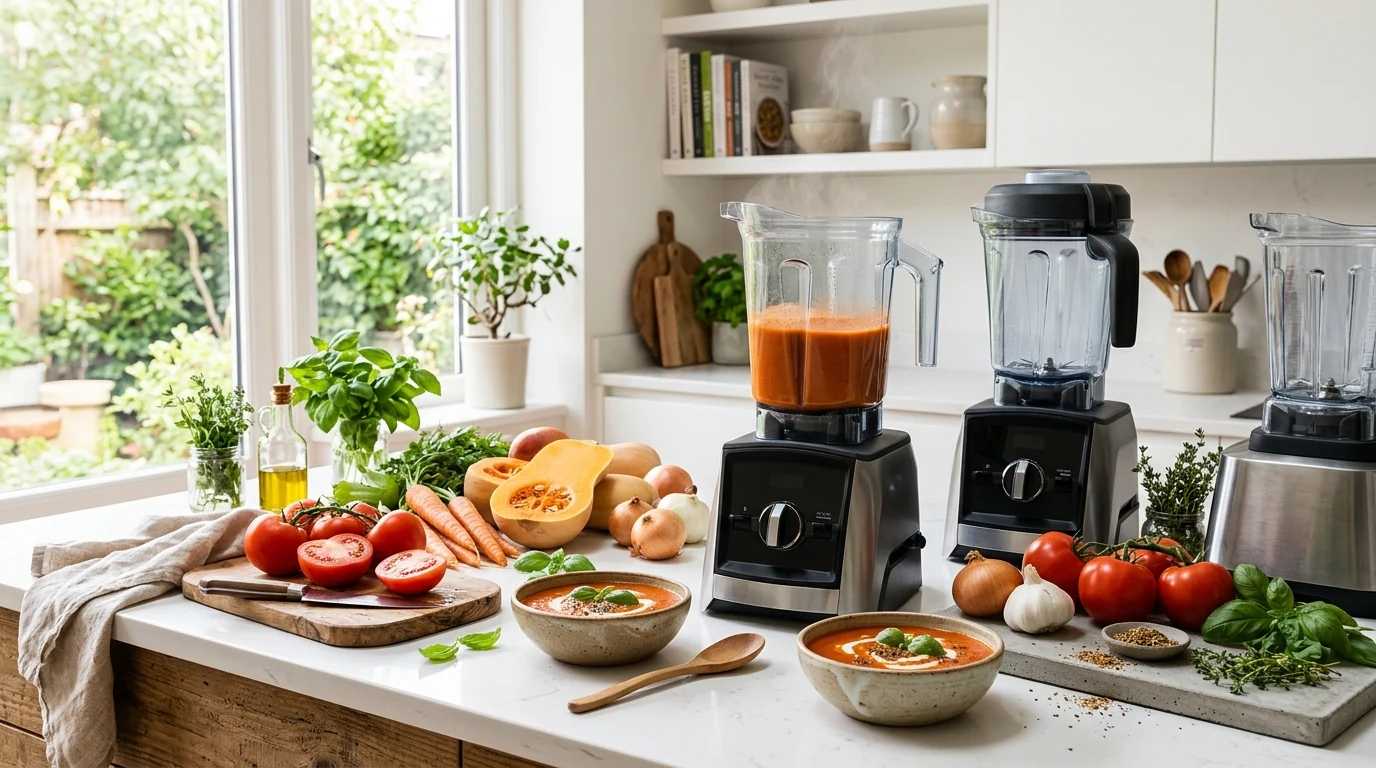
If you are shopping for the best blenders for soup, the right choice depends on what you mean by soup. Some blenders make hot soup by blending cooked ingredients at very high speed until the mixture is steaming and smooth. Others are cooking blenders with a heating element, so they can warm or cook soup inside the jar. Those are different tools, and buying the wrong one can be frustrating.
This guide focuses on real kitchen fit: smooth texture, safe handling of hot ingredients, cleanup, capacity, and whether the blender makes weeknight soup easier instead of turning it into another appliance chore. I also separate verified product facts from details that can change by retailer, because soup blenders are especially prone to confusing listings and older model pages.
I am not claiming hands-on testing or lab measurements. Product specifications, bundles, and availability can change, so confirm the exact model, jar, warranty, and hot-blending instructions before buying. The goal here is practical decision help, not inflated promises.
Disclosure: This article may contain affiliate links. If you buy through them, Healthy Kitchen Reviews may earn a commission at no extra cost to you.
Quick Comparison Table
| Rank | Product | Best For | Capacity | Key Feature | CTA |
|---|---|---|---|---|---|
| 1 | Vitamix 5200 | Best overall blender for silky hot soup | 64-ounce classic container | High-speed blending for smooth puree, soup, smoothies, and frozen drinks | View on Amazon |
| 2 | Vitamix A3500 Ascent Series | Best premium blender with a hot soup program | 64-ounce low-profile SELF-DETECT container | Program settings for smoothies, hot soups, dips and spreads, and frozen desserts | View on Amazon |
| 3 | Ninja Foodi Cold & Hot Blender HB152 | Best cooking blender with a built-in heating element | 64-ounce glass pitcher in common retailer listings | Cold blending plus heated soup, sauce, and dip programs | View on Amazon |
| 4 | Instant Ace Nova Cooking Blender | Best value cooking blender for hot and cold recipes | 56-ounce pitcher in accessible retailer listings | Hot and cold blending with one-touch programs | View on Amazon |
| 5 | Vitamix Explorian E310 | Best smaller Vitamix for soup and everyday cooking | 48-ounce container | Ten variable speeds, pulse, and a 2 HP motor for smooth purees and hearty soups | View on Amazon |
Our Top Picks
- Best Overall: Vitamix 5200, because it gives soup lovers serious texture control without overcomplicating the process.
- Best Premium Pick: Vitamix A3500, because its hot soup program and timer make repeatable blending easier.
- Best Cooking Blender: Ninja Foodi Cold & Hot HB152, because it uses a heating element instead of relying only on blade friction.
- Best Value Cooking Blender: Instant Ace Nova, because it targets hot and cold recipes at a more approachable level.
- Best Smaller Vitamix: Vitamix Explorian E310, because its 48-ounce container is easier to live with in smaller kitchens.
Detailed Reviews of the Best Blenders for Soup
1. Vitamix 5200
Vitamix 5200 is best for buyers who want best overall blender for silky hot soup. It is the strongest overall pick because it treats soup as a texture problem, not a gimmick. The 5200 can take cooked vegetables, broth, beans, squash, or tomatoes and turn them into a very smooth puree with simple manual control.
Key Features
- Best for: Best overall blender for silky hot soup
- Capacity: 64-ounce classic container
- Main soup advantage: High-speed blending for smooth puree, soup, smoothies, and frozen drinks
- Verification note: Vitamix lists a 64-ounce container, variable speed control, High switch, hardened stainless steel blades, self-cleaning, and a 7-year full warranty.
What Makes It Stand Out
For soup, the standout factor is not just motor power. It is how confidently the blender handles cooked vegetables, broth, fibrous skins, beans, aromatics, and thick textures without forcing you to stop every few seconds. A good soup blender should make the final texture feel intentional, whether you want a silky bisque or a slightly rustic vegetable puree.
How It Helps Your Kitchen Routine
This kind of blender is most useful when you cook soup often enough that texture and cleanup matter. It can turn roasted squash, canned tomatoes, lentils, steamed cauliflower, or leftover vegetables into a warmer, more satisfying meal without needing a separate immersion blender. For healthy meal prep, that convenience can be the difference between using leftovers and letting them sit in the refrigerator.
How to Use It
For friction-heating blenders, start with cooked ingredients and enough liquid to keep everything circulating. For cooking blenders with heating elements, follow the manufacturer instructions for fill lines, program choice, and cleaning. In both cases, avoid sealing very hot liquid in a way that traps pressure unless the manual specifically allows it. Let steam escape according to the product instructions, and never overfill the jar.
Pros and Cons
Pros:
- Can help create smoother soups, sauces, purees, and vegetable bases.
- Useful for healthy home cooking because it makes vegetables and leftovers easier to turn into meals.
- More versatile than a soup-only appliance if you also make smoothies or sauces.
Cons:
- It does not cook raw ingredients with a heating element. You still need cooked ingredients or a hot liquid base if you want true soup rather than a warmed puree.
- Hot liquids require more care than cold smoothies.
- Exact specs and included accessories can vary by current retailer listing.
Customer Feedback Snapshot
The most useful review signals to check are soup texture, lid security, cleaning difficulty, noise, jar weight, and whether the blender leaves fibrous bits from tomato skins, kale stems, celery, or squash. Ignore vague praise and look for buyers who describe the same recipes you plan to make.
Best For
Choose this model if your top priority lines up with best overall blender for silky hot soup. If you mostly make cold smoothies, frozen fruit blends, or nut butter, compare it with the related guides below before deciding.
2. Vitamix A3500 Ascent Series
Vitamix A3500 Ascent Series is best for buyers who want best premium blender with a hot soup program. The A3500 is the pick for shoppers who want Vitamix performance with more walk-away convenience. The hot soup program is useful if you like repeatable results and do not want to babysit every blend.
Key Features
- Best for: Best premium blender with a hot soup program
- Capacity: 64-ounce low-profile SELF-DETECT container
- Main soup advantage: Program settings for smoothies, hot soups, dips and spreads, and frozen desserts
- Verification note: Vitamix lists four program settings including Hot Soups, a 64-ounce low-profile SELF-DETECT container, touchscreen controls, variable speed, pulse, a programmable timer, and a 10-year standard warranty.
What Makes It Stand Out
For soup, the standout factor is not just motor power. It is how confidently the blender handles cooked vegetables, broth, fibrous skins, beans, aromatics, and thick textures without forcing you to stop every few seconds. A good soup blender should make the final texture feel intentional, whether you want a silky bisque or a slightly rustic vegetable puree.
How It Helps Your Kitchen Routine
This kind of blender is most useful when you cook soup often enough that texture and cleanup matter. It can turn roasted squash, canned tomatoes, lentils, steamed cauliflower, or leftover vegetables into a warmer, more satisfying meal without needing a separate immersion blender. For healthy meal prep, that convenience can be the difference between using leftovers and letting them sit in the refrigerator.
How to Use It
For friction-heating blenders, start with cooked ingredients and enough liquid to keep everything circulating. For cooking blenders with heating elements, follow the manufacturer instructions for fill lines, program choice, and cleaning. In both cases, avoid sealing very hot liquid in a way that traps pressure unless the manual specifically allows it. Let steam escape according to the product instructions, and never overfill the jar.
Pros and Cons
Pros:
- Can help create smoother soups, sauces, purees, and vegetable bases.
- Useful for healthy home cooking because it makes vegetables and leftovers easier to turn into meals.
- More versatile than a soup-only appliance if you also make smoothies or sauces.
Cons:
- It is expensive, and the smart features only make sense if you will actually use preset programs and compatible containers.
- Hot liquids require more care than cold smoothies.
- Exact specs and included accessories can vary by current retailer listing.
Customer Feedback Snapshot
The most useful review signals to check are soup texture, lid security, cleaning difficulty, noise, jar weight, and whether the blender leaves fibrous bits from tomato skins, kale stems, celery, or squash. Ignore vague praise and look for buyers who describe the same recipes you plan to make.
Best For
Choose this model if your top priority lines up with best premium blender with a hot soup program. If you mostly make cold smoothies, frozen fruit blends, or nut butter, compare it with the related guides below before deciding.
3. Ninja Foodi Cold & Hot Blender HB152
Ninja Foodi Cold & Hot Blender HB152 is best for buyers who want best cooking blender with a built-in heating element. This is the most direct choice if you want the blender itself to handle heat. It is designed for shoppers who want to cook or warm soup inside the pitcher instead of only blending already-cooked ingredients.
Key Features
- Best for: Best cooking blender with a built-in heating element
- Capacity: 64-ounce glass pitcher in common retailer listings
- Main soup advantage: Cold blending plus heated soup, sauce, and dip programs
- Verification note: Accessible retailer listings describe the HB152 as a 64-ounce glass-pitcher cold and hot blender with a 1400-peak-watt motor base and an 800-watt precision heating element.
What Makes It Stand Out
For soup, the standout factor is not just motor power. It is how confidently the blender handles cooked vegetables, broth, fibrous skins, beans, aromatics, and thick textures without forcing you to stop every few seconds. A good soup blender should make the final texture feel intentional, whether you want a silky bisque or a slightly rustic vegetable puree.
How It Helps Your Kitchen Routine
This kind of blender is most useful when you cook soup often enough that texture and cleanup matter. It can turn roasted squash, canned tomatoes, lentils, steamed cauliflower, or leftover vegetables into a warmer, more satisfying meal without needing a separate immersion blender. For healthy meal prep, that convenience can be the difference between using leftovers and letting them sit in the refrigerator.
How to Use It
For friction-heating blenders, start with cooked ingredients and enough liquid to keep everything circulating. For cooking blenders with heating elements, follow the manufacturer instructions for fill lines, program choice, and cleaning. In both cases, avoid sealing very hot liquid in a way that traps pressure unless the manual specifically allows it. Let steam escape according to the product instructions, and never overfill the jar.
Pros and Cons
Pros:
- Can help create smoother soups, sauces, purees, and vegetable bases.
- Useful for healthy home cooking because it makes vegetables and leftovers easier to turn into meals.
- More versatile than a soup-only appliance if you also make smoothies or sauces.
Cons:
- Availability can change, and current package details should be checked carefully before purchase. Heating blenders also need more careful cleaning than a simple jar-and-base blender.
- Hot liquids require more care than cold smoothies.
- Exact specs and included accessories can vary by current retailer listing.
Customer Feedback Snapshot
The most useful review signals to check are soup texture, lid security, cleaning difficulty, noise, jar weight, and whether the blender leaves fibrous bits from tomato skins, kale stems, celery, or squash. Ignore vague praise and look for buyers who describe the same recipes you plan to make.
Best For
Choose this model if your top priority lines up with best cooking blender with a built-in heating element. If you mostly make cold smoothies, frozen fruit blends, or nut butter, compare it with the related guides below before deciding.
4. Instant Ace Nova Cooking Blender
Instant Ace Nova Cooking Blender is best for buyers who want best value cooking blender for hot and cold recipes. The Ace Nova is appealing if you want a cooking blender for soups, sauces, smoothies, and simple family meal prep without jumping straight to premium Vitamix pricing.
Key Features
- Best for: Best value cooking blender for hot and cold recipes
- Capacity: 56-ounce pitcher in accessible retailer listings
- Main soup advantage: Hot and cold blending with one-touch programs
- Verification note: Accessible retailer listings describe the Instant Ace Nova as a hot and cold cooking blender with 9 one-touch programs, 56-ounce capacity, and 1000W power.
What Makes It Stand Out
For soup, the standout factor is not just motor power. It is how confidently the blender handles cooked vegetables, broth, fibrous skins, beans, aromatics, and thick textures without forcing you to stop every few seconds. A good soup blender should make the final texture feel intentional, whether you want a silky bisque or a slightly rustic vegetable puree.
How It Helps Your Kitchen Routine
This kind of blender is most useful when you cook soup often enough that texture and cleanup matter. It can turn roasted squash, canned tomatoes, lentils, steamed cauliflower, or leftover vegetables into a warmer, more satisfying meal without needing a separate immersion blender. For healthy meal prep, that convenience can be the difference between using leftovers and letting them sit in the refrigerator.
How to Use It
For friction-heating blenders, start with cooked ingredients and enough liquid to keep everything circulating. For cooking blenders with heating elements, follow the manufacturer instructions for fill lines, program choice, and cleaning. In both cases, avoid sealing very hot liquid in a way that traps pressure unless the manual specifically allows it. Let steam escape according to the product instructions, and never overfill the jar.
Pros and Cons
Pros:
- Can help create smoother soups, sauces, purees, and vegetable bases.
- Useful for healthy home cooking because it makes vegetables and leftovers easier to turn into meals.
- More versatile than a soup-only appliance if you also make smoothies or sauces.
Cons:
- Instant's current product pages can move or disappear, so verify availability, warranty, included accessories, and replacement parts on the exact listing before buying.
- Hot liquids require more care than cold smoothies.
- Exact specs and included accessories can vary by current retailer listing.
Customer Feedback Snapshot
The most useful review signals to check are soup texture, lid security, cleaning difficulty, noise, jar weight, and whether the blender leaves fibrous bits from tomato skins, kale stems, celery, or squash. Ignore vague praise and look for buyers who describe the same recipes you plan to make.
Best For
Choose this model if your top priority lines up with best value cooking blender for hot and cold recipes. If you mostly make cold smoothies, frozen fruit blends, or nut butter, compare it with the related guides below before deciding.
5. Vitamix Explorian E310
Vitamix Explorian E310 is best for buyers who want best smaller vitamix for soup and everyday cooking. The E310 is a practical choice if you want Vitamix soup performance but do not need a 64-ounce jar. It is especially sensible for smaller households that still want smooth vegetable soups, sauces, and healthy whole-food recipes.
Key Features
- Best for: Best smaller Vitamix for soup and everyday cooking
- Capacity: 48-ounce container
- Main soup advantage: Ten variable speeds, pulse, and a 2 HP motor for smooth purees and hearty soups
- Verification note: Vitamix lists a 48-ounce container, ten variable speeds, pulse, a 2 HP motor, self-cleaning, and a 5-year full warranty for the E310.
What Makes It Stand Out
For soup, the standout factor is not just motor power. It is how confidently the blender handles cooked vegetables, broth, fibrous skins, beans, aromatics, and thick textures without forcing you to stop every few seconds. A good soup blender should make the final texture feel intentional, whether you want a silky bisque or a slightly rustic vegetable puree.
How It Helps Your Kitchen Routine
This kind of blender is most useful when you cook soup often enough that texture and cleanup matter. It can turn roasted squash, canned tomatoes, lentils, steamed cauliflower, or leftover vegetables into a warmer, more satisfying meal without needing a separate immersion blender. For healthy meal prep, that convenience can be the difference between using leftovers and letting them sit in the refrigerator.
How to Use It
For friction-heating blenders, start with cooked ingredients and enough liquid to keep everything circulating. For cooking blenders with heating elements, follow the manufacturer instructions for fill lines, program choice, and cleaning. In both cases, avoid sealing very hot liquid in a way that traps pressure unless the manual specifically allows it. Let steam escape according to the product instructions, and never overfill the jar.
Pros and Cons
Pros:
- Can help create smoother soups, sauces, purees, and vegetable bases.
- Useful for healthy home cooking because it makes vegetables and leftovers easier to turn into meals.
- More versatile than a soup-only appliance if you also make smoothies or sauces.
Cons:
- The smaller container is less convenient for big batch soup, and it does not include the premium program settings found on the A3500.
- Hot liquids require more care than cold smoothies.
- Exact specs and included accessories can vary by current retailer listing.
Customer Feedback Snapshot
The most useful review signals to check are soup texture, lid security, cleaning difficulty, noise, jar weight, and whether the blender leaves fibrous bits from tomato skins, kale stems, celery, or squash. Ignore vague praise and look for buyers who describe the same recipes you plan to make.
Best For
Choose this model if your top priority lines up with best smaller vitamix for soup and everyday cooking. If you mostly make cold smoothies, frozen fruit blends, or nut butter, compare it with the related guides below before deciding.
How These Soup Blenders Compare
The Vitamix 5200 and A3500 are the best fits if you want high-speed blending and very smooth texture. The 5200 is more manual and direct, while the A3500 adds automatic programs and a premium interface. Both make the most sense for people who already cook ingredients and want the blender to finish the texture beautifully.
The Ninja Foodi Cold & Hot HB152 and Instant Ace Nova are different because they are cooking blenders. They are better for shoppers who specifically want heat inside the blender jar. That can be convenient, but it also means more attention to cleaning, heating cycles, and current model availability. The Vitamix E310 is the smaller high-performance option for buyers who want soup texture without a full-size 64-ounce jar.
How to Choose the Best Blender for Soup
Decide Between Friction Heating and Built-In Cooking
High-speed blenders can warm soup through friction, but they are not the same as blenders with heating elements. If you want to blend already-cooked roasted vegetables into a creamy soup, a Vitamix-style blender is often enough. If you want the appliance to heat or cook the recipe inside the jar, look at a cooking blender instead.
Think About Texture First
Soup exposes weak blending quickly. Tomato skins, celery strings, kale, beans, lentils, and roasted squash can all turn gritty if the blender is underpowered or if the jar does not circulate ingredients well. If silky texture matters, prioritize blending performance over novelty features.
Check Capacity Against Your Household
A large jar is useful for family soup, but it can feel awkward if you mostly make one or two servings. A 64-ounce container gives more batch flexibility, while smaller or more specialized jars may be easier to handle. Always respect the hot-liquid fill line if the manual gives one.
Do Not Ignore Hot-Liquid Safety
Hot soup expands and releases steam. That makes lid design, venting, fill limits, and manual instructions more important than they are for a cold smoothie. If a listing is unclear about hot blending, do not guess. Check the manufacturer’s manual or choose a product that clearly supports hot soup.
Plan for Cleanup
Creamy soups can cling to lids, gaskets, corners, and blade assemblies. Self-cleaning cycles help, but they do not replace careful washing after tomato, curry, dairy, or garlic-heavy recipes. If cleanup feels annoying, the blender will get used less often.
Soup Blender vs Immersion Blender
A countertop blender is usually better for very smooth soups, especially if you want a restaurant-style texture. It can also handle smoothies, sauces, dressings, frozen drinks, and some thicker blends. The trade-off is that you may need to transfer hot soup from the pot to the jar, which takes care and creates more dishes.
An immersion blender is simpler for blending directly in the pot. It is often better for chunky soups, quick weeknight cooking, and people who dislike moving hot liquid around. But it usually will not create the same silky texture as a strong countertop blender. If you are deciding between appliances more broadly, the Food Processor vs Blender article can help clarify where a blender fits in your kitchen.
Are Soup Blenders Worth It for Healthy Cooking?
A soup-friendly blender can support healthier cooking because it makes vegetables, beans, broth, herbs, and leftovers easier to turn into satisfying meals. Instead of relying on cream or heavy sauces for body, you can use blended cauliflower, white beans, squash, lentils, or potatoes to create thickness. That can be useful, but the health value still depends on the ingredients and portions you choose.
If your main routine is smoothies, start with Best Blenders for Smoothies. If frozen fruit is the priority, the Best Blender for Frozen Fruit guide is more useful. For dense blends like peanut butter or almond butter, see Best Blenders for Nut Butter. For icy drinks, compare the Best Blenders for Ice Crushing guide. And if jar material matters, the Best Glass Jar Blenders roundup covers glass-jar options separately.
Product Fact Sources and Verification Notes
For this article, I relied on accessible product and retailer information rather than inventing specs. The most relevant verification sources were Vitamix 5200 product page, Vitamix A3500 product page, Vitamix E310 product page, Ninja Foodi Cold & Hot HB152 listing information, Instant Ace Nova listing information.
I avoided unsupported prices, star ratings, dishwasher-safe claims, exact cooking times, and warranty statements unless they were clearly visible in accessible product information. Because blender listings change often, verify the exact model number and current package before buying.
Frequently Asked Questions
What is the best blender for soup overall?
For most shoppers who want silky texture from cooked ingredients, the Vitamix 5200 is the best overall starting point. If you want automatic programs and a premium interface, the Vitamix A3500 is the stronger upgrade.
Can a blender actually make hot soup?
Some high-speed blenders can warm soup through blade friction, while cooking blenders use a heating element. Those are different methods, so check the manual before assuming a blender can cook soup from raw ingredients.
Is a cooking blender better than a Vitamix for soup?
A cooking blender is better if you specifically want heat inside the jar. A Vitamix-style blender is often better if you cook ingredients separately and care most about smooth texture, reliability, and broader blending versatility.
Can I put hot soup in any blender?
No. Hot liquids can create pressure and steam. Use only a blender that supports hot blending, follow fill limits, and vent the lid as instructed by the manufacturer.
What capacity is best for soup?
For families or batch cooking, a 64-ounce container is useful. For one or two servings, a smaller jar may be easier to handle. Hot-liquid fill limits may be lower than total jar capacity.
Do I still need an immersion blender?
Maybe. A countertop blender is better for very smooth soup, while an immersion blender is easier for blending directly in the pot. Many serious soup cooks use both for different jobs.
Are soup blenders good for smoothies too?
Most strong countertop blenders for soup can also make smoothies. Cooking blenders can make smoothies too, but they may be heavier or more complicated than needed if cold drinks are your main use.
Conclusion
The best blenders for soup are the models that match your soup style, not just the ones with the biggest motor claims. For silky purees from cooked ingredients, the Vitamix 5200 is the best overall pick. For premium automation, the Vitamix A3500 is easier to justify. For true heated blending, the Ninja Foodi Cold & Hot HB152 and Instant Ace Nova are the more direct cooking-blender choices.
My practical recommendation is simple: choose a high-speed blender if texture is your priority, and choose a cooking blender if heating inside the jar is your priority. Either way, verify hot-liquid instructions, capacity, and current package details before buying. Soup is forgiving, but hot blending is not something to guess your way through.