Food Processor vs Blender: Which One Do You Actually Need?
Food Processor vs Blender: Which One Do You Actually Need?
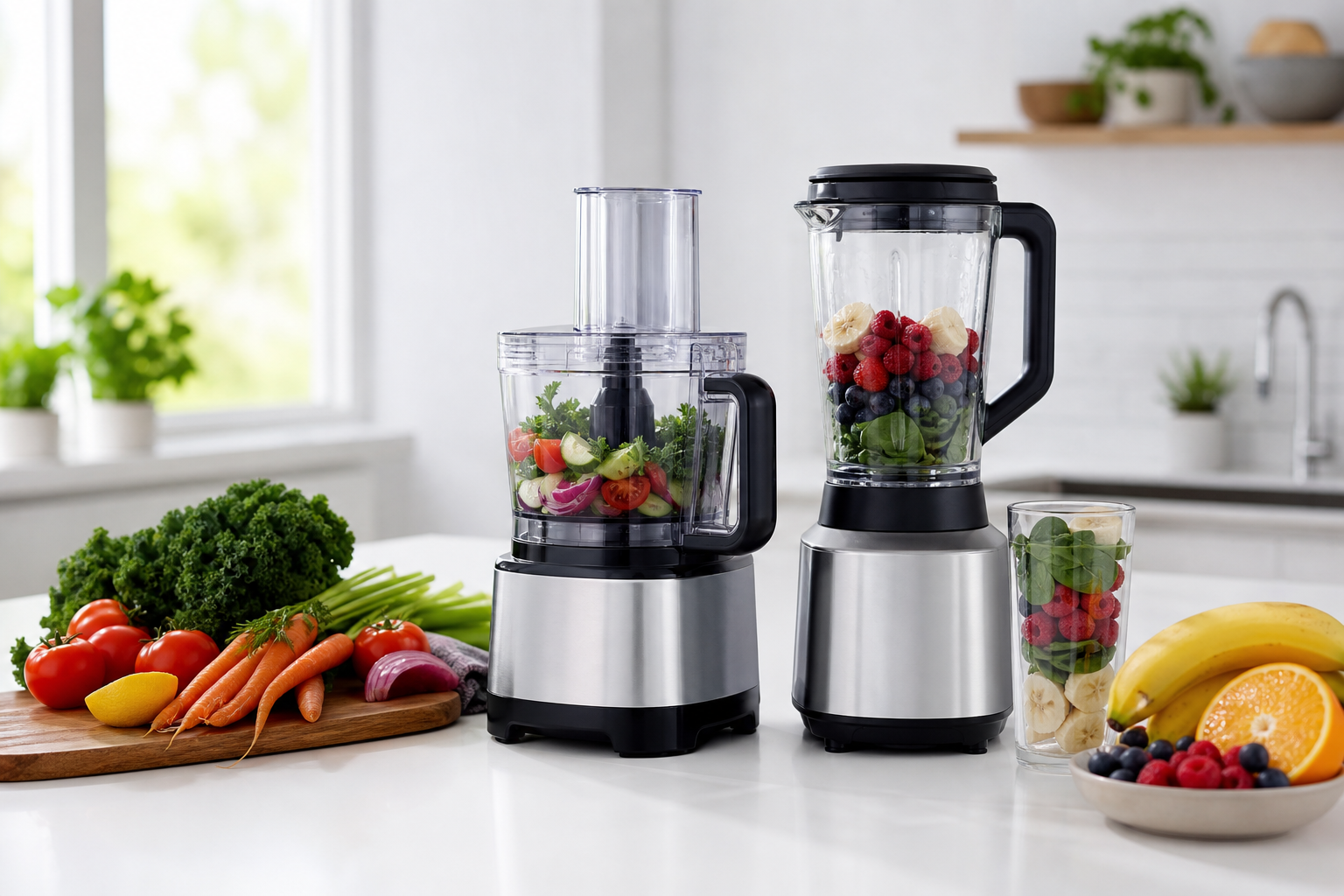
If you are comparing a food processor vs blender, the honest answer is that neither one replaces the other perfectly. A food processor is built for prep work: chopping, slicing, shredding, mixing, and handling thicker ingredients. A blender is built for liquids and smooth textures: smoothies, soups, sauces, shakes, and purees.
The better choice depends on what you make most often. If your kitchen routine is mostly smoothies, protein shakes, soups, and frozen fruit, start with a blender. If you spend more time chopping vegetables, making dips, shredding cheese, preparing dough, or batch-prepping ingredients, a food processor will probably feel more useful.
Disclosure: This article may contain affiliate links. If you buy through them, Healthy Kitchen Reviews may earn a commission at no extra cost to you.
Quick Verdict
Choose a blender if you want smooth drinks, creamy soups, sauces, frozen drinks, or anything that needs a pourable texture. Choose a food processor if you want faster chopping, shredding, slicing, kneading, or thicker mixtures like hummus, pesto, salsa, and pie dough.
If you cook often and have the budget and space, owning both is the most practical answer. They solve different kitchen problems, and trying to force one machine to do the other’s job usually creates frustration.
Food Processor vs Blender Comparison Table
| Feature | Food Processor | Blender |
|---|---|---|
| Best for | Chopping, slicing, shredding, dough, thick dips | Smoothies, soups, purees, sauces, frozen drinks |
| Texture result | Chunky, chopped, grated, mixed, or coarse | Smooth, drinkable, creamy, or pourable |
| Works best with | Dry, solid, or thick ingredients | Liquid-heavy recipes |
| Vegetable prep | Excellent | Limited unless making puree or soup |
| Smoothies | Poor fit | Excellent |
| Dough and pastry | Useful for many home cooks | Not recommended |
| Cleanup | More parts to wash | Usually simpler, depending on jar design |
| Countertop footprint | Often wider | Often taller |
What a Food Processor Does Best
A food processor is the better machine when you want to reduce manual prep. The wide bowl and sharp blade are designed to move solid ingredients around without needing much liquid. That makes it useful for chopping onions, shredding carrots, slicing potatoes, grating cheese, making breadcrumbs, chopping nuts, and mixing thicker foods.
It also handles recipes where texture matters. Salsa, coleslaw, pesto, hummus, nut-based mixtures, pastry dough, and veggie prep are all stronger food processor jobs. You can pulse ingredients instead of liquefying them, which gives you more control over whether the final result is coarse, chunky, or finely chopped.
Best Uses for a Food Processor
- Chopping vegetables quickly
- Shredding cheese or cabbage
- Slicing potatoes, cucumbers, or carrots with the right disc
- Making hummus, pesto, salsa, or thick dips
- Preparing pie crust, biscuit dough, or some bread doughs
- Making breadcrumbs or chopping nuts
- Batch-prepping ingredients for the week
What a Blender Does Best
A blender is the better choice when the goal is smoothness. The narrow jar, fast blades, and liquid-friendly shape are made to pull ingredients into a vortex and break them down into a uniform texture. That is why blenders dominate smoothies, shakes, pureed soups, sauces, frozen drinks, and creamy dressings.
Most blenders need enough liquid to move ingredients properly. Without liquid, ingredients can stick above the blades or blend unevenly. That is not a defect; it is just how the tool is designed. For wet recipes, a good blender is faster, cleaner, and more satisfying than trying to make a food processor act like a smoothie machine.
Best Uses for a Blender
- Smoothies and protein shakes
- Frozen fruit drinks
- Creamy soups and purees
- Salad dressings and pourable sauces
- Nut milks and blended beverages
- Crushing ice, depending on the blender model
- Making very smooth textures that a food processor may leave grainy
Which One Is Better for Healthy Cooking?
Both can support healthier cooking, but in different ways. A food processor makes it easier to prep vegetables, homemade dips, shredded salads, and batch-cooking ingredients. That can help if your biggest barrier is time-consuming prep.
A blender makes it easier to drink smoothies, make vegetable soups, blend sauces, and use whole ingredients in quick recipes. That can help if your biggest barrier is getting enough fruits, vegetables, or protein into a simple routine.
The healthier choice is the one you will actually use. If a blender helps you make a protein smoothie instead of skipping breakfast, it is useful. If a food processor helps you prep vegetables instead of ordering takeout, it is useful. The appliance itself is less important than the habit it supports.
Food Processor vs Blender for Common Kitchen Tasks
Smoothies
A blender wins clearly. A food processor can break down fruit, but it usually will not create the same smooth, drinkable texture. For frozen fruit, protein powder, greens, and milk or water, use a blender.
Chopping Vegetables
A food processor wins. It can chop, pulse, slice, or shred depending on the blade and disc setup. A blender tends to pull vegetables toward the blades unevenly and can turn them watery if liquid is added.
Soups
A blender is better for smooth soups. A food processor can help with chopping soup ingredients before cooking, but once you want a creamy puree, the blender is usually the right tool.
Hummus, Pesto, and Dips
A food processor usually wins for thicker dips. It handles dense mixtures with less liquid and gives you more control over texture. A powerful blender can make very smooth hummus, but it may need more liquid and more scraping.
Dough
A food processor wins for many simple dough and pastry tasks. A blender is not built for kneading or cutting butter into flour. If dough is part of your routine, a food processor is the safer choice.
Nut Butters
This depends on the machine. Some high-powered blenders can make nut butter, but a sturdy food processor is often easier for thick mixtures because the bowl shape gives you better access for scraping and pulsing.
Which One Should You Buy First?
Buy a blender first if your priority is drinks, smoothies, soups, sauces, or easy liquid recipes. It is the more obvious starter appliance for people who want quick breakfast or post-workout routines.
Buy a food processor first if your priority is cooking from scratch, chopping vegetables, preparing ingredients, making dips, shredding, slicing, or saving time on prep work. It is the better starter appliance for people who already cook meals and want less knife work.
If you already own a decent blender and still avoid cooking because prep feels annoying, a food processor may be the missing piece. If you already own a food processor and still buy smoothies or bottled sauces, a blender may add more value.
Cleanup and Storage Differences
Blenders are often easier to rinse quickly, especially if the jar design is simple. Many people clean a blender by blending warm water with a little dish soap, then rinsing. That does not replace proper cleaning every time, but it does make daily use feel easier.
Food processors usually have more pieces: bowl, lid, pusher, blade, and sometimes slicing or shredding discs. That makes cleanup more involved. The trade-off is that the food processor can save a lot of chopping time before cleanup even starts.
Storage also matters. Food processors are usually wider and can feel bulky in cabinets. Blenders are often taller and may not fit under low cabinets. Before buying either one, measure the place where it will live. An appliance that is annoying to store becomes an appliance you avoid using.
Who Should Choose a Food Processor?
- You cook at home often and want faster prep.
- You chop, slice, or shred vegetables regularly.
- You make hummus, pesto, salsa, nut mixtures, or thick dips.
- You want help with dough or pastry tasks.
- You prefer batch cooking or meal prep.
- You are comfortable washing a few extra parts if it saves knife work.
Who Should Choose a Blender?
- You make smoothies, shakes, or frozen drinks.
- You want creamy soups, sauces, and purees.
- You prefer quick, liquid-based recipes.
- You want simpler cleanup for daily use.
- You care more about smooth texture than chopped texture.
- You do not need slicing, shredding, or dough support.
When It Makes Sense to Own Both
Owning both makes sense if you cook often and use your kitchen for more than one kind of task. A blender handles your smoothie, soup, and sauce work. A food processor handles your chopping, shredding, slicing, dough, and thick dip work. Together, they cover a much wider range than either appliance alone.
The main reasons not to own both are budget, counter space, and storage. If space is tight, buy the one that solves your most frequent problem first. You can always add the other later when the need becomes obvious.
Frequently Asked Questions
Can I use a blender instead of a food processor?
Sometimes, but only for certain recipes. A blender can handle smooth sauces, purees, and some dips, especially when enough liquid is added. It is not a good replacement for slicing, shredding, chopping dry ingredients, or making dough.
Can I use a food processor instead of a blender?
Sometimes, but it will not perform as well for drinks and smooth textures. A food processor can make chunky sauces and thick dips, but it usually cannot match a blender for smoothies, creamy soups, or fine purees.
Which is better for baby food?
A blender is usually better if you want very smooth purees. A food processor can work for thicker or slightly textured foods, but the blender is the stronger tool for silky consistency.
Which is better for salsa?
A food processor is usually better for salsa because you can pulse ingredients and keep some texture. A blender can make salsa too, but it is easier to over-blend and end up with a thinner texture.
Which is better for smoothies?
A blender is the right choice for smoothies. It is designed to handle liquid, frozen fruit, ice, protein powder, and leafy greens in a way that produces a drinkable texture.
Is a mini food processor enough?
A mini food processor can be enough for small kitchens, dips, herbs, onions, garlic, and quick prep. It is not ideal for large batches, slicing discs, shredding, or dough. If you cook for a family or meal prep often, a full-size food processor is more practical.
Conclusion
In the food processor vs blender debate, the right answer is based on your routine. For smoothies, soups, shakes, and smooth sauces, buy a blender. For chopping, slicing, shredding, dough, and thick dips, buy a food processor. If you cook often and have the space, both are useful because they solve different problems.
If you are buying only one today, choose the appliance that removes the biggest friction from your kitchen. That is the one you will use most, and that is the one most likely to support better home-cooking habits.