Best Mini Food Processors for Small Kitchens
Best Mini Food Processors for Small Kitchens
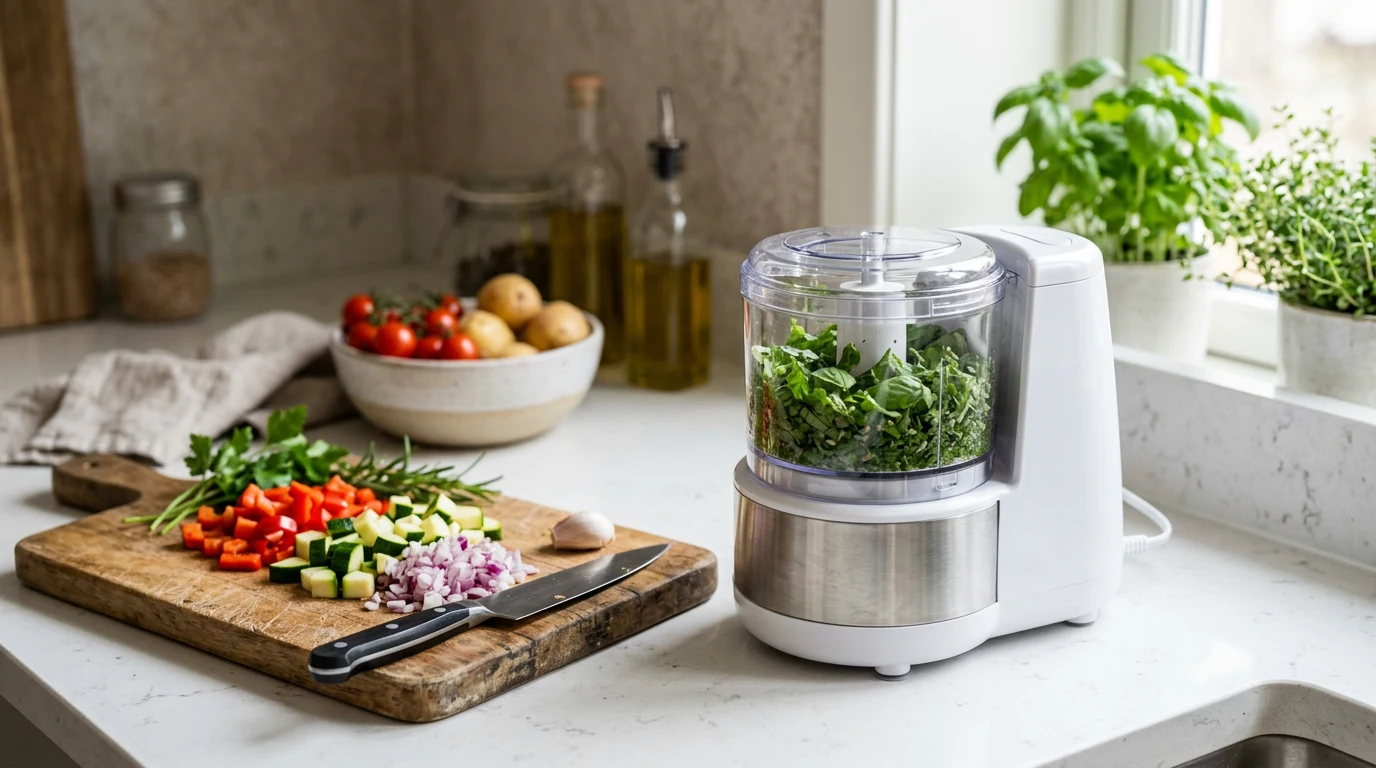
Choosing the best mini food processor is harder than it should be because most compact choppers look useful until you imagine them in your own kitchen. A bowl can be too small for salsa, too large for one onion, too fussy to clean, or too weak for anything beyond soft herbs. In a small kitchen, those trade-offs show up quickly.
This guide focuses on mini food processors and compact food choppers that make sense for apartments, small counters, and quick daily prep. I looked for realistic strengths: sensible capacity, easy controls, cleanup that does not feel punishing, and enough versatility to earn the space they take up. I also kept the claims conservative. If a specification or product detail is not clearly stated, I do not treat it as fact.
Disclosure: This article may contain affiliate links. If you buy through them, Healthy Kitchen Reviews may earn a commission at no extra cost to you.
Quick Comparison Table
| Rank | Product | Best For | Capacity | Key Feature | CTA |
|---|---|---|---|---|---|
| 1 | Cuisinart Mini-Prep Plus 3-Cup Food Processor | Best Overall | 3 cups | Chop and grind functions with a reversible blade | View on Amazon |
| 2 | KitchenAid 3.5 Cup Food Chopper | Best for Sauces and Dressings | 3.5 cups | Drizzle basin and pour spout | View on Amazon |
| 3 | Hamilton Beach 4-Cup Mini Food Processor & Vegetable Chopper | Best Budget with Slicing | 4 cups | Slicing and shredding disk on selected 4-cup models | View on Amazon |
| 4 | Ninja Express Chop Professional | Best Compact Power Pick | 2 cups | Stacked blade design for more even chopping | View on Amazon |
| 5 | BLACK+DECKER One-Touch 1.5-Cup Electric Food Chopper | Best Cheap Mini Chopper | 1.5 cups | One-touch lid operation | View on Amazon |
| 6 | KitchenAid Cordless 5 Cup Food Chopper | Best Cordless Option | 5 cups | Rechargeable cordless design with whisk attachment | View on Amazon |
| 7 | Zyliss Easy Pull Food Chopper | Best Manual Mini Processor | 3.125 cups | Pull-cord manual chopping | View on Amazon |
Top Picks Summary
- Best Overall: Cuisinart Mini-Prep Plus 3-Cup Food Processor – Chop and grind functions with a reversible blade.
- Best for Sauces and Dressings: KitchenAid 3.5 Cup Food Chopper – Drizzle basin and pour spout.
- Best Budget with Slicing: Hamilton Beach 4-Cup Mini Food Processor & Vegetable Chopper – Slicing and shredding disk on selected 4-cup models.
- Best Compact Power Pick: Ninja Express Chop Professional – Stacked blade design for more even chopping.
- Best Cheap Mini Chopper: BLACK+DECKER One-Touch 1.5-Cup Electric Food Chopper – One-touch lid operation.
Detailed Reviews of the Best Mini Food Processors
1. Cuisinart Mini-Prep Plus 3-Cup Food Processor
Cuisinart Mini-Prep Plus 3-Cup Food Processor is the pick I would start with for most small-kitchen prep. It earns its spot because its strengths make sense in a real small kitchen, where storage, cleanup, and quick setup matter as much as chopping power.
Key Features
- 3-cup work bowl
- 250-watt motor
- Chop and grind buttons
- Dishwasher-safe bowl according to available product information
What Makes It Stand Out
The Cuisinart Mini-Prep Plus is the most balanced pick here because 3 cups is small enough for apartments but roomy enough for pesto, onions, herbs, dressings, and a quick sauce. The reversible blade gives it a little more range than the simplest one-button choppers.
How It Helps Your Kitchen Routine
It fits the kind of cooking where you want to avoid pulling out a full-size processor for half an onion or a handful of herbs. If you cook in small batches, that convenience matters more than raw capacity.
How to Use It
Use short pulses for herbs, onions, garlic, nuts, and small sauce bases. For dressings or mayonnaise-style emulsions, the lid design can help with slowly adding liquid, but keep batches modest so the texture stays controlled.
Pros and Cons
Pros:
- Useful 3-cup size for small kitchens
- Chop and grind controls add flexibility
- Works well for sauces, herbs, nuts, and small prep tasks
Cons:
- Some users report that it can be loud
- You need to hold a button for continuous running
Customer Feedback Snapshot
Common buyer feedback centers on its everyday usefulness and compact footprint. The main complaints tend to be noise and the press-and-hold control style, so it is better for quick prep than long processing sessions.
Best For
Choose this if you want one dependable mini food processor that can handle most small prep tasks without taking over the counter. Skip it if you regularly prep large family-size batches.
2. KitchenAid 3.5 Cup Food Chopper
KitchenAid 3.5 Cup Food Chopper is the pick I would start with for sauces, dressings, and everyday chopping. It earns its spot because its strengths make sense in a real small kitchen, where storage, cleanup, and quick setup matter as much as chopping power.
Key Features
- 3.5-cup bowl on common current models
- Two speeds plus pulse on common current models
- Drizzle basin for adding liquids
- Pour spout for transferring sauces
What Makes It Stand Out
KitchenAid makes sense for cooks who use a mini chopper for vinaigrettes, dips, salsa, and small sauce batches as much as dry chopping. The bowl handle, drizzle basin, and pour spout make it feel more like a small kitchen helper than a bare-bones gadget.
How It Helps Your Kitchen Routine
It is especially useful when you prep a sauce while dinner is already moving. You can chop aromatics, pulse herbs, or blend a quick dressing without setting up a larger machine.
How to Use It
Pulse for chopped vegetables and herbs, then use the puree setting for smoother dips and dressings. Keep an eye on liquid level, because small bowls can overflow if you treat them like full-size processors.
Pros and Cons
Pros:
- Very practical for sauces and dressings
- Controls are straightforward
- The handled bowl is easier to pour from than many tiny cups
Cons:
- The lid can feel less effortless for some users
- Not meant for large meal-prep batches
Customer Feedback Snapshot
Review patterns often praise the intuitive design and sauce-friendly features. The most common hesitation is that the lid and locking feel can take a little getting used to.
Best For
This is a strong pick if you want your mini processor to live near salad dressings, sauces, dips, and weeknight prep. It is less ideal if you mainly need slicing or shredding.
3. Hamilton Beach 4-Cup Mini Food Processor & Vegetable Chopper
Hamilton Beach 4-Cup Mini Food Processor & Vegetable Chopper is the pick I would start with for buyers who want more function for the money. It earns its spot because its strengths make sense in a real small kitchen, where storage, cleanup, and quick setup matter as much as chopping power.
Key Features
- 4-cup capacity
- 250-watt motor on commonly listed model
- Slicing and shredding disk on selected versions
- Food chute for narrow ingredients
What Makes It Stand Out
Most mini processors are really choppers. This Hamilton Beach model is more interesting because it can also slice and shred narrow foods, which makes it more useful for carrots, cucumbers, cheese, and small prep jobs.
How It Helps Your Kitchen Routine
For a small kitchen, the appeal is simple: one compact appliance can cover more than one job. That can reduce drawer clutter if you otherwise rely on several manual tools.
How to Use It
Use the chopping blade for onions, herbs, dips, and breadcrumbs. Use the disk only for foods that fit the chute comfortably, and avoid forcing oversized pieces through a compact processor.
Pros and Cons
Pros:
- More versatile than a basic mini chopper
- 4-cup bowl gives extra room without feeling huge
- Good fit for shoppers who want slicing and shredding in a compact appliance
Cons:
- More parts means more cleaning and storage
- Some user reports mention lid-tab durability concerns
Customer Feedback Snapshot
The strongest positive theme is versatility for the price. The trade-off is that buyers should handle the lid and small parts carefully and expect more cleanup than with a one-button chopper.
Best For
Pick this if you want the most utility in a small footprint. Skip it if simplicity and minimal cleanup matter more than extra attachments.
4. Ninja Express Chop Professional
Ninja Express Chop Professional is the pick I would start with for quick chopping in tight spaces. It earns its spot because its strengths make sense in a real small kitchen, where storage, cleanup, and quick setup matter as much as chopping power.
Key Features
- 2-cup bowl
- 200-watt motor on commonly listed model
- Top-mounted power pod
- Measurement markings on the bowl on available versions
What Makes It Stand Out
The Ninja Express Chop is built for people who want a small, fast chopper that does not feel fragile. The stacked blade design helps it catch ingredients at more than one level, which is useful in a short bowl.
How It Helps Your Kitchen Routine
It is good for the tiny tasks that make weeknight cooking annoying: garlic, herbs, onion, nuts, and a small batch of salsa. The small bowl also means cleanup feels quick.
How to Use It
Pulse instead of holding the motor down for too long. Scrape the bowl if needed, especially with herbs or sticky mixtures, and hold the top steady while processing.
Pros and Cons
Pros:
- Compact and easy to store
- Useful for fast, small chopping jobs
- Stacked blade design can help with more even contact
Cons:
- The top motor pod needs to be held securely
- Two cups may be too small for batch prep
Customer Feedback Snapshot
People tend to like this style for speed and simplicity. The common caution is that the top-mounted motor design asks for a steadier hand than a fixed-base food processor.
Best For
Choose it if your priority is fast chopping in a very small kitchen. Skip it if you want a bowl large enough for full meal-prep sessions.
5. BLACK+DECKER One-Touch 1.5-Cup Electric Food Chopper
BLACK+DECKER One-Touch 1.5-Cup Electric Food Chopper is the pick I would start with for tiny kitchens and very small batches. It earns its spot because its strengths make sense in a real small kitchen, where storage, cleanup, and quick setup matter as much as chopping power.
Key Features
- 1.5-cup bowl
- 70-watt motor
- One-touch pulse operation
- Dishwasher-safe removable parts according to available product information
What Makes It Stand Out
This is the practical low-cost choice for someone who only needs help with garlic, herbs, baby-food-style small portions, or a few spoonfuls of sauce. It is not trying to replace a real food processor.
How It Helps Your Kitchen Routine
In a tiny apartment or dorm-style kitchen, a 1.5-cup chopper can be easier to justify than a bigger appliance. It gives you quick prep help without demanding much storage space.
How to Use It
Use it for soft or moderate ingredients in small amounts. Avoid asking too much from the motor with dense mixtures, hard nuts, or large chunks.
Pros and Cons
Pros:
- Very compact and lightweight
- Affordable compared with larger mini processors
- Simple one-touch operation
Cons:
- Low wattage limits tougher tasks
- Tiny capacity can require multiple batches
Customer Feedback Snapshot
The strongest feedback theme is convenience for small jobs. The limitation is equally clear: this is a small chopper, not a heavy-duty processor.
Best For
Buy this if price, storage, and simplicity are your main concerns. Choose a stronger model if you prep thick dips, nuts, or larger batches often.
6. KitchenAid Cordless 5 Cup Food Chopper
KitchenAid Cordless 5 Cup Food Chopper is the pick I would start with for flexible prep away from an outlet. It earns its spot because its strengths make sense in a real small kitchen, where storage, cleanup, and quick setup matter as much as chopping power.
Key Features
- 5-cup bowl
- Cordless rechargeable operation
- Whisk accessory on available versions
- Designed for chopping and pureeing
What Makes It Stand Out
The cordless KitchenAid is for kitchens where outlet placement is awkward or counter space moves around. Five cups is large for a mini processor, but it is still easier to store than many full-size machines.
How It Helps Your Kitchen Routine
It can be useful if you prep near a kitchen island, dining table, or cramped counter where a cord would be annoying. The whisk accessory also gives it a little more meal-prep range.
How to Use It
Charge it before you need it, then use it for chopped vegetables, dips, sauces, and small mixing tasks. Treat the battery as part of the routine, the same way you would with a cordless hand blender.
Pros and Cons
Pros:
- No outlet required during use
- Larger capacity than most mini choppers
- Whisk attachment adds versatility
Cons:
- Needs charging before use
- Bigger than the smallest mini processors
Customer Feedback Snapshot
The positive theme is freedom from outlet placement. The obvious drawback is that a dead battery can interrupt cooking if you forget to charge it.
Best For
Choose this if cordless convenience matters and you still want a compact appliance. Skip it if you prefer plug-in reliability and the smallest possible footprint.
7. Zyliss Easy Pull Food Chopper
Zyliss Easy Pull Food Chopper is the pick I would start with for no-plug chopping and camping-style kitchens. It earns its spot because its strengths make sense in a real small kitchen, where storage, cleanup, and quick setup matter as much as chopping power.
Key Features
- Manual pull-cord operation
- About 3.125-cup capacity
- No motor or charging required
- Top-rack dishwasher-safe bowl according to available product information; lid care varies
What Makes It Stand Out
The Zyliss Easy Pull is different because it skips the motor entirely. That makes it useful for quiet prep, small kitchens without convenient outlets, RVs, camping setups, or anyone who wants fewer electric gadgets.
How It Helps Your Kitchen Routine
It is best for quick chopping where you want control over texture. A few pulls can leave ingredients coarse, while more pulls can create a finer chop.
How to Use It
Cut ingredients into smaller pieces first, then pull steadily until you reach the texture you want. Do not overload it, and keep the lid mechanism away from soaking unless the care instructions say otherwise.
Pros and Cons
Pros:
- No outlet, battery, or cord required
- Quiet compared with electric choppers
- Good texture control for herbs, onions, and small prep
Cons:
- Requires hand effort and dexterity
- Not as effortless as an electric processor for repeated batches
Customer Feedback Snapshot
People who like this style usually appreciate its simplicity and portability. The trade-off is manual effort, which may not suit everyone.
Best For
Pick this if you want a compact, non-electric chopper for occasional use. Skip it if you need powered help because of hand fatigue or frequent batch prep.
How These Mini Food Processors Compare
The Cuisinart Mini-Prep Plus is the safest overall choice because it balances capacity, power, and simplicity. The KitchenAid 3.5 Cup Food Chopper feels more sauce-friendly, especially if you make dressings or dips often. Hamilton Beach is the most versatile budget-minded option because selected 4-cup models add slicing and shredding.
The Ninja Express Chop and BLACK+DECKER One-Touch are better for very small kitchens where storage is the main concern. Ninja gives you more chopping confidence in a 2-cup format, while BLACK+DECKER keeps cost and size low. The cordless KitchenAid is the flexible pick if outlet placement is annoying, and the Zyliss is the manual option for people who want no cord, no battery, and quiet prep.
How to Choose the Best Mini Food Processor
Capacity and Batch Size
For most small kitchens, 2 to 4 cups is the useful range. A 1.5-cup chopper is great for garlic, herbs, and tiny sauce portions, but it can feel cramped for salsa or chopped vegetables. A 5-cup model gives more breathing room, but it starts moving closer to full-size appliance territory.
Motor Power and Realistic Tasks
Wattage is not everything, but it gives you a clue. Lower-power choppers are fine for soft ingredients and quick pulses. Stronger compact processors are better for nuts, firmer vegetables, thicker dips, and repeated prep. Even then, a mini food processor is not the right tool for heavy dough or large-volume processing.
Controls and Texture Control
Simple controls are a strength in this category. Pulse control matters because small bowls can overprocess food quickly. For herbs, onions, and salsa, a few short pulses usually work better than holding the motor down and hoping for an even chop.
Cleaning and Storage
A mini processor should make cooking easier, not add a new cleanup problem. Look for removable bowls, smooth shapes, and parts that are easy to rinse right away. Attachments can be helpful, but they only add value if you will actually store and clean them.
Electric, Cordless, or Manual
Electric models are easiest for repeated use. Cordless models are convenient when outlets are awkward, but charging becomes part of the routine. Manual pull choppers are quiet and portable, though they require hand effort and are not ideal for every user.
Are Mini Food Processors Worth It for Small Kitchens?
A mini food processor is worth it if it removes friction from healthy home cooking. Chopping onions, herbs, nuts, garlic, and small sauce bases by hand is not difficult, but it can be just annoying enough to make cooking feel slower. A good compact chopper helps with the small prep steps that often decide whether dinner gets made or skipped.
The key is buying for your real routine. If you prep large batches every weekend, a mini model may frustrate you. If you mostly cook for one or two people, make quick dressings, chop aromatics, or prep small vegetable portions, the right compact model can be one of the most useful appliances in the kitchen.
Frequently Asked Questions
What size mini food processor is best for a small kitchen?
For most small kitchens, a 3-cup or 3.5-cup mini food processor is the best balance. It is compact enough to store easily but large enough for common prep jobs like chopped onions, pesto, salsa, breadcrumbs, and salad dressing. A 1.5-cup chopper is better for tiny tasks, while a 5-cup model makes sense if you want more batch flexibility.
Can a mini food processor replace a full-size food processor?
Usually, no. A mini food processor can replace a full-size model for small chopping, herbs, sauces, dips, and quick prep. It is not ideal for large batches, heavy dough, big slicing jobs, or repeated family-size cooking. Think of it as a convenience tool for daily prep, not a full-size appliance replacement.
What can you make in a mini food processor?
You can use a mini food processor for chopped onions, garlic, herbs, nuts, breadcrumbs, pesto, salsa, hummus-style dips, vinaigrettes, and small sauce bases. The exact results depend on the model, blade design, and bowl size. For best texture, pulse in short bursts and scrape the bowl when needed.
Is a mini food processor good for meal prep?
It can be useful for meal prep if your batches are modest. A mini model is great for aromatics, sauces, toppings, chopped nuts, and small vegetable prep. If you prep several meals at once or cook for a larger household, a larger food processor will usually be more efficient.
Are manual mini food processors worth buying?
Manual mini food processors are worth considering if you want quiet operation, portability, and no reliance on outlets or batteries. They are especially practical for occasional chopping. The downside is physical effort, so they may not be the best choice for people with hand fatigue or anyone doing repeated prep.
What is the easiest mini food processor to clean?
The easiest models to clean are usually the simplest ones: a removable bowl, removable blade, smooth lid, and few extra attachments. Slicing disks, feed chutes, and extra accessories add versatility, but they also create more parts to wash and store.
Conclusion
The best mini food processor for your kitchen depends on how you actually cook. The Cuisinart Mini-Prep Plus is the best overall starting point, KitchenAid is excellent for sauces and dressings, Hamilton Beach adds useful slicing and shredding, and Ninja is strong for fast compact chopping. If budget, cordless freedom, or manual simplicity matters more, BLACK+DECKER, KitchenAid Cordless, and Zyliss all have a clear place.
For a small kitchen, the smartest choice is not always the biggest or most powerful model. It is the one you will keep within reach, clean without resentment, and use often enough to make healthy home cooking easier.