Glass vs Plastic Blender Jars: Which Is Better for Healthy Kitchens?
Glass vs Plastic Blender Jars: Which Is Better for Healthy Kitchens?
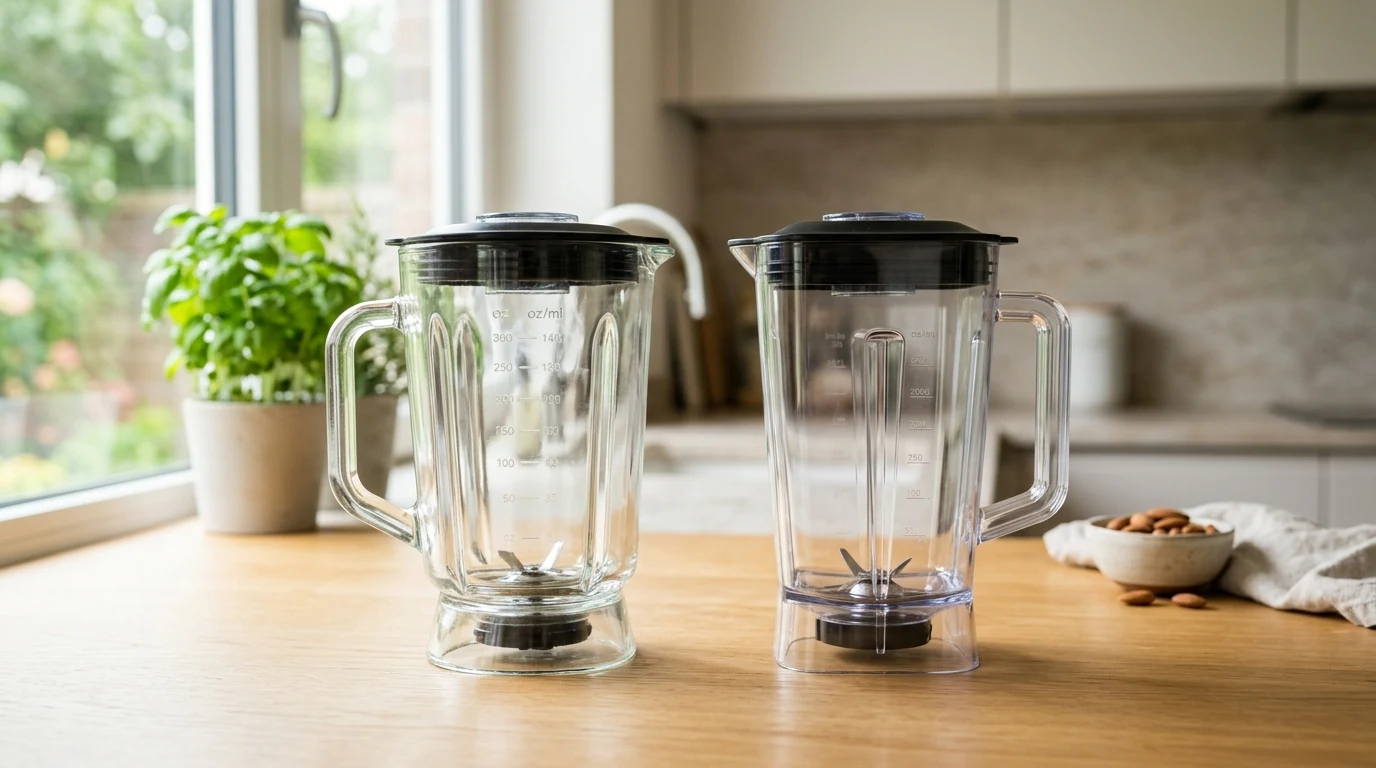
If you are comparing glass vs plastic blender jars, the choice usually comes down to confidence versus convenience. Glass feels reassuring because it is rigid, clear, and less likely to hold odors. Plastic feels practical because it is lighter, harder to shatter, and common on high-performance blenders designed for frozen fruit, thick smoothies, and daily use.
The tricky part is that neither jar material is automatically best for every kitchen. A glass jar can feel cleaner and more premium, but it is heavier and can break. A plastic jar can be easier to handle and better suited to powerful blender designs, but it can scratch, cloud, and raise more questions for buyers who are sensitive to plastic food-contact materials.
This guide keeps the comparison practical: safety, durability, weight, odor, heat, cleaning, and buyer fit. If you are still choosing the blender itself, compare this with our guides to the best blenders for smoothies and the best personal blenders.
Disclosure: This article may contain affiliate links. If you buy through them, Healthy Kitchen Reviews may earn a commission at no extra cost to you.
Glass vs Plastic Blender Jars: Quick Verdict
Choose a glass blender jar if your top priorities are odor resistance, long-term clarity, stain resistance, and avoiding plastic contact where possible. Glass is especially appealing for lighter blending routines, sauces, dressings, simple smoothies, and kitchens where the jar will be handled carefully.
Choose a plastic blender jar if you want lighter handling, less breakage risk, and better compatibility with many modern high-powered blender designs. Plastic jars are common on premium and performance-focused blenders because they can be shaped for blending flow while keeping the overall jar weight manageable.
For most busy healthy kitchens, a high-quality plastic jar is the more practical everyday choice if you make frozen smoothies, smoothie bowls, nut milk, or thick blends often. Glass is the more reassuring choice if you blend lighter recipes, dislike plastic, and value clarity and odor resistance more than low weight.
Side-by-Side Comparison Table
| Feature | Glass Blender Jar | Plastic Blender Jar |
|---|---|---|
| Best for | Odor resistance, clarity, simple blending, plastic-averse buyers | Daily use, frozen smoothies, lighter handling, high-performance blenders |
| Weight | Heavier, especially when full | Lighter and easier to lift |
| Breakage risk | Can crack, chip, or shatter if dropped | Less likely to shatter, but can crack or wear over time |
| Scratches and clouding | More scratch-resistant in normal use | Can scratch, haze, or cloud with use and cleaning |
| Odors and stains | Usually resists odors and stains better | May hold odors or stains, especially after strongly colored or oily blends |
| Heat considerations | May tolerate warm ingredients depending on the manufacturer, but thermal shock and lid pressure still matter | Depends heavily on the plastic and manufacturer guidance; avoid unsupported hot-liquid use |
| Safety confidence | Appeals to buyers who prefer fewer plastic-contact surfaces | Look for clear food-contact and BPA-free information from the brand |
| Best buyer fit | Careful users, simple recipes, appearance-focused kitchens | Frequent smoothie makers, families, high-powered blender users |
Detailed Comparison by Features
Safety and Food-Contact Confidence
Glass has a simple advantage in buyer confidence: it is not plastic. For people trying to reduce plastic food contact, that alone can make the choice feel calmer. Glass also tends to be easier to inspect because it stays clear longer and does not develop the same surface haze that many plastic jars can pick up after repeated use.
Plastic is more complicated but not automatically unsafe. Food-contact plastics are regulated, and the FDA maintains guidance around food contact substances and BPA use in food-contact applications. The practical buyer move is to look for clear manufacturer language, such as BPA-free claims, jar material details, and hot-liquid limits, then follow the manual rather than assuming every plastic jar behaves the same.
I would not buy a blender jar based only on a vague marketplace listing. If a plastic jar matters to you, check the brand page or manual for material and care guidance. If that information is missing or unclear, treat it as a real buying drawback.
Weight, Handling, and Everyday Ergonomics
This is where plastic often wins decisively. A full glass blender jar can feel heavy, especially for older adults, people with wrist discomfort, or anyone pouring a large smoothie batch with one hand while holding a cup with the other. The heavier the jar, the more likely it is to stay in the cabinet instead of becoming part of your routine.
Plastic jars are easier to lift, rinse, empty, and store. That matters if you make smoothies every morning or regularly blend frozen fruit. A lighter jar also feels less stressful around kids, busy counters, and tight sinks. For many readers, this simple handling difference is more important than the material debate.
Durability, Cracking, and Drop Risk
Glass resists scratching well, but it is not forgiving when dropped. A chip near the rim, a crack around the base, or a hard fall onto tile can end the jar immediately. That breakage risk matters in small kitchens and shared households.
Plastic is more impact-resistant in normal handling, but it can still crack, warp, cloud, or wear. It is also more vulnerable to damage from abrasive pads, dishwasher heat if the manual warns against it, and repeated blending of gritty ingredients. So plastic is not carefree. It is simply more forgiving if you bump it or set it down quickly.
Scratches, Clouding, Odors, and Stains
Glass usually looks better for longer. If you blend tomato sauce, turmeric, berries, nut butter, or strongly scented ingredients, glass is less likely to hold stains and smells. It is also less likely to develop the cloudy surface that makes an older plastic jar look tired even when it still works.
Plastic jars need gentler care. Rinse soon after blending, avoid abrasive scrubbers, and do not let oily or strongly colored mixtures sit in the jar. If your current plastic jar smells like garlic, protein powder, or old smoothies, the issue may be cleaning timing rather than the blender itself.
Heat, Soups, and Warm Ingredients
Hot blending is one area where buyers should slow down. Some blenders are designed for hot soup-style blending, while others are not. Glass can handle heat in some kitchen contexts, but sudden temperature changes can stress glass, and steam pressure can be dangerous in any sealed blender jar.
Plastic jar rules vary by brand and model. Some high-performance blenders use plastic containers for warm blends, but that does not mean every plastic blender jar should be used with boiling liquids. Follow the manual, vent the lid as instructed, avoid overfilling, and never assume a jar is hot-liquid safe unless the manufacturer says so.
Blending Performance and Jar Shape
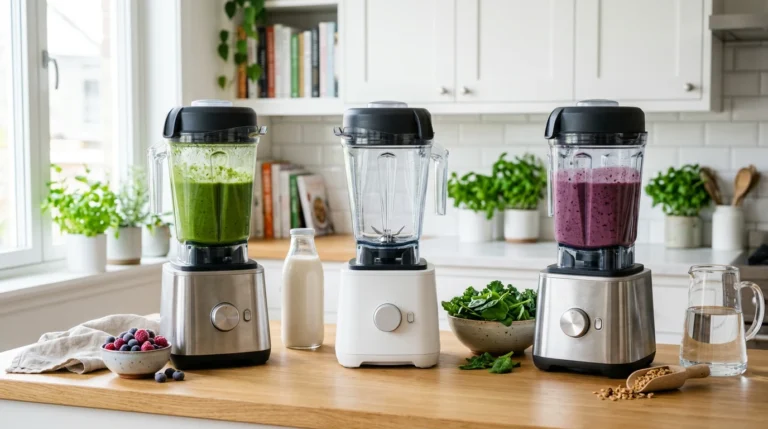
Jar material is only one part of blending performance. Blade design, motor strength, jar shape, lid design, and tamper support often matter more. This is one reason many high-performance blenders use plastic containers: plastic can be molded into shapes that support circulation while staying light enough for daily handling.
If you make thick smoothie bowls or frozen-fruit blends, jar design matters a lot. Our guide to the best blenders for thick smoothie bowls explains why dense blends need good circulation, enough liquid, and sometimes tamper support. A glass jar that looks premium can still perform poorly if the shape does not pull ingredients toward the blade.
Pros and Cons of Glass Blender Jars
Glass Blender Jar Pros
- Better resistance to lingering odors and stains.
- Usually stays clearer and more polished-looking over time.
- Appeals to buyers who prefer less plastic contact with food.
- Less likely to scratch from normal spooning, rinsing, and cleaning.
- Can feel more premium on the counter.
Glass Blender Jar Cons
- Heavier to lift, pour, wash, and store.
- Can chip, crack, or shatter if dropped.
- Less common on many modern high-performance blender models.
- May be awkward for large batches or users with hand-strength concerns.
- Still requires manufacturer guidance for hot liquids and cleaning.
Pros and Cons of Plastic Blender Jars
Plastic Blender Jar Pros
- Lighter and easier to handle every day.
- Less likely to shatter if dropped.
- Common on high-powered blenders built for smoothies, frozen fruit, and thick blends.
- Can be molded into shapes that help ingredient circulation.
- Often more practical for families and frequent smoothie routines.
Plastic Blender Jar Cons
- Can scratch, cloud, stain, or hold odors over time.
- Material details are not always clear on marketplace listings.
- May bother buyers who prefer to avoid plastic food-contact surfaces.
- Can be damaged by abrasive cleaning or unsupported dishwasher use.
- Hot-liquid safety depends heavily on the brand and model.
Who Should Choose Glass?
Choose glass if you mostly make lighter smoothies, dressings, sauces, batters, or simple drinks and you care strongly about odor resistance and long-term clarity. Glass also makes sense if you keep your blender on the counter and want the jar to look clean and transparent after years of use.
Glass is less ideal if the jar will be handled by children, used in a cramped sink, lifted frequently when full, or moved around a hard tile kitchen. It is also not my first choice for heavy frozen-fruit routines unless the specific blender is designed well for that job.
Who Should Choose Plastic?
Choose plastic if your blender is a daily appliance, especially for frozen smoothies, protein shakes, oat milk, nut milk, or thick blends. The lighter handling can make the whole routine easier, and that matters if you want healthy habits to stick.
Plastic is also the more common route if you are comparing performance blender brands. In our Vitamix vs Blendtec comparison, jar design and control style matter more than the simple glass-versus-plastic label. If you are choosing between more compact personal systems, see our Ninja vs NutriBullet guide too.
Buying Recommendation
My practical recommendation is this: buy glass for confidence and cleanliness, buy plastic for daily performance and convenience. If you blend once or twice a week and hate the idea of plastic, glass can be the happier choice. If you blend frozen fruit every morning, make thick smoothies, or need something easy to lift and rinse, a high-quality plastic jar is usually the better buy.
For plant-based milk routines, jar handling and cleanup matter a lot. See our guide to the best blenders for oat milk and nut milk if that is your main use case. For ice-heavy drinks or frozen fruit, compare the jar material question with our best blender for frozen fruit guide.
Care Tips for Either Jar Type
- Rinse immediately: Smoothie residue, protein powder, nut butter, and greens are easier to remove before they dry.
- Follow the manual: Dishwasher, hot-liquid, and blade-base instructions vary by model.
- Avoid abrasive pads: They can scratch plastic and damage markings or surfaces.
- Do not ignore cracks: Replace any jar with visible cracking, leaking, or chipped glass.
- Blend hot ingredients cautiously: Use only manufacturer-approved methods and leave room for steam expansion.
Frequently Asked Questions
Are glass blender jars safer than plastic blender jars?
Glass feels safer to many buyers because it avoids plastic food contact and resists odors and staining. Plastic jars can still be appropriate when they are made for food contact and used according to the manufacturer instructions. The safest answer depends on the specific jar, not only the material category.
Do plastic blender jars contain BPA?
Many modern blender brands describe their jars as BPA-free, but shoppers should verify the current product page or manual. Do not assume a marketplace listing is complete. If BPA-free status matters to you, buy from a brand or retailer that states it clearly.
Why do high-performance blenders often use plastic jars?
Plastic jars are lighter and can be shaped for blending flow while keeping the container manageable. That matters for powerful blenders used with frozen fruit, thick smoothies, nut butter, and larger batches.
Can glass blender jars handle hot soup?
Only if the manufacturer says the jar and blender are designed for that use. Glass can be vulnerable to thermal shock, and any sealed blender can build pressure from steam. Always follow the manual for hot ingredients.
Why does my plastic blender jar look cloudy?
Clouding can come from fine scratches, mineral deposits, dishwasher wear, abrasive cleaning, or repeated blending of gritty ingredients. Rinsing quickly and cleaning gently can slow it down, but some clouding is common with older plastic jars.
Which jar is better for smoothies?
For simple smoothies, either can work. For frequent frozen smoothies, thick blends, and larger batches, plastic is often more practical because it is lighter and common on performance-focused designs.
Sources and Safety Notes
- FDA food contact substances
- FDA BPA in food contact applications
- FDA food safety in your kitchen
- Vitamix containers overview
- Blendtec jars overview
Conclusion
The best answer to glass vs plastic blender jars is not one-size-fits-all. Glass is better for clarity, odor resistance, stain resistance, and plastic-averse buyers. Plastic is better for lighter handling, drop resistance, and the kind of high-performance blending many healthy kitchens actually do every day.
If you want the most practical daily blender, I would usually choose a well-made plastic jar from a transparent brand. If your recipes are lighter and your main concern is minimizing plastic contact, a glass jar can absolutely make sense. The right pick is the one you will use comfortably, clean promptly, and trust enough to keep in your routine.