Best Blenders for Baby Food: 5 Smart Picks for Homemade Purees
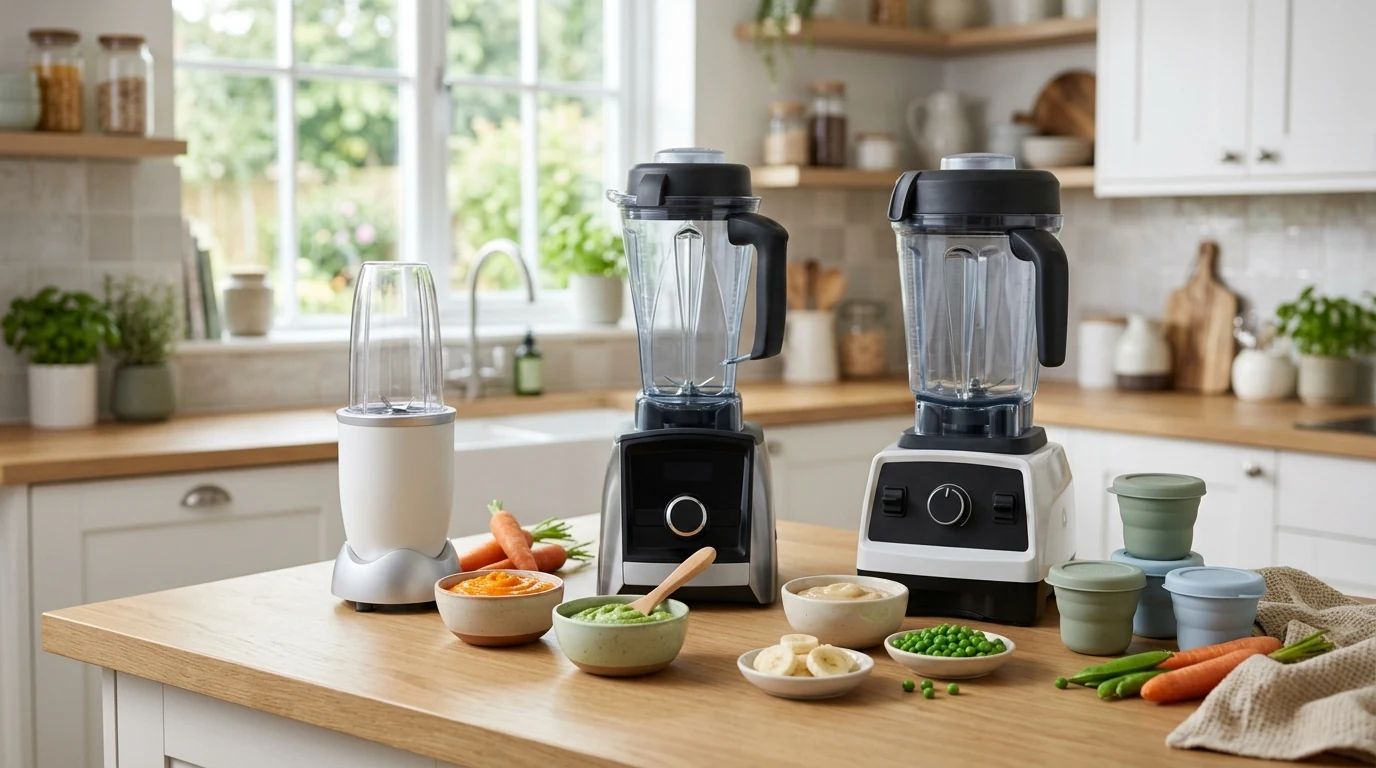
If you are shopping for the best blenders for baby food, the real question is not only which machine can blend. It is which one can make smooth, age-appropriate purees without creating a cleaning headache or tempting you to ignore basic food-safety steps. Homemade baby food sounds simple until you are dealing with tiny portions, soft cooked vegetables, steam, storage cups, and a hungry child on a schedule.
This guide focuses on practical buyer fit: smooth puree texture, batch size, steaming versus blending, cleanup, storage, and whether the appliance will still be useful after the first-puree stage. I included dedicated baby-food systems and general blenders because different households need different tools. A parent who wants one compact baby station is not shopping the same way as someone who wants a full-size blender for the whole family.
I am not claiming hands-on testing or medical feeding advice. Always follow your pediatrician’s guidance for introducing solids, allergens, and texture progression. Product details can change, so confirm the exact model, included accessories, and current manual before buying.
Disclosure: This article may contain affiliate links. If you buy through them, Healthy Kitchen Reviews may earn a commission at no extra cost to you.
Quick Comparison Table
| Rank | Product | Best For | Capacity | Key Feature | CTA |
|---|---|---|---|---|---|
| 1 | nutribullet Baby Steam + Blend | Best dedicated baby-food blender for steaming and pureeing in one vessel | Not clearly specified on the accessible category page | Manual steam and blend/pulse controls plus an automatic steam-and-blend cycle | View on Amazon |
| 2 | nutribullet Baby | Best complete baby-food making system for batch prep and storage | Not clearly specified on the accessible category page | Dedicated baby-food system with storage accessories for dated, pre-portioned servings | View on Amazon |
| 3 | Vitamix Explorian E310 | Best high-performance blender for very smooth purees | 48-ounce container | Ten variable speeds, pulse, 2 HP motor, and self-cleaning with warm water and dish soap | View on Amazon |
| 4 | Vitamix 5200 | Best full-size blender for larger family batches | 64-ounce classic container | Variable speed control, High switch, tamper, self-cleaning, and 64-ounce container | View on Amazon |
| 5 | magic bullet Full-Sized Blender | Best affordable full-size blender for simple soft-food purees | 48-ounce pitcher | 500-watt power base, 48-ounce pitcher, high/low/pulse controls, and vented pitcher lid | View on Amazon |
Our Top Picks
- Best Overall Baby-Food System: nutribullet Baby Steam + Blend, because it handles steaming and pureeing in one workflow.
- Best for Batch Prep: nutribullet Baby, because its storage-focused setup fits the way parents actually portion homemade food.
- Best Smooth Purees: Vitamix Explorian E310, because variable speed control gives you more texture control.
- Best for Family Batches: Vitamix 5200, because the 64-ounce container suits larger prep days.
- Best Budget Full-Size Pick: magic bullet Full-Sized Blender, because it gives soft-food puree capacity at a lower level than premium blenders.
Detailed Reviews of the Best Blenders for Baby Food
1. nutribullet Baby Steam + Blend
nutribullet Baby Steam + Blend is best for buyers who want best dedicated baby-food blender for steaming and pureeing in one vessel. It is the most purpose-built pick for parents who want fewer steps between cooked produce and puree. Instead of using a pot, steamer basket, blender jar, and separate storage setup every time, this type of machine is designed around early-feeding prep from the start.
Key Features
- Best for: Best dedicated baby-food blender for steaming and pureeing in one vessel
- Capacity: Not clearly specified on the accessible category page
- Main baby-food advantage: Manual steam and blend/pulse controls plus an automatic steam-and-blend cycle
- Verification note: nutribullet's Baby category page describes the Steam + Blend as a product that can steam and puree in one vessel, with manual steam and blend/pulse or an automatic steam + blend cycle, plus dishwasher-safe components.
What Makes It Stand Out
For baby food, the standout factor is texture control. A useful blender should handle soft cooked carrots, peas, pears, apples, sweet potato, squash, beans, and oatmeal-style blends without leaving stringy or gritty pieces that frustrate early feeding. It should also make it easy to adjust from very smooth purees toward thicker textures as your child grows.
How It Helps Your Kitchen Routine
The best fit depends on your rhythm. Some parents want a dedicated station that steams, blends, and stores small portions. Others want one stronger blender that can make baby food, adult smoothies, soups, sauces, and family meal prep. The right choice is the one that reduces friction on ordinary weekdays, because homemade baby food only works if the process feels repeatable.
How to Use It
Cook firm produce until tender, cool it enough to handle safely, and blend with breast milk, formula, water, or cooking liquid only when appropriate for your feeding plan. Start with short blending cycles, scrape down as needed, and add liquid gradually so you do not thin the puree too much. For hot ingredients, follow the manual exactly; steam pressure and sealed cups are not something to guess about.
Pros and Cons
Pros:
- Can help make homemade purees more consistent and convenient.
- Useful for controlling ingredients and avoiding unnecessary added salt or sugar.
- Fits different stages if you adjust texture carefully as feeding skills develop.
Cons:
- The accessible category page does not clearly state capacity, motor power, or detailed materials. Confirm the exact product page, included parts, and current manual before buying.
- Homemade baby food still requires careful cooking, cooling, storage, and reheating habits.
- No blender replaces pediatric feeding guidance or proper food-safety practices.
Customer Feedback Snapshot
The most useful buyer feedback to read is not generic praise. Look for comments about puree smoothness, cleaning after carrots or sweet potatoes, cup staining, lid security, whether storage accessories are actually convenient, and how the machine handles small batches. Reviews from parents making the same foods you plan to make are more useful than broad blender ratings.
Best For
Choose this model if your priority lines up with best dedicated baby-food blender for steaming and pureeing in one vessel. If your bigger need is smoothies, frozen fruit, or a blender for the whole household, compare the related blender guides before deciding.
2. nutribullet Baby
nutribullet Baby is best for buyers who want best complete baby-food making system for batch prep and storage. This is the cleaner fit if you want a baby-food system rather than a general blender. The storage-focused setup matters because homemade baby food is not only about blending. It is also about portioning, dating, refrigerating, freezing, and serving without turning the kitchen into a pile of tiny containers.
Key Features
- Best for: Best complete baby-food making system for batch prep and storage
- Capacity: Not clearly specified on the accessible category page
- Main baby-food advantage: Dedicated baby-food system with storage accessories for dated, pre-portioned servings
- Verification note: nutribullet's Baby category page describes nutribullet Baby as a complete baby food-making system for every stage of feeding, with storage accessories for batch prep and date-marked portions, plus dishwasher-safe parts and accessories.
What Makes It Stand Out
For baby food, the standout factor is texture control. A useful blender should handle soft cooked carrots, peas, pears, apples, sweet potato, squash, beans, and oatmeal-style blends without leaving stringy or gritty pieces that frustrate early feeding. It should also make it easy to adjust from very smooth purees toward thicker textures as your child grows.
How It Helps Your Kitchen Routine
The best fit depends on your rhythm. Some parents want a dedicated station that steams, blends, and stores small portions. Others want one stronger blender that can make baby food, adult smoothies, soups, sauces, and family meal prep. The right choice is the one that reduces friction on ordinary weekdays, because homemade baby food only works if the process feels repeatable.
How to Use It
Cook firm produce until tender, cool it enough to handle safely, and blend with breast milk, formula, water, or cooking liquid only when appropriate for your feeding plan. Start with short blending cycles, scrape down as needed, and add liquid gradually so you do not thin the puree too much. For hot ingredients, follow the manual exactly; steam pressure and sealed cups are not something to guess about.
Pros and Cons
Pros:
- Can help make homemade purees more consistent and convenient.
- Useful for controlling ingredients and avoiding unnecessary added salt or sugar.
- Fits different stages if you adjust texture carefully as feeding skills develop.
Cons:
- It is less versatile than a full-size blender for adult smoothies, soups, nut butters, or large family recipes. Verify current accessories and replacement cup availability before committing.
- Homemade baby food still requires careful cooking, cooling, storage, and reheating habits.
- No blender replaces pediatric feeding guidance or proper food-safety practices.
Customer Feedback Snapshot
The most useful buyer feedback to read is not generic praise. Look for comments about puree smoothness, cleaning after carrots or sweet potatoes, cup staining, lid security, whether storage accessories are actually convenient, and how the machine handles small batches. Reviews from parents making the same foods you plan to make are more useful than broad blender ratings.
Best For
Choose this model if your priority lines up with best complete baby-food making system for batch prep and storage. If your bigger need is smoothies, frozen fruit, or a blender for the whole household, compare the related blender guides before deciding.
3. Vitamix Explorian E310
Vitamix Explorian E310 is best for buyers who want best high-performance blender for very smooth purees. The E310 makes sense for families who want baby-food purees now and a serious everyday blender later. Its variable speed control is helpful when you need a smooth first puree one month and a thicker texture as feeding progresses.
Key Features
- Best for: Best high-performance blender for very smooth purees
- Capacity: 48-ounce container
- Main baby-food advantage: Ten variable speeds, pulse, 2 HP motor, and self-cleaning with warm water and dish soap
- Verification note: Vitamix lists a 48-ounce container, ten variable speeds, pulse, a 2 HP motor, self-cleaning in 30 to 60 seconds, a mini-tamper, and a 5-year full warranty for the E310.
What Makes It Stand Out
For baby food, the standout factor is texture control. A useful blender should handle soft cooked carrots, peas, pears, apples, sweet potato, squash, beans, and oatmeal-style blends without leaving stringy or gritty pieces that frustrate early feeding. It should also make it easy to adjust from very smooth purees toward thicker textures as your child grows.
How It Helps Your Kitchen Routine
The best fit depends on your rhythm. Some parents want a dedicated station that steams, blends, and stores small portions. Others want one stronger blender that can make baby food, adult smoothies, soups, sauces, and family meal prep. The right choice is the one that reduces friction on ordinary weekdays, because homemade baby food only works if the process feels repeatable.
How to Use It
Cook firm produce until tender, cool it enough to handle safely, and blend with breast milk, formula, water, or cooking liquid only when appropriate for your feeding plan. Start with short blending cycles, scrape down as needed, and add liquid gradually so you do not thin the puree too much. For hot ingredients, follow the manual exactly; steam pressure and sealed cups are not something to guess about.
Pros and Cons
Pros:
- Can help make homemade purees more consistent and convenient.
- Useful for controlling ingredients and avoiding unnecessary added salt or sugar.
- Fits different stages if you adjust texture carefully as feeding skills develop.
Cons:
- It does not steam food, it is more expensive than baby-only systems, and the 48-ounce jar can feel large if you only make tiny portions.
- Homemade baby food still requires careful cooking, cooling, storage, and reheating habits.
- No blender replaces pediatric feeding guidance or proper food-safety practices.
Customer Feedback Snapshot
The most useful buyer feedback to read is not generic praise. Look for comments about puree smoothness, cleaning after carrots or sweet potatoes, cup staining, lid security, whether storage accessories are actually convenient, and how the machine handles small batches. Reviews from parents making the same foods you plan to make are more useful than broad blender ratings.
Best For
Choose this model if your priority lines up with best high-performance blender for very smooth purees. If your bigger need is smoothies, frozen fruit, or a blender for the whole household, compare the related blender guides before deciding.
4. Vitamix 5200
Vitamix 5200 is best for buyers who want best full-size blender for larger family batches. The 5200 is overkill for a few spoonfuls, but it is practical if you cook for the whole household and want to pull baby portions from the same steamed vegetables, soups, beans, or fruit blends. It is also better suited to bigger batches than small baby-only machines.
Key Features
- Best for: Best full-size blender for larger family batches
- Capacity: 64-ounce classic container
- Main baby-food advantage: Variable speed control, High switch, tamper, self-cleaning, and 64-ounce container
- Verification note: Vitamix describes the 5200 with a classic 64-ounce container, variable speed control, High switch, tamper, self-cleaning, hardened stainless steel blades, and a 7-year full warranty.
What Makes It Stand Out
For baby food, the standout factor is texture control. A useful blender should handle soft cooked carrots, peas, pears, apples, sweet potato, squash, beans, and oatmeal-style blends without leaving stringy or gritty pieces that frustrate early feeding. It should also make it easy to adjust from very smooth purees toward thicker textures as your child grows.
How It Helps Your Kitchen Routine
The best fit depends on your rhythm. Some parents want a dedicated station that steams, blends, and stores small portions. Others want one stronger blender that can make baby food, adult smoothies, soups, sauces, and family meal prep. The right choice is the one that reduces friction on ordinary weekdays, because homemade baby food only works if the process feels repeatable.
How to Use It
Cook firm produce until tender, cool it enough to handle safely, and blend with breast milk, formula, water, or cooking liquid only when appropriate for your feeding plan. Start with short blending cycles, scrape down as needed, and add liquid gradually so you do not thin the puree too much. For hot ingredients, follow the manual exactly; steam pressure and sealed cups are not something to guess about.
Pros and Cons
Pros:
- Can help make homemade purees more consistent and convenient.
- Useful for controlling ingredients and avoiding unnecessary added salt or sugar.
- Fits different stages if you adjust texture carefully as feeding skills develop.
Cons:
- It is large, premium-priced, and not a baby-specific appliance. You still need to cook ingredients separately and manage portions safely.
- Homemade baby food still requires careful cooking, cooling, storage, and reheating habits.
- No blender replaces pediatric feeding guidance or proper food-safety practices.
Customer Feedback Snapshot
The most useful buyer feedback to read is not generic praise. Look for comments about puree smoothness, cleaning after carrots or sweet potatoes, cup staining, lid security, whether storage accessories are actually convenient, and how the machine handles small batches. Reviews from parents making the same foods you plan to make are more useful than broad blender ratings.
Best For
Choose this model if your priority lines up with best full-size blender for larger family batches. If your bigger need is smoothies, frozen fruit, or a blender for the whole household, compare the related blender guides before deciding.
5. magic bullet Full-Sized Blender
magic bullet Full-Sized Blender is best for buyers who want best affordable full-size blender for simple soft-food purees. This is the budget-minded general blender pick for families who mostly blend soft cooked fruit, vegetables, sauces, and simple purees. It is not the strongest machine here, but the pitcher format and controls are more useful for baby-food prep than a tiny smoothie-only cup system.
Key Features
- Best for: Best affordable full-size blender for simple soft-food purees
- Capacity: 48-ounce pitcher
- Main baby-food advantage: 500-watt power base, 48-ounce pitcher, high/low/pulse controls, and vented pitcher lid
- Verification note: The magic bullet Full-Sized Blender page lists a 48-ounce pitcher, 500-watt power base, high/low/pulse control, a pitcher lid with removable cap, and top-rack dishwasher-safe components except the power base.
What Makes It Stand Out
For baby food, the standout factor is texture control. A useful blender should handle soft cooked carrots, peas, pears, apples, sweet potato, squash, beans, and oatmeal-style blends without leaving stringy or gritty pieces that frustrate early feeding. It should also make it easy to adjust from very smooth purees toward thicker textures as your child grows.
How It Helps Your Kitchen Routine
The best fit depends on your rhythm. Some parents want a dedicated station that steams, blends, and stores small portions. Others want one stronger blender that can make baby food, adult smoothies, soups, sauces, and family meal prep. The right choice is the one that reduces friction on ordinary weekdays, because homemade baby food only works if the process feels repeatable.
How to Use It
Cook firm produce until tender, cool it enough to handle safely, and blend with breast milk, formula, water, or cooking liquid only when appropriate for your feeding plan. Start with short blending cycles, scrape down as needed, and add liquid gradually so you do not thin the puree too much. For hot ingredients, follow the manual exactly; steam pressure and sealed cups are not something to guess about.
Pros and Cons
Pros:
- Can help make homemade purees more consistent and convenient.
- Useful for controlling ingredients and avoiding unnecessary added salt or sugar.
- Fits different stages if you adjust texture carefully as feeding skills develop.
Cons:
- It is not a high-performance blender, and tougher fibrous ingredients may need more liquid, more cooking, or more straining. Follow the manufacturer's hot-blending warnings carefully.
- Homemade baby food still requires careful cooking, cooling, storage, and reheating habits.
- No blender replaces pediatric feeding guidance or proper food-safety practices.
Customer Feedback Snapshot
The most useful buyer feedback to read is not generic praise. Look for comments about puree smoothness, cleaning after carrots or sweet potatoes, cup staining, lid security, whether storage accessories are actually convenient, and how the machine handles small batches. Reviews from parents making the same foods you plan to make are more useful than broad blender ratings.
Best For
Choose this model if your priority lines up with best affordable full-size blender for simple soft-food purees. If your bigger need is smoothies, frozen fruit, or a blender for the whole household, compare the related blender guides before deciding.
How These Baby-Food Blenders Compare
The nutribullet Baby Steam + Blend and nutribullet Baby are the most baby-specific choices. They make the most sense if your main goal is early feeding, tiny portions, and storage accessories. The Steam + Blend is stronger if you want one vessel for steaming and pureeing; the standard nutribullet Baby is better if you already cook ingredients separately and mainly want blending plus portioning.
The Vitamix E310 and Vitamix 5200 are more versatile long-term machines. They are not baby-only appliances, but they are strong options if you want smooth purees and a blender that still earns counter space after the baby-food stage. The magic bullet Full-Sized Blender is the lower-cost general blender here. It is best for softer cooked foods and simple purees rather than difficult fibrous blends.
How to Choose the Best Blender for Baby Food
Decide Whether You Need Steaming Built In
If you want the simplest baby-food workflow, a steam-and-blend appliance can save dishes and time. If you already steam vegetables in a pot, pressure cooker, or microwave-safe steamer, a regular blender may be enough. Paying for built-in steaming only makes sense if it actually simplifies your routine.
Prioritize Texture Control
Early purees usually need to be very smooth, but babies do not stay in that stage forever. A good blender should let you move from silky carrot or pear puree to thicker lentils, oatmeal, beans, soft fruit, or mashed vegetable blends. Variable speeds and pulse control are useful because they help you avoid both under-blending and turning everything watery.
Think About Batch Size
Small baby-food systems are convenient for tiny portions, while full-size blenders are better if you prep several servings at once or cook for the whole family. A huge jar can be annoying for two tablespoons of puree, but a tiny cup can be frustrating if you want to freeze several days of food.
Look Closely at Cleaning
Baby food gets into lids, gaskets, blades, corners, and storage-cup threads. Sweet potato, tomato, berries, turmeric, and carrots can also stain. Dishwasher-safe parts help, but you still need a design that feels easy enough to clean immediately, because dried puree is much harder to remove.
Be Careful With Hot Food and Sealed Cups
Hot ingredients can release steam and pressure. Some personal blender cups are not meant for hot blending at all. Use a vented pitcher when the manual requires it, let food cool when needed, and never blend hot or warm ingredients in a sealed cup unless the manufacturer specifically says it is safe.
Baby-Food Blender vs Food Processor
A blender is usually better for smooth early purees because it pulls ingredients into a vortex with liquid. A food processor is better for chopping, thicker textures, and family meal prep, but it may leave chunkier results unless the food is very soft. If you are choosing between the two appliances more broadly, the Food Processor vs Blender guide explains the practical differences.
For parents, the choice may change over time. A blender is often more useful at the smooth-puree stage. A food processor can become more helpful later for soft chopped meals, toddler snacks, hummus-style spreads, and family prep. Many households can manage with one appliance, but the right one depends on texture goals.
Are Homemade Baby-Food Blenders Worth It?
They can be worth it if they make healthy home prep easier and more repeatable. A blender can help you use simple ingredients like steamed vegetables, ripe fruit, beans, lentils, oats, and unsalted family foods in a controlled way. That can be helpful for parents who want to avoid relying only on pouches or jars.
Still, homemade does not automatically mean better. Safe cooking, clean equipment, quick cooling, proper refrigeration, careful reheating, and age-appropriate texture matter. The FDA’s baby and toddler food-safety guidance is a useful external reference for safe handling habits, and your pediatrician should guide feeding concerns, allergens, choking risks, and texture progression.
If your needs are broader than baby food, start with Best Blenders for Smoothies for everyday drinks, Best Personal Blenders for compact cups, Best Blender for Frozen Fruit for tougher frozen fruit blends, Best Glass Jar Blenders if jar material matters, and Best Blenders for Soup if hot blended meals are part of your family routine.
Product Fact Sources and Verification Notes
For this article, I used accessible manufacturer and food-safety sources rather than inventing specifications. The most relevant references were Vitamix E310 product page, Vitamix 5200 product page, nutribullet Baby category page, magic bullet Full-Sized Blender product page, FDA food safety for babies and toddlers.
I avoided unsupported prices, star ratings, exact material claims, dishwasher-safe claims beyond the cited pages, and medical feeding claims. Because product pages and bundles change, verify the current listing, manual, included accessories, and replacement parts before buying.
Frequently Asked Questions
What is the best blender for baby food overall?
For a dedicated baby-food workflow, the nutribullet Baby Steam + Blend is the strongest starting point because it combines steaming and pureeing. For the smoothest long-term blender pick, the Vitamix E310 is the better general appliance.
Can I use a regular blender to make baby food?
Yes, a regular blender can work well if ingredients are cooked until tender and blended with enough liquid. The trade-off is that you may need separate steaming, storage, and smaller-portion tools.
Is a baby-food maker better than a Vitamix?
A baby-food maker is usually more convenient for tiny portions and early-feeding accessories. A Vitamix is more powerful and versatile for the whole household, but it is larger and does not replace a dedicated storage system.
Do I need a blender that steams too?
Not always. Built-in steaming is convenient if you want fewer dishes. If you already steam vegetables another way, a normal blender may be enough.
Can I blend hot baby food?
Only if the product manual allows the method you are using. Hot ingredients can create steam and pressure, especially in sealed cups. Follow the manufacturer’s fill lines, venting instructions, and cooling guidance.
How smooth should baby food be?
That depends on your child’s age, feeding stage, and pediatric guidance. Many first purees are very smooth, while later foods gradually become thicker and more textured.
What foods are easiest to blend for baby food?
Soft cooked carrots, sweet potato, squash, peas, pears, apples, beans, lentils, and ripe banana are common starting points, but ingredient choices should match your pediatric guidance and allergy-introduction plan.
Conclusion
The best blenders for baby food are the ones that fit your feeding routine, cleanup tolerance, and long-term kitchen plans. If you want a dedicated baby-food workflow, start with the nutribullet Baby Steam + Blend or nutribullet Baby. If you want a blender that can keep working for smoothies, soups, sauces, and family cooking, the Vitamix E310 and Vitamix 5200 are stronger long-term buys.
My practical recommendation is to buy for the stage you are actually in, but avoid a tool that becomes useless too quickly. Choose a dedicated baby-food system if convenience and portioning are the pain points. Choose a full-size blender if smooth texture and whole-family versatility matter more. Either way, safe cooking, cleaning, cooling, and storage matter as much as the blender itself.