What Is PFAS in Cookware? What Healthy Home Cooks Should Know
If you have been comparing nonstick pans, ceramic cookware, stainless steel, or cast iron, you have probably run into the question: what is pfas in cookware? The short version is that PFAS are a large family of synthetic fluorinated chemicals, and some cookware conversations involve them because certain traditional nonstick coatings are fluoropolymer-based.
That does not mean every pan in your cabinet is automatically dangerous, and it does not mean every marketing claim deserves blind trust. The useful answer is more practical: understand where PFAS concerns come from, which cookware types are more likely to raise questions, and how to choose pans that fit your cooking style without relying on vague fear-based labels.
Disclosure: This article may contain affiliate links. If you buy through them, Healthy Kitchen Reviews may earn a commission at no extra cost to you.
Direct Answer: What Is PFAS in Cookware?
PFAS stands for per- and polyfluoroalkyl substances. It is not one single chemical. It is a broad group of compounds that have been used in different industries because they can resist heat, water, oil, and stains. In cookware, PFAS discussions usually focus on traditional PTFE-style nonstick coatings and older manufacturing chemicals connected with that category.
For home cooks, the practical takeaway is this: PFAS concerns are one reason many shoppers look beyond conventional nonstick and compare stainless steel, cast iron, carbon steel, true ceramic, and clearly disclosed ceramic-coated options. The safest buying decision starts with knowing the coating type, how the pan should be used, and when a worn nonstick surface should be replaced.
Why PFAS Gets Connected to Nonstick Cookware
Nonstick cookware became popular because it makes eggs, fish, pancakes, and low-oil cooking easier. The trade-off is that many classic nonstick pans use PTFE-based coatings. PTFE is valued because food releases easily, but it also sits inside the larger fluorinated-chemistry conversation that shoppers often summarize as PFAS.
The concern is not only what happens during normal cooking. People also worry about manufacturing, long-term environmental persistence, old PFOA-era chemistry, overheating, scratched coatings, and vague product labels. Agencies such as the EPA PFAS overview and ATSDR PFAS health information explain why PFAS receive attention as persistent chemicals. For food-related context, the FDA PFAS and food information is a useful starting point.
This is where careful language matters. A newer nonstick pan may be marketed as PFOA-free, but that does not automatically mean it is free of all fluorinated chemistry. PFOA-free and PFAS-free are not the same claim. If a brand does not clearly disclose the coating type, it is reasonable to be cautious.
Common Cookware Types and PFAS Risk
| Cookware Type | PFAS Concern Level | What Buyers Should Check | Best Fit |
|---|---|---|---|
| Traditional PTFE nonstick | Higher concern for PFAS-conscious shoppers | Coating type, heat limits, condition of surface, brand disclosure | Low-stick cooking when used carefully |
| Ceramic-coated nonstick | Often lower, but verify the claim | Whether the brand clearly states PFAS-free and how durable the coating is | Eggs, vegetables, lower-heat cooking |
| Stainless steel | Low PFAS concern because it is uncoated | Nickel content if you have a known sensitivity; construction quality | Searing, sauces, long-term durability |
| Cast iron | Low PFAS concern because it is uncoated | Seasoning, weight, rust prevention | High-heat cooking, skillets, oven use |
| Carbon steel | Low PFAS concern because it is uncoated | Seasoning, maintenance, compatibility with your stove | Responsive skillet cooking |
| Enameled cookware | Low PFAS concern when the enamel surface is intact | Chips, manufacturer care instructions, weight | Braises, soups, gentle simmering |
For a deeper shopping list, the Best Cookware Without PFAS guide focuses on cookware options that make more sense for PFAS-conscious buyers. If you are comparing broad cookware sets, start with Best Non-Toxic Cookware Sets and then narrow by your actual cooking habits.
What PFOA-Free, PTFE-Free, and PFAS-Free Actually Mean
Cookware labels can be frustrating because several claims sound similar but mean different things. A pan labeled PFOA-free is saying something narrower than PFAS-free. A pan labeled PTFE-free is usually telling you it does not use the classic fluoropolymer nonstick coating. A pan labeled PFAS-free is making the broadest claim, but the value of that claim depends on how clearly the brand defines and supports it.
- PFOA-free: The product is not made with PFOA, an older PFAS chemical associated with past nonstick manufacturing concerns.
- PTFE-free: The nonstick coating is not the classic Teflon-style PTFE coating.
- PFAS-free: The brand is claiming the product does not use the broader PFAS family, but shoppers should still look for clear coating disclosure.
- Ceramic nonstick: Often marketed as a PFAS-free alternative, but durability and heat care still matter.
If you want the simplest shopping rule, choose uncoated cookware when you can cook comfortably with it. Stainless steel, cast iron, and carbon steel avoid the nonstick-coating question entirely, though they each come with their own learning curve.
Is PFAS in Cookware Dangerous? A Cautious, Practical View
It is not useful to tell every reader to panic about every nonstick pan. It is also not useful to dismiss PFAS concerns as internet noise. The more balanced view is that PFAS are taken seriously because of persistence and potential exposure concerns, while cookware risk depends on the specific coating, age, use, heat level, and condition of the pan.
For normal home cooking, the biggest practical concerns are overheating a PTFE-style nonstick pan, using a badly scratched or flaking surface, and trusting vague marketing claims without understanding the coating. If a pan is peeling, flaking, or badly worn, replacing it is the sensible move.
Avoid using nonstick cookware under a broiler or empty over high heat unless the manufacturer clearly says it is safe for that use. Use wood, silicone, or nylon utensils on coated pans. Do not stack coated pans directly against metal surfaces without protection. Small daily habits can reduce wear and keep you from pushing a coating beyond its intended use.
Best PFAS-Free Cookware Alternatives to Consider
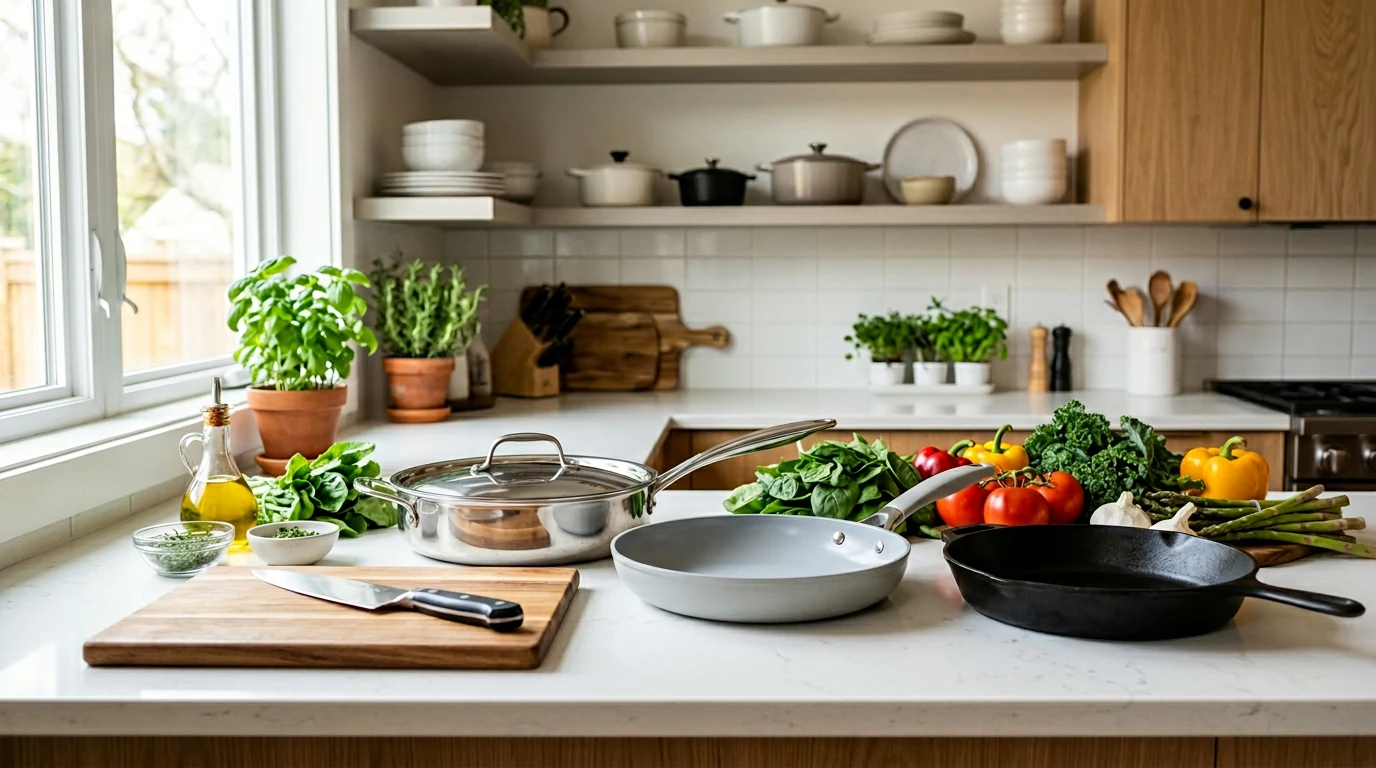
The best alternative depends on what you cook most often. There is no single material that wins every task. A good healthy kitchen often uses a small mix: stainless steel for searing and sauces, cast iron or carbon steel for high-heat skillet work, and a carefully chosen ceramic-coated pan for delicate foods that stick easily.
Stainless Steel
Stainless steel is one of the easiest recommendations for PFAS-conscious buyers because it is uncoated, durable, and versatile. It does take more technique than nonstick for eggs or delicate fish, but it handles browning, sauces, boiling, and everyday cooking well. If this direction fits your kitchen, compare options in Best Stainless Steel Cookware Sets.
Cast Iron and Carbon Steel
Cast iron and carbon steel are also uncoated choices, but they need seasoning and dry storage. They are excellent for high-heat cooking and can become naturally more release-friendly over time. The trade-off is weight, maintenance, and a learning curve. The Cast Iron vs Stainless Steel Cookware comparison is useful if you are deciding between classic skillet materials.
Ceramic-Coated Nonstick
Ceramic-coated pans appeal to shoppers who want easier food release without PTFE-style nonstick. They can be useful for eggs, vegetables, and lower-heat cooking, but coatings still wear down. They are not magic. Use moderate heat, avoid metal utensils, and replace the pan when the surface no longer performs well. For a deeper safety discussion, read Is Ceramic Cookware Safe?.
Enameled Cast Iron
Enameled cookware gives you a smooth coated surface without the same classic nonstick coating category. It is useful for soups, braises, stews, and slow cooking. It is usually heavy and can chip if abused, so it is better for steady cooking than quick lightweight skillet work.
How to Shop for Cookware If You Want to Avoid PFAS
Start with your actual cooking routine. If you mostly cook eggs and pancakes, you may still want one carefully chosen ceramic-coated nonstick pan. If you cook proteins, sauces, and vegetables most nights, stainless steel may be the smarter long-term base. If you like high heat and do not mind maintenance, cast iron or carbon steel can be excellent.
- Read the coating language: Look for PFAS-free, PTFE-free, and coating details instead of relying only on green-sounding claims.
- Check the heat guidance: Coated pans usually have stricter heat limits than uncoated metal cookware.
- Think about replacement: Nonstick-style coatings are not lifetime surfaces, even when marketed well.
- Match material to food: Stainless steel for browning, ceramic-coated for delicate low-stick foods, cast iron or carbon steel for high heat.
- Avoid mystery coatings: If a brand cannot explain what the cooking surface is, choose a clearer option.
If your main goal is to move away from old nonstick, the related guide to Best Cookware Without Teflon gives a practical next step. If you are deciding between ceramic and stainless, Ceramic vs Stainless Steel Cookware breaks down the trade-offs clearly.
When Should You Replace a Nonstick Pan?
Replace a nonstick pan when the surface is visibly peeling, flaking, deeply scratched, or no longer releasing food even with proper use. A worn coating is not just annoying; it also removes the main reason you bought the pan in the first place.
You should also replace a pan if the base is warped, the handle is loose, or you cannot identify the coating and do not feel comfortable using it. Cookware should make cooking easier, not leave you second-guessing every meal.
Frequently Asked Questions
Is all nonstick cookware made with PFAS?
No. Traditional PTFE-style nonstick is the category most often connected with PFAS discussions, but some newer ceramic-coated pans are marketed as PFAS-free or PTFE-free. The key is to check the exact coating language from the manufacturer rather than assuming all nonstick pans are the same.
Is ceramic cookware PFAS-free?
Many ceramic-coated cookware products are marketed as PFAS-free, but shoppers should still verify the specific product claim. Ceramic-coated cookware can be a useful alternative for lower-stick cooking, but the coating can wear over time and should be used with moderate heat and non-metal utensils.
Is stainless steel cookware PFAS-free?
Stainless steel cookware is generally a PFAS-conscious choice because the cooking surface is uncoated metal. It does not have the same nonstick coating question. However, stainless steel is not naturally nonstick, so technique matters, especially for eggs and delicate foods.
Are scratched nonstick pans unsafe?
A scratched or flaking nonstick pan should usually be replaced. Even aside from safety concerns, a damaged coating performs poorly and can shed bits of material into food. Use coated pans gently and avoid metal utensils to extend their usable life.
What is the safest cookware if I want to avoid PFAS?
For avoiding PFAS-related coating concerns, uncoated stainless steel, cast iron, and carbon steel are strong options. Enameled cookware can also be useful for soups and braises. For eggs or delicate foods, a clearly labeled PFAS-free ceramic-coated pan may be convenient.
Does PFOA-free mean PFAS-free?
No. PFOA-free is a narrower claim. It means the product is not made with PFOA, but it does not automatically rule out all fluorinated chemistry. PFAS-free is broader, and PTFE-free is another separate claim.
Conclusion
So, what is pfas in cookware? It is a question about fluorinated chemicals, nonstick coatings, cookware labels, and how much certainty you want in your kitchen. The best response is not panic. It is clearer buying.
If you want the simplest path, build your kitchen around durable uncoated materials such as stainless steel, cast iron, or carbon steel, then keep one clearly labeled ceramic-coated pan only if you need easier release for delicate foods. That mix gives you flexibility without making your whole kitchen depend on mystery coatings or vague nonstick claims.