Best Non-Toxic Cookware Sets
Best Non-Toxic Cookware Sets
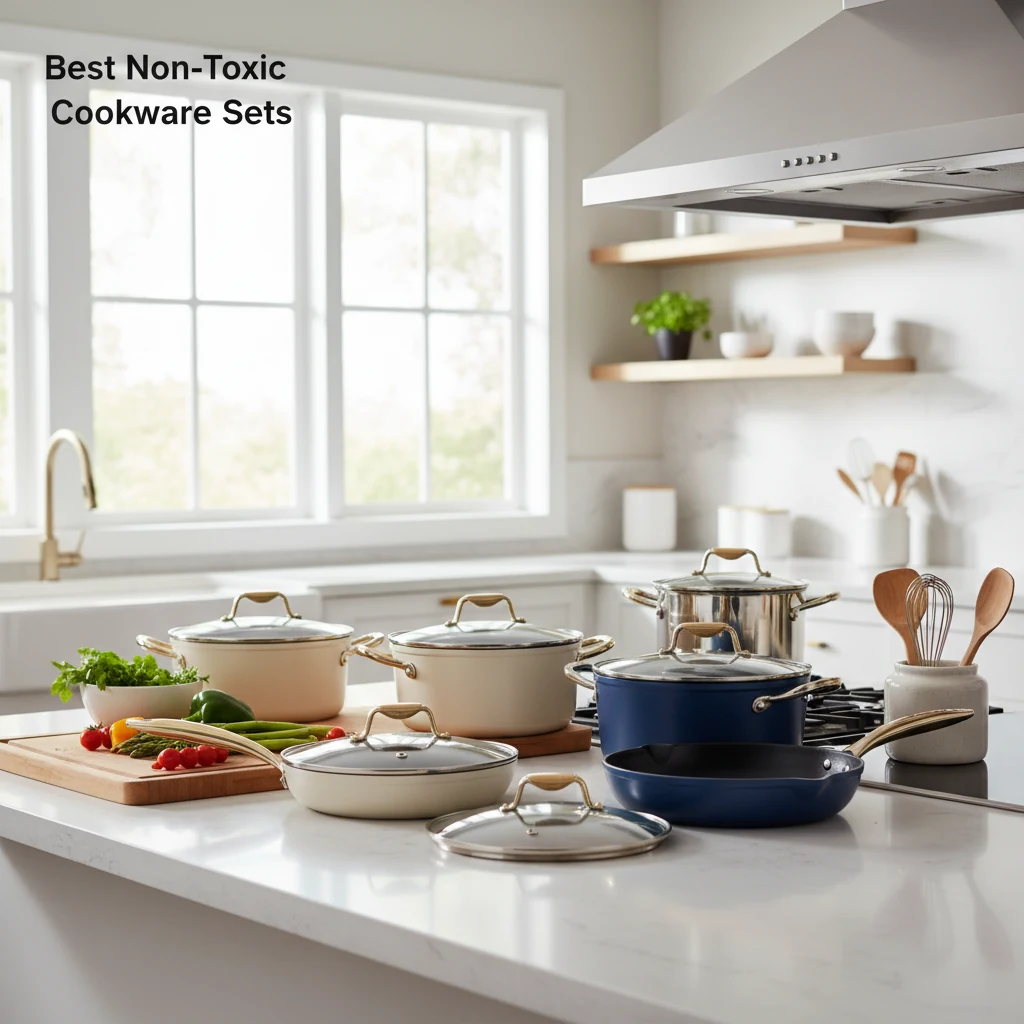
If you are shopping for the best non-toxic cookware sets, you are probably trying to avoid the wrong compromise. You want pans that feel safer and more durable, but you still need them to cook eggs, vegetables, sauces, and family dinners without turning every meal into a cleanup project. That is where the choice gets tricky: stainless steel, ceramic-coated cookware, pure ceramic, and cast iron all solve different problems.
This guide is built for real buying decisions, not vague clean-kitchen claims. I focused on cookware materials, daily usability, care requirements, and honest limitations. “Non-toxic” is not a regulated magic label, so the better question is which material fits your cooking habits while avoiding unnecessary coatings or exaggerated safety promises.
Disclosure: This article may contain affiliate links. If you buy through them, Healthy Kitchen Reviews may earn a commission at no extra cost to you.
Quick Comparison of the Best Non-Toxic Cookware Sets
| Rank | Product | Best For | Main Material | Key Advantage | CTA |
|---|---|---|---|---|---|
| 1 | All-Clad D3 Stainless 10-Piece Cookware Set | Best overall uncoated set | Tri-ply stainless steel with an aluminum core | Durable, responsive, and free of nonstick coating | View on Amazon |
| 2 | GreenPan Valencia Pro Ceramic Nonstick Cookware Set | Best ceramic nonstick option | Hard-anodized aluminum with ceramic nonstick coating | Easy-release cooking without traditional PTFE nonstick | View on Amazon |
| 3 | Caraway Ceramic-Coated Cookware Set | Best design-forward set | Ceramic-coated aluminum cookware | Clean look with useful storage support | View on Amazon |
| 4 | Xtrema Pure Ceramic Cookware Set | Best pure ceramic choice | One-piece ceramic cookware | No metal core and no applied nonstick coating | View on Amazon |
| 5 | Lodge Seasoned Cast Iron 5-Piece Set | Best cast iron set | Seasoned cast iron | Rugged, coating-free durability | View on Amazon |
Top Picks Summary
- Best Overall: All-Clad D3 Stainless 10-Piece Cookware Set — the most durable, versatile uncoated choice for everyday cooking.
- Best Ceramic Nonstick: GreenPan Valencia Pro Ceramic Nonstick Cookware Set — best for shoppers who still want easy release.
- Best Design-Friendly Set: Caraway Ceramic-Coated Cookware Set — a clean-looking option for organized kitchens.
- Best Pure Ceramic: Xtrema Pure Ceramic Cookware Set — best for buyers who want ceramic material rather than a ceramic coating.
- Best Cast Iron: Lodge Seasoned Cast Iron 5-Piece Set — the rugged, repairable choice for searing and oven cooking.
Detailed Reviews of the Best Non-Toxic Cookware Sets
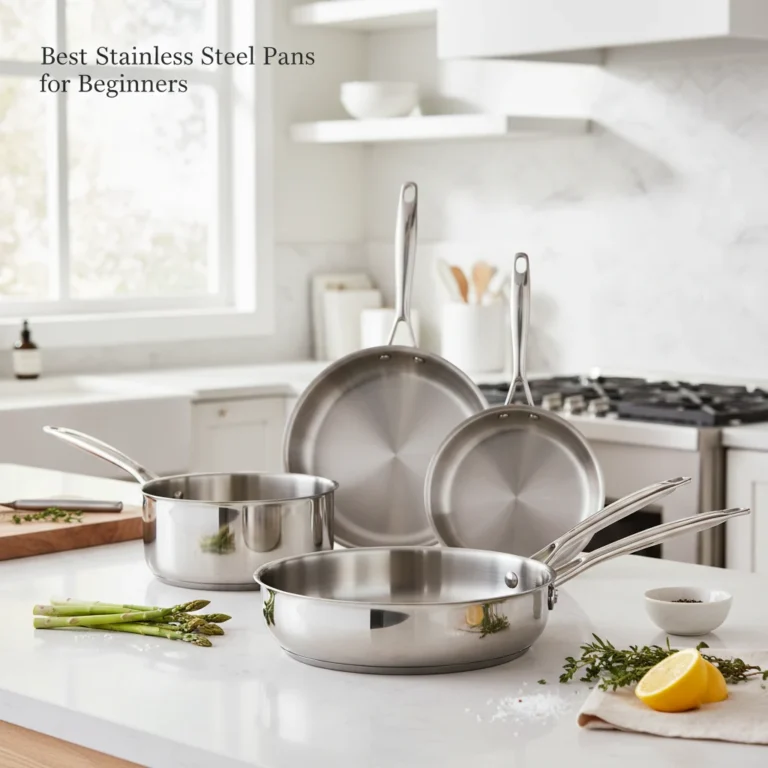
1. All-Clad D3 Stainless 10-Piece Cookware Set
All-Clad D3 Stainless 10-Piece Cookware Set is the pick for home cooks who want one long-term stainless set. It earns its place because the material choice makes sense for a healthy kitchen without asking buyers to accept vague claims or a single best-for-everyone answer.
Key Features
- Material: Tri-ply stainless steel with an aluminum core
- Best for: Best overall uncoated set
- Primary advantage: Durable, responsive, and free of nonstick coating
- All-Clad lists this as a 10-piece D3 stainless steel set.
- The brand describes D3 as fully bonded tri-ply cookware with stainless steel around an aluminum core.
- The listed set includes fry pans, saucepans, a saute pan, and a stockpot.
- It is listed by the brand as induction compatible.
What Makes It Stand Out
This is the most practical first choice for many buyers because the cooking surface is uncoated stainless steel. It avoids the lifespan problem that comes with many nonstick coatings, and it handles browning, pan sauces, boiling, sauteing, and general weeknight cooking well once you learn heat control.
How It Helps Your Kitchen Routine
Use it for vegetables, chicken, pasta water, soups, pan sauces, and one-pan dinners where browned bits improve flavor. It is less convenient than nonstick for eggs, but more versatile for a full kitchen.
How to Use It
Preheat gradually, add oil after the pan is warm, and give food time to release before moving it. Deglaze stuck browned bits with warm water while the pan is still safe to handle.
Pros and Cons
Pros:
- Uncoated cooking surface avoids common nonstick wear concerns
- Excellent for browning, sauteing, sauces, and everyday cooking
- Strong long-term value for cooks willing to learn stainless technique
Cons:
- Food can stick if heat and oil are not managed well
- Higher upfront cost than basic nonstick sets
- Not as effortless for eggs or delicate fish
Customer Feedback Snapshot
The most useful feedback for this type of cookware usually centers on release, cleanup, weight, heat control, storage, and whether the set still feels convenient after the first few weeks. Because this workflow does not use live customer-rating data, the safer approach is to explain the real trade-offs instead of quoting unverifiable review numbers.
Best For
This set is best for home cooks who want one long-term stainless set. It is less ideal if your top priority conflicts with its material limits, which is why choosing by cooking style matters more than chasing the loudest non-toxic claim.
2. GreenPan Valencia Pro Ceramic Nonstick Cookware Set
GreenPan Valencia Pro Ceramic Nonstick Cookware Set is the pick for buyers who want nonstick convenience for lower-oil meals. It earns its place because the material choice makes sense for a healthy kitchen without asking buyers to accept vague claims or a single best-for-everyone answer.
Key Features
- Material: Hard-anodized aluminum with ceramic nonstick coating
- Best for: Best ceramic nonstick option
- Primary advantage: Easy-release cooking without traditional PTFE nonstick
- GreenPan positions the Valencia Pro line as ceramic nonstick cookware.
- Ceramic nonstick is useful for eggs, pancakes, tofu, and delicate foods.
- Exact set contents can vary by retailer, so verify the current listing before buying.
- Ceramic-coated cookware depends heavily on moderate heat and gentle utensils.
What Makes It Stand Out
GreenPan makes sense if you want a softer landing away from traditional nonstick. It gives you easier release than stainless steel and can make breakfast, quick lunches, and reheating feel less fussy. The trade-off is durability: ceramic nonstick is convenient, but it is still a coating.
How It Helps Your Kitchen Routine
It is useful for eggs, oat pancakes, vegetables, tofu, and meals where you want less sticking without using a lot of oil. If easy cleanup keeps you cooking at home, this type of set can be a realistic healthy-kitchen upgrade.
How to Use It
Use low to medium heat, avoid metal utensils, and skip harsh scrubbers. Let pans cool before washing, and avoid treating ceramic nonstick like stainless steel or cast iron.
Pros and Cons
Pros:
- More forgiving release than stainless steel
- Good fit for quick low- and medium-heat meals
- Easier cleanup can make healthy cooking more repeatable
Cons:
- Ceramic release can fade over time
- Not ideal for high-heat searing
- Needs gentle utensils and careful washing
Customer Feedback Snapshot
The most useful feedback for this type of cookware usually centers on release, cleanup, weight, heat control, storage, and whether the set still feels convenient after the first few weeks. Because this workflow does not use live customer-rating data, the safer approach is to explain the real trade-offs instead of quoting unverifiable review numbers.
Best For
This set is best for buyers who want nonstick convenience for lower-oil meals. It is less ideal if your top priority conflicts with its material limits, which is why choosing by cooking style matters more than chasing the loudest non-toxic claim.
3. Caraway Ceramic-Coated Cookware Set
Caraway Ceramic-Coated Cookware Set is the pick for small kitchens and buyers who value organization. It earns its place because the material choice makes sense for a healthy kitchen without asking buyers to accept vague claims or a single best-for-everyone answer.
Key Features
- Material: Ceramic-coated aluminum cookware
- Best for: Best design-forward set
- Primary advantage: Clean look with useful storage support
- Caraway sells ceramic-coated cookware sets built around everyday core pieces.
- Many Caraway set listings emphasize included storage accessories.
- The cooking surface is ceramic-coated rather than solid ceramic.
- Buyers should verify current piece count and stovetop compatibility before ordering.
What Makes It Stand Out
Caraway earns its place because cookware has to fit your kitchen behavior, not just your safety preferences. If a messy cabinet makes cooking feel annoying, the storage and design angle can genuinely help. It is a convenience-focused ceramic-coated set, not a high-heat workhorse.
How It Helps Your Kitchen Routine
Use it for simple vegetables, grains, oatmeal, sauces, and weeknight meals where a slicker surface helps. It is especially appealing in kitchens where cookware stays visible or storage space is tight.
How to Use It
Keep heat moderate, protect the coating from scratches, and use the included storage pieces if your set has them. Do not stack coated pans bare against each other.
Pros and Cons
Pros:
- Attractive option for organized kitchens
- Approachable ceramic-coated surface for daily cooking
- Storage pieces can reduce cabinet friction
Cons:
- More style-focused than performance-focused stainless steel
- Coating still requires careful use
- Not the best choice for aggressive searing
Customer Feedback Snapshot
The most useful feedback for this type of cookware usually centers on release, cleanup, weight, heat control, storage, and whether the set still feels convenient after the first few weeks. Because this workflow does not use live customer-rating data, the safer approach is to explain the real trade-offs instead of quoting unverifiable review numbers.
Best For
This set is best for small kitchens and buyers who value organization. It is less ideal if your top priority conflicts with its material limits, which is why choosing by cooking style matters more than chasing the loudest non-toxic claim.
4. Xtrema Pure Ceramic Cookware Set
Xtrema Pure Ceramic Cookware Set is the pick for material-focused buyers who cook gently. It earns its place because the material choice makes sense for a healthy kitchen without asking buyers to accept vague claims or a single best-for-everyone answer.
Key Features
- Material: One-piece ceramic cookware
- Best for: Best pure ceramic choice
- Primary advantage: No metal core and no applied nonstick coating
- Xtrema is known for pure ceramic cookware rather than ceramic-coated metal.
- Pure ceramic is different from ceramic-coated aluminum cookware.
- It is naturally nonreactive, but it does not behave like slick nonstick.
- Confirm current piece count, lid materials, and temperature guidance before purchase.
What Makes It Stand Out
Pure ceramic appeals to shoppers who want the simplest material story. It avoids the confusion around coatings, but it also asks for patience. It is not the fastest-heating or toughest option in the drawer, and it is not the right fit for hurried high-heat cooking.
How It Helps Your Kitchen Routine
Use it for soups, grains, sauces, simmered vegetables, and slower meals. It can be satisfying if you cook gently and care more about material simplicity than speed.
How to Use It
Avoid sudden temperature changes, follow brand heating guidance, and handle it more carefully than metal cookware. Pure ceramic should not be tossed around like stainless steel.
Pros and Cons
Pros:
- Simple material choice for coating-conscious shoppers
- Nonreactive surface suits sauces and simmering
- Good fit for slower, gentler cooking
Cons:
- Can be more fragile than metal cookware
- Usually slower and less forgiving than aluminum or stainless
- Not as slick as ceramic nonstick
Customer Feedback Snapshot
The most useful feedback for this type of cookware usually centers on release, cleanup, weight, heat control, storage, and whether the set still feels convenient after the first few weeks. Because this workflow does not use live customer-rating data, the safer approach is to explain the real trade-offs instead of quoting unverifiable review numbers.
Best For
This set is best for material-focused buyers who cook gently. It is less ideal if your top priority conflicts with its material limits, which is why choosing by cooking style matters more than chasing the loudest non-toxic claim.
5. Lodge Seasoned Cast Iron 5-Piece Set
Lodge Seasoned Cast Iron 5-Piece Set is the pick for cooks who want searing power and oven use. It earns its place because the material choice makes sense for a healthy kitchen without asking buyers to accept vague claims or a single best-for-everyone answer.
Key Features
- Material: Seasoned cast iron
- Best for: Best cast iron set
- Primary advantage: Rugged, coating-free durability
- Lodge is widely known for seasoned cast iron cookware.
- Cast iron is coating-free in the PTFE sense, though it relies on seasoning for easier release.
- Cast iron is useful on stovetops and in ovens when used according to manufacturer guidance.
- Bundle contents vary, so verify the live listing before ordering.
What Makes It Stand Out
Cast iron belongs in this roundup because it is simple, repairable, and tough. If seasoning gets rough, you can usually rebuild it instead of replacing the pan. The trade-off is weight and maintenance, which matter a lot for everyday buyers.
How It Helps Your Kitchen Routine
Use it for roasted potatoes, skillet chicken, cornbread, steaks, vegetables, and recipes that move from stovetop to oven. It is less ideal for acidic tomato sauces or anyone who needs lightweight pans.
How to Use It
Dry it promptly, maintain seasoning with a thin oil layer, and avoid long soaking. Preheat gradually and use enough fat until the seasoning becomes more mature.
Pros and Cons
Pros:
- Very durable and often restorable
- Excellent for searing, roasting, and oven cooking
- No synthetic nonstick coating to wear off
Cons:
- Heavy compared with stainless or ceramic-coated cookware
- Needs drying and seasoning care
- Not the easiest choice for acidic foods or beginner egg cooking
Customer Feedback Snapshot
The most useful feedback for this type of cookware usually centers on release, cleanup, weight, heat control, storage, and whether the set still feels convenient after the first few weeks. Because this workflow does not use live customer-rating data, the safer approach is to explain the real trade-offs instead of quoting unverifiable review numbers.
Best For
This set is best for cooks who want searing power and oven use. It is less ideal if your top priority conflicts with its material limits, which is why choosing by cooking style matters more than chasing the loudest non-toxic claim.
How These Non-Toxic Cookware Materials Compare
| Material | Best Strength | Main Trade-Off | Best Buyer Fit |
|---|---|---|---|
| Stainless steel | Browning, sauces, durability, no nonstick coating | Food can stick until you learn heat control | Cooks who want a long-term everyday set |
| Ceramic-coated cookware | Easy release and lighter cleanup | Coating can wear down over time | People who cook eggs, pancakes, and quick meals often |
| Pure ceramic | Simple material story and nonreactive cooking | Can be fragile and slower to heat | Material-focused buyers who cook gently |
| Cast iron | High-heat searing and oven use | Heavy and needs seasoning care | Cooks who want rugged, repairable cookware |
If you want one set to do almost everything, stainless steel is the most practical choice. If you cook eggs every morning and hate scrubbing, ceramic nonstick may make your routine easier. If your main concern is avoiding coatings, pure ceramic and cast iron deserve a closer look, but they require more patience.
What Does Non-Toxic Cookware Actually Mean?
The phrase “non-toxic cookware” is used loosely online. It can mean cookware without traditional PTFE nonstick coatings, cookware marketed as PFAS-free, cookware made from stainless steel or cast iron, or cookware that avoids certain dyes, glazes, or surface treatments. Because the phrase is broad, buyers should look at the material and manufacturer guidance instead of trusting the label alone.
For background, the EPA explains that PFAS are long-lasting chemicals used in many consumer and industrial products. The FDA has also discussed authorized PFAS uses in food-contact applications. That does not mean every nonstick pan is dangerous, and it does not mean every PFAS-free claim should be treated as a full safety guarantee. It means buyers should pay attention to the surface material, temperature guidance, and care instructions.
If you are comparing cookware materials across the kitchen, you may also find our guides to non-toxic frying pans, safe air fryer basket materials, and silicone air fryer liner safety useful.
Buying Guide: How to Choose the Right Set
Start With Your Main Cooking Style
For searing, sauces, and serious stovetop cooking, choose stainless steel or cast iron. For eggs, pancakes, reheating, and low-oil meals, ceramic nonstick is more forgiving. For slow simmering and material simplicity, pure ceramic is worth considering.
Be Honest About Maintenance
The healthiest pan is not helpful if you avoid using it. Stainless steel needs technique. Cast iron needs drying and seasoning. Ceramic-coated pans need gentle heat and utensils. Pure ceramic needs careful handling. Pick the maintenance style you will actually follow.
Do Not Overbuy Pieces You Will Not Use
A 10- or 12-piece set often counts lids as pieces, so read the contents carefully. Most homes get the most value from a skillet, saucepan, saute pan, and stockpot. Extra specialty pieces are only useful if they fit your normal meals.
Check Stovetop Compatibility
Induction users need to verify compatibility before buying. Stainless steel and cast iron often work well on induction, but aluminum-based ceramic-coated cookware only works if it has an induction-ready base.
Avoid Absolute Safety Claims
No cookware material is perfect for every person or every recipe. A more useful standard is whether the surface is appropriate for your cooking temperature, whether the manufacturer gives clear care instructions, and whether the material matches your risk tolerance.
Care Tips That Help Non-Toxic Cookware Last Longer
- Use moderate heat with ceramic-coated cookware; high heat is one of the fastest ways to shorten coating life.
- Use silicone, wood, or nylon utensils on coated cookware.
- Let coated pans cool before washing to avoid thermal shock.
- Preheat stainless steel gradually, then add oil before food.
- Dry cast iron immediately and maintain seasoning with a light oil layer.
- Avoid abrasive pads unless the manufacturer specifically allows them.
- Replace any coated pan if the surface is badly chipped, peeling, or no longer cleanable.
For readers using air fryers alongside cookware, the same material logic applies. We cover related surface questions in our guides to air fryers with ceramic coating and the silicone vs parchment air fryer liner comparison.
FAQ
What is the safest non-toxic cookware material?
There is no single safest material for everyone. Stainless steel, cast iron, carbon steel, pure ceramic, and carefully used ceramic-coated cookware can all make sense. Stainless steel is usually the best all-around starting point because it is durable, uncoated, and versatile.
Is ceramic cookware better than stainless steel?
Ceramic-coated cookware is easier for low-stick cooking, but stainless steel is usually more durable and better for browning. Choose ceramic if convenience matters most; choose stainless if longevity and cooking control matter more.
Is PFAS-free cookware always non-toxic?
PFAS-free is useful information, but it is not a complete safety guarantee. You still need to look at the full material, temperature limits, coating care, and whether the pan is damaged or overheated.
Should I avoid all nonstick cookware?
Not necessarily. Nonstick cookware can be practical when used correctly, but it has a shorter life than stainless steel or cast iron. If you want fewer coating concerns, choose stainless, cast iron, or pure ceramic.
When should I replace ceramic nonstick cookware?
Replace it when the surface is peeling, badly scratched, flaking, or no longer cleanable. A worn coating also makes cooking less predictable, even if you are not focused on safety concerns.
Final Recommendation
For most homes, the best non-toxic cookware sets start with uncoated stainless steel. The All-Clad D3 Stainless 10-Piece Set is the strongest overall pick if you want durability, broad cooking range, and fewer coating concerns. If you need easy-release cooking for eggs and quick meals, GreenPan or Caraway can make daily cooking less frustrating, as long as you treat the coating gently.
The right choice depends on what you will actually use. Stainless steel is the best long-term foundation, ceramic nonstick is the easiest transition away from traditional nonstick, pure ceramic is the most material-focused option, and cast iron is the most rugged. Match the cookware to your habits, and you will make a healthier kitchen upgrade that lasts beyond the first week.