Ceramic vs Stainless Steel Cookware: Which Is Better for Healthy Home Cooking?
Ceramic vs Stainless Steel Cookware: Which Is Better for Healthy Home Cooking?
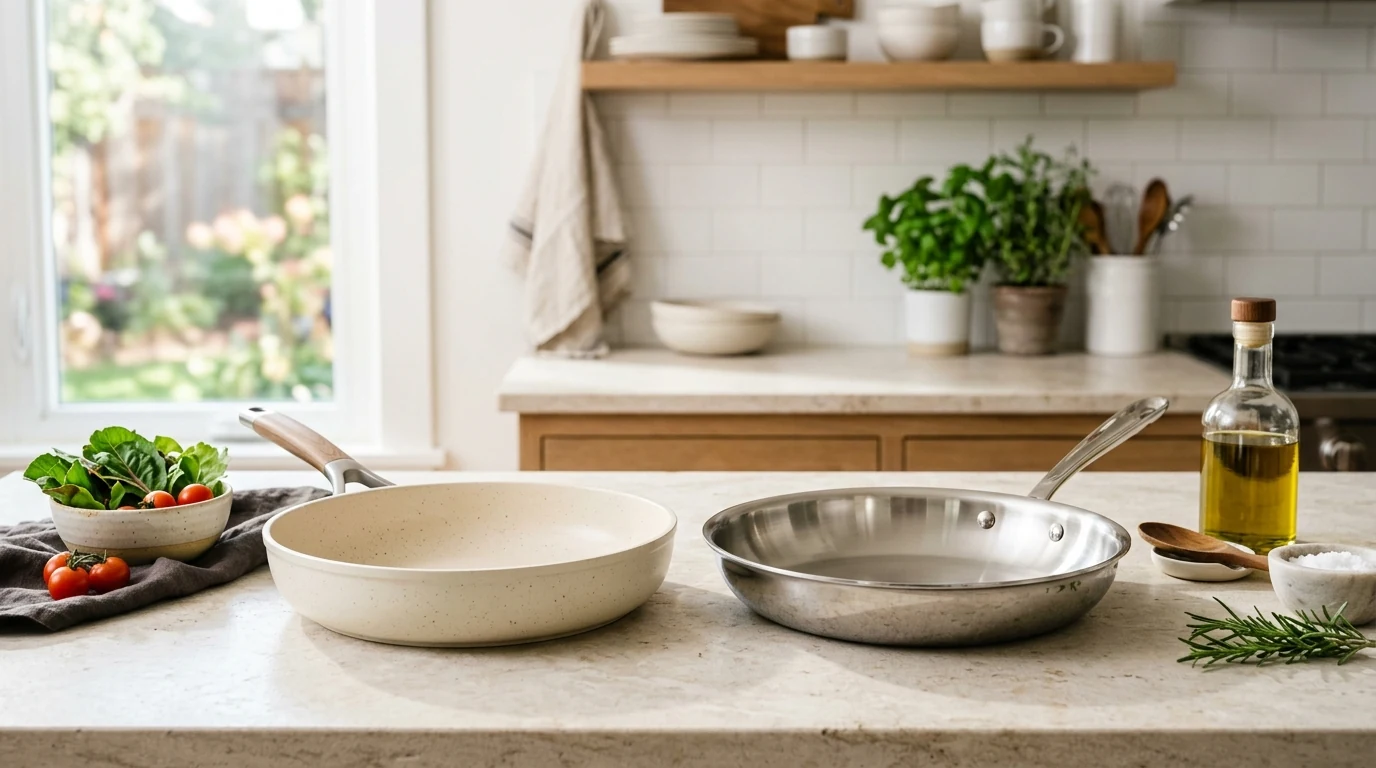
If you are comparing ceramic vs stainless steel cookware, the practical answer is simple: ceramic is usually better for easy food release and gentle cooking, while stainless steel is better for durability, browning, and long-term versatility. Both can belong in a healthy kitchen, but they are not trying to solve the same problem.
Ceramic cookware makes delicate foods feel easier. Stainless steel gives you more range and usually lasts longer. The best choice depends on what you cook most often, how much cleanup you tolerate, and whether you want convenience or a long-term workhorse.
Disclosure: This article may contain affiliate links. If you buy through them, Healthy Kitchen Reviews may earn a commission at no extra cost to you.
Quick Verdict: Ceramic vs Stainless Steel Cookware
Choose ceramic cookware if you mostly cook eggs, fish, pancakes, and lower-heat meals where easy release matters. It is the friendlier option for cooks who want a nonstick-style experience and lighter cleanup.
Choose stainless steel cookware if you want better browning, stronger durability, and a pan that can handle more cooking jobs. It asks for more technique, but it is usually the better long-term foundation.
For most kitchens, the smartest answer is a mix: one durable stainless pan or set, plus one ceramic pan for delicate foods. See our guides to best ceramic cookware sets and best stainless steel cookware sets if you want product-specific options.
Side-by-Side Comparison Table
| Factor | Ceramic Cookware | Stainless Steel Cookware |
|---|---|---|
| Best for | Eggs, fish, pancakes, gentle low-to-medium heat cooking | Searing, browning, sauces, boiling, daily long-term use |
| Food release | Easier while coating is in good condition | Requires preheating, oil, and technique |
| Durability | Coating can wear down over time | Usually lasts longer when built well |
| High heat | Not the best choice for high heat | Better for high-heat cooking and deglazing |
| Healthy-kitchen fit | Useful if you want a PFAS-free nonstick-style pan | Useful if you want durable uncoated cookware |
Cooking Performance
Stainless steel wins for browning. A properly preheated stainless pan can create fond, sear vegetables and proteins, and handle pan sauces well. This is where stainless feels more like serious everyday cookware than a convenience pan.
Ceramic wins for release. If your morning routine involves eggs or your weeknight meals include fish, a ceramic pan can reduce frustration. The trade-off is that ceramic coatings need gentler heat, utensils, cleaning, and storage.
Safety and Healthy Cooking Considerations
Ceramic cookware often appeals to shoppers who want a nonstick-style surface without traditional PTFE-style nonstick. Many brands market ceramic coatings as PFAS-free, but claims should be checked by exact model. The EPA PFAS overview is a useful background reference for why buyers pay attention to this topic.
Stainless steel is uncoated, which many health-conscious cooks prefer. There is no nonstick coating to wear down, but stainless may require more oil and technique. For broader shopping context, compare our guides to best non-toxic cookware sets, cookware without PFAS, and cookware without Teflon.
Durability and Maintenance
Stainless steel usually lasts longer. A good stainless pan can discolor, scratch, and still cook well. You can deglaze it, scrub it with appropriate cleaners, and keep using it for years.
Ceramic cookware is more temporary. The surface can lose slickness if overheated, scraped with metal utensils, cleaned abrasively, or stacked carelessly. That does not make ceramic a poor choice; it just means you should treat it as a convenience pan rather than forever cookware.
Heat Control and Stovetop Fit
Stainless steel is better for high heat, especially if the pan has clad construction or a strong heat-conductive base. It is a strong fit for shoppers comparing cookware for gas stoves or cookware for induction stoves.
Ceramic cookware should usually stay at low to medium heat unless the manufacturer clearly says otherwise. Empty high-heat preheating can shorten coating life and make the pan less useful over time.
Pros and Cons of Ceramic Cookware
- Easier release for eggs, fish, and pancakes.
- Usually easier to clean after gentle cooking.
- Often marketed as a PFAS-free nonstick-style option, but verify the specific model.
- Less durable than stainless steel over the long term.
- Not ideal for high-heat searing or rough utensils.
Pros and Cons of Stainless Steel Cookware
- Excellent for browning, searing, and pan sauces.
- Durable uncoated cooking surface.
- Better for higher heat and long-term daily use.
- Can stick if you skip proper preheating and oil technique.
- Good clad stainless cookware can cost more upfront.
Who Should Choose Ceramic Cookware?
Choose ceramic if you want easy release above all else. It is best for gentle foods, quick breakfasts, and cooks who value cleanup convenience. Use silicone or wood utensils, avoid high heat, and wash it gently.
Who Should Choose Stainless Steel Cookware?
Choose stainless steel if you want a durable foundation for daily cooking. It is better for searing, sauteing, boiling, deglazing, and learning stronger cooking technique. If you are new to it, our guide to stainless steel pans for beginners is a useful next read.
Buying Recommendation
If you want the most practical healthy-kitchen setup, start with stainless steel and add one ceramic pan for sticky or delicate foods. Stainless handles the heavy work. Ceramic handles the convenience work.
Also check food-contact claims carefully. The FDA food-contact substances guidance explains the regulatory side, but individual cookware claims still need manufacturer-level verification.
Frequently Asked Questions
Is ceramic cookware safer than stainless steel?
Not automatically. Ceramic may be a good option if the brand clearly supports its material claims. Stainless steel is uncoated and durable. Safe use depends on verified materials, proper heat, and replacing damaged cookware when needed.
Does stainless steel stick more than ceramic?
Yes. Stainless steel usually sticks more unless you preheat the pan, use enough oil, and let food release naturally. Ceramic is easier for eggs and delicate foods.
Which lasts longer, ceramic or stainless steel cookware?
Stainless steel usually lasts longer. Ceramic coatings can wear down, especially with high heat, abrasive cleaning, or metal utensils.
Can ceramic cookware be used on high heat?
Usually it is better at low to medium heat. Follow the manufacturer instructions for the exact pan and avoid empty high-heat preheating.
Should I buy ceramic or stainless steel first?
Buy stainless steel first if you want a long-term everyday foundation. Buy ceramic first only if your main priority is easy release for eggs, fish, and gentle foods.
Conclusion
The clearest answer to ceramic vs stainless steel cookware is that stainless steel is the better long-term workhorse, while ceramic is the easier specialty pan for delicate cooking. Most home cooks will be happier with both: stainless for durability and flavor-building, ceramic for low-stress release.