Best Non-Toxic Saucepan: 6 Safer Picks for Everyday Cooking
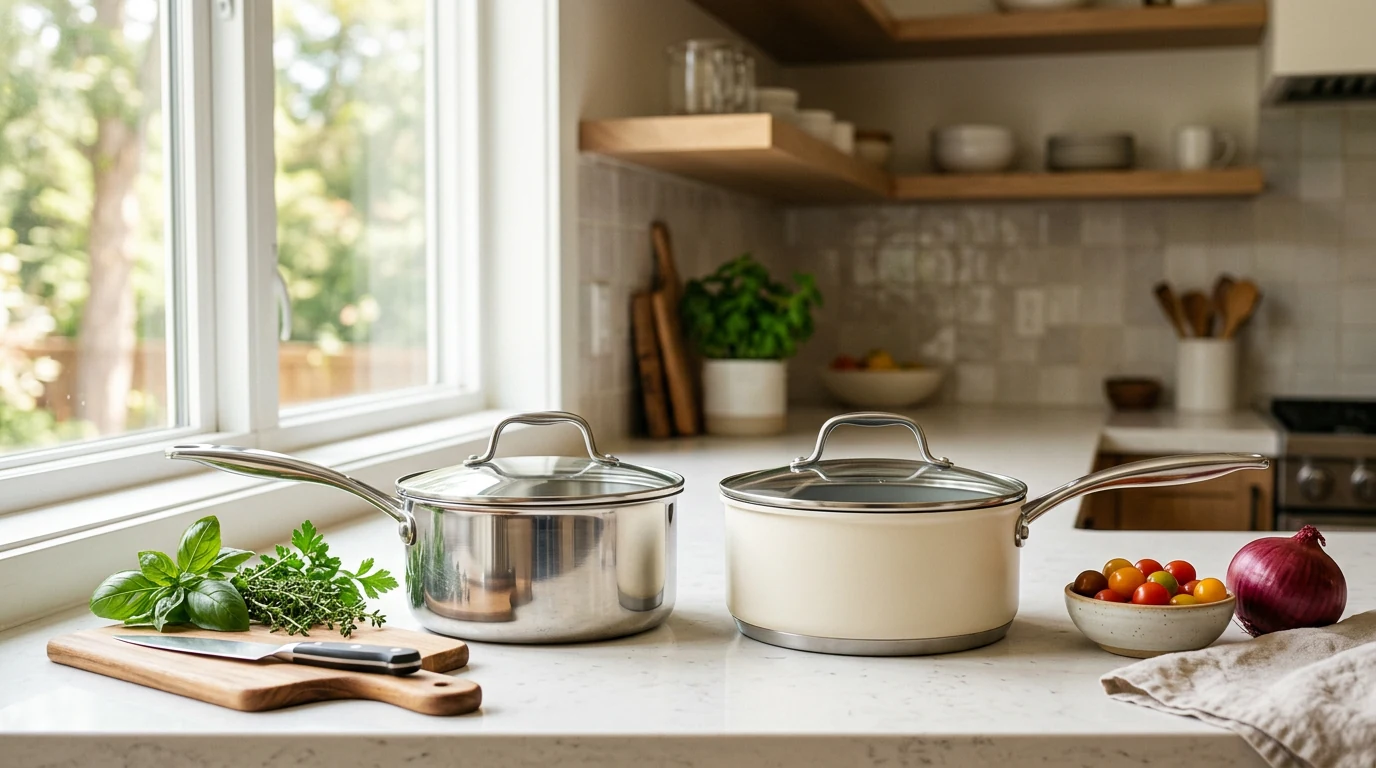
Choosing the best non-toxic saucepan is harder than it should be because “non-toxic” gets used for very different cookware materials. Some saucepans are uncoated stainless steel. Some are pure ceramic. Others use ceramic nonstick coatings that brands describe as PFAS-free. Those are not the same thing, and the best choice depends on how you cook.
For a small saucepan, the decision matters because this is often the pan you use every day: oatmeal, rice, quinoa, tomato sauce, soup, reheating leftovers, melting butter, or steaming vegetables. A good one should heat predictably, clean without drama, and fit your comfort level with coatings, metal surfaces, weight, and long-term care.
Disclosure: This article may contain affiliate links. If you buy through them, Healthy Kitchen Reviews may earn a commission at no extra cost to you.
Quick Comparison Table
| Rank | Product | Best For | Capacity | Key Material | CTA |
|---|---|---|---|---|---|
| 1 | All-Clad D3 Stainless 3-Quart Sauce Pan with Lid | overall uncoated stainless saucepan | 3 quart | Stainless steel with tri-ply bonded construction and aluminum core | View Product |
| 2 | GreenPan Valencia Pro Ceramic Nonstick 2-Qt Saucepan | ceramic nonstick saucepan for easier cleanup | 2 quart | Hard anodized body with ceramic nonstick coating | View on Amazon |
| 3 | Caraway Nonstick Ceramic Sauce Pan with Lid | design-forward ceramic nonstick saucepan | 1.75 quart | Ceramic-coated nonstick cookware | View on Amazon |
| 4 | 360 Cookware 1.75 Quart Saucepan with Cover | premium stainless saucepan for small households | 1.75 quart | Cladded stainless steel; 360 lists T-316 surgical grade stainless steel | View Product |
| 5 | Xtrema Versa Pot 1.5-Quart | pure ceramic saucepan alternative | 1.5 quart | 100% pure ceramic, according to Xtrema | View Product |
| 6 | Eater x Heritage Steel 4 Quart Saucepan with Lid | larger stainless saucepan for soups and sauces | 4 quart | Stainless steel cookware | View Product |
Our Top Picks
- Best overall: All-Clad D3 Stainless 3-Quart Sauce Pan because it is durable, uncoated, and versatile.
- Best ceramic nonstick: GreenPan Valencia Pro 2-Qt Saucepan for easier cleanup with a PFAS-free ceramic nonstick surface.
- Best compact ceramic nonstick: Caraway Sauce Pan for smaller kitchens and design-conscious buyers.
- Best premium small stainless: 360 Cookware 1.75 Quart Saucepan for a compact uncoated stainless option.
- Best pure ceramic: Xtrema Versa Pot for shoppers who want to avoid both metal cooking surfaces and nonstick coatings.
Detailed Reviews of the Best Non-Toxic Saucepan Picks
1. All-Clad D3 Stainless 3-Quart Sauce Pan with Lid

All-Clad D3 Stainless 3-Quart Sauce Pan with Lid is my best overall uncoated stainless saucepan. It belongs in this roundup because its material story is clear, its best use case is easy to understand, and it helps a buyer choose a saucepan based on daily cooking needs instead of vague “healthy cookware” marketing.
Key Features
- Capacity: 3 quart
- Material: Stainless steel with tri-ply bonded construction and aluminum core
- Verified product notes: All-Clad lists this pan as D3 fully bonded tri-ply stainless cookware with a 3-quart capacity, stainless cooking surface, aluminum core, induction compatibility, oven/broiler safety up to 600 degrees F, and hand-wash care.
What Makes It Stand Out
It gives healthy-kitchen buyers an uncoated cooking surface, strong heat control, and enough room for grains, pasta, sauces, vegetables, and small soup portions.
How It Helps Your Kitchen Routine
Use it for oatmeal, rice, quinoa, reheating soup, simmering tomato sauce, or steaming vegetables when you want a durable pan that is not built around a synthetic nonstick coating.
How to Use It
Use this saucepan over the heat level recommended by the maker, avoid overheating empty cookware, and match the pan to the task. Stainless choices reward preheating and enough cooking fat. Ceramic-coated nonstick choices reward moderate heat, soft utensils, and gentler cleaning. Pure ceramic rewards slower, more careful cooking.
Pros and Cons
Pros:
- Clear fit for best overall uncoated stainless saucepan.
- Material choice is easier to understand than many generic non-toxic cookware listings.
- Useful for everyday saucepan tasks such as oatmeal, sauces, grains, soup, and reheating.
Cons:
- Food can stick if you use too much heat or too little fat.
- Hand washing is recommended by the manufacturer.
Customer Feedback Snapshot
Buyer appeal is strongest for durability, even heating, and brand trust; the common tradeoff is the learning curve of stainless steel cooking.
Best For
This is best for shoppers who want overall uncoated stainless saucepan. If your top priority is different, compare it with the next pick before buying.
2. GreenPan Valencia Pro Ceramic Nonstick 2-Qt Saucepan
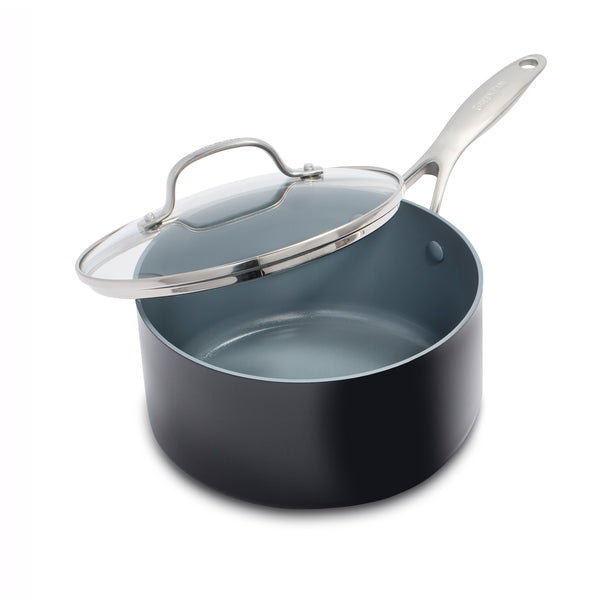
GreenPan Valencia Pro Ceramic Nonstick 2-Qt Saucepan is my best ceramic nonstick saucepan for easier cleanup. It belongs in this roundup because its material story is clear, its best use case is easy to understand, and it helps a buyer choose a saucepan based on daily cooking needs instead of vague “healthy cookware” marketing.
Key Features
- Capacity: 2 quart
- Material: Hard anodized body with ceramic nonstick coating
- Verified product notes: GreenPan lists the Valencia Pro 2-quart saucepan as a PFAS-free ceramic nonstick saucepan with a diamond-infused ceramic coating and Magneto induction base. The exact Amazon listing also identifies it as the 2QT Valencia Pro saucepan.
What Makes It Stand Out
It is the most familiar choice for readers who want a nonstick saucepan feel without choosing a PTFE/Teflon-style surface.
How It Helps Your Kitchen Routine
Use it for oatmeal, milk-based sauces, scrambled eggs for one, small pasta portions, and sticky reductions where cleanup matters.
How to Use It
Use this saucepan over the heat level recommended by the maker, avoid overheating empty cookware, and match the pan to the task. Stainless choices reward preheating and enough cooking fat. Ceramic-coated nonstick choices reward moderate heat, soft utensils, and gentler cleaning. Pure ceramic rewards slower, more careful cooking.
Pros and Cons
Pros:
- Clear fit for best ceramic nonstick saucepan for easier cleanup.
- Material choice is easier to understand than many generic non-toxic cookware listings.
- Useful for everyday saucepan tasks such as oatmeal, sauces, grains, soup, and reheating.
Cons:
- Ceramic nonstick coatings still need gentle utensils and moderate heat.
- It may not last as long as uncoated stainless if used roughly.
Customer Feedback Snapshot
This type of pan tends to appeal to buyers who care most about easy release and quick cleanup, while durability-minded cooks may prefer stainless.
Best For
This is best for shoppers who want ceramic nonstick saucepan for easier cleanup. If your top priority is different, compare it with the next pick before buying.
3. Caraway Nonstick Ceramic Sauce Pan with Lid
Caraway Nonstick Ceramic Sauce Pan with Lid is my best design-forward ceramic nonstick saucepan. It belongs in this roundup because its material story is clear, its best use case is easy to understand, and it helps a buyer choose a saucepan based on daily cooking needs instead of vague “healthy cookware” marketing.
Key Features
- Capacity: 1.75 quart
- Material: Ceramic-coated nonstick cookware
- Verified product notes: The exact Amazon listing identifies this as the Caraway Nonstick Ceramic Sauce Pan with Lid, 1.75 qt, and states that the ceramic nonstick is free of PTFE, PFOA, PFAS, lead, and cadmium.
What Makes It Stand Out
Caraway is a practical pick for readers who want a smaller saucepan that looks good on the stove and feels easy for low-to-medium heat cooking.
How It Helps Your Kitchen Routine
Use it for oatmeal, reheating soup, simmering a small sauce, cooking a single batch of rice, or warming milk when you want easy release and a tidy footprint.
How to Use It
Use this saucepan over the heat level recommended by the maker, avoid overheating empty cookware, and match the pan to the task. Stainless choices reward preheating and enough cooking fat. Ceramic-coated nonstick choices reward moderate heat, soft utensils, and gentler cleaning. Pure ceramic rewards slower, more careful cooking.
Pros and Cons
Pros:
- Clear fit for best design-forward ceramic nonstick saucepan.
- Material choice is easier to understand than many generic non-toxic cookware listings.
- Useful for everyday saucepan tasks such as oatmeal, sauces, grains, soup, and reheating.
Cons:
- The smaller size is not ideal for larger family portions.
- Ceramic-coated cookware should not be treated like high-heat stainless steel.
Customer Feedback Snapshot
Its likely appeal is cleanup, countertop aesthetics, and a compact daily-use size; the tradeoff is that coating care matters.
Best For
This is best for shoppers who want design-forward ceramic nonstick saucepan. If your top priority is different, compare it with the next pick before buying.
4. 360 Cookware 1.75 Quart Saucepan with Cover

360 Cookware 1.75 Quart Saucepan with Cover is my best premium stainless saucepan for small households. It belongs in this roundup because its material story is clear, its best use case is easy to understand, and it helps a buyer choose a saucepan based on daily cooking needs instead of vague “healthy cookware” marketing.
Key Features
- Capacity: 1.75 quart
- Material: Cladded stainless steel; 360 lists T-316 surgical grade stainless steel
- Verified product notes: 360 Cookware lists this 1.75-quart saucepan with cover as induction capable, cladded metal, oven safe up to 500 degrees F, handcrafted in the USA, and made with T-316 surgical grade stainless steel.
What Makes It Stand Out
It is a strong fit for buyers who want an uncoated stainless saucepan but prefer a smaller daily size than a 3-quart pan.
How It Helps Your Kitchen Routine
Use it for side dishes, sauces, small soups, pasta for one or two, and vegetable steaming routines where a compact covered saucepan makes sense.
How to Use It
Use this saucepan over the heat level recommended by the maker, avoid overheating empty cookware, and match the pan to the task. Stainless choices reward preheating and enough cooking fat. Ceramic-coated nonstick choices reward moderate heat, soft utensils, and gentler cleaning. Pure ceramic rewards slower, more careful cooking.
Pros and Cons
Pros:
- Clear fit for best premium stainless saucepan for small households.
- Material choice is easier to understand than many generic non-toxic cookware listings.
- Useful for everyday saucepan tasks such as oatmeal, sauces, grains, soup, and reheating.
Cons:
- It is a premium-priced option compared with mass-market stainless pans.
- The smaller capacity can feel limiting if you cook bigger batches.
Customer Feedback Snapshot
The main buyer draw is premium stainless construction and made-in-USA positioning; the obvious tradeoff is price.
Best For
This is best for shoppers who want premium stainless saucepan for small households. If your top priority is different, compare it with the next pick before buying.
5. Xtrema Versa Pot 1.5-Quart

Xtrema Versa Pot 1.5-Quart is my best pure ceramic saucepan alternative. It belongs in this roundup because its material story is clear, its best use case is easy to understand, and it helps a buyer choose a saucepan based on daily cooking needs instead of vague “healthy cookware” marketing.
Key Features
- Capacity: 1.5 quart
- Material: 100% pure ceramic, according to Xtrema
- Verified product notes: Xtrema lists the Versa Pot as 100% pure ceramic cookware with a 1.5-quart variant and a matching lid.
What Makes It Stand Out
It is the most different pick in this list because it is not a metal pan and not a coated nonstick pan.
How It Helps Your Kitchen Routine
Use it for gentle simmering, soups, sauces, grains, and buyers who specifically want to avoid both nonstick coatings and metal cooking surfaces.
How to Use It
Use this saucepan over the heat level recommended by the maker, avoid overheating empty cookware, and match the pan to the task. Stainless choices reward preheating and enough cooking fat. Ceramic-coated nonstick choices reward moderate heat, soft utensils, and gentler cleaning. Pure ceramic rewards slower, more careful cooking.
Pros and Cons
Pros:
- Clear fit for best pure ceramic saucepan alternative.
- Material choice is easier to understand than many generic non-toxic cookware listings.
- Useful for everyday saucepan tasks such as oatmeal, sauces, grains, soup, and reheating.
Cons:
- Ceramic cookware can be heavier and more fragile than metal cookware.
- It may require a slower, more careful cooking style.
Customer Feedback Snapshot
It tends to appeal to buyers who care most about material simplicity, while cooks who want fast responsiveness may prefer stainless.
Best For
This is best for shoppers who want pure ceramic saucepan alternative. If your top priority is different, compare it with the next pick before buying.
6. Eater x Heritage Steel 4 Quart Saucepan with Lid

Eater x Heritage Steel 4 Quart Saucepan with Lid is my best larger stainless saucepan for soups and sauces. It belongs in this roundup because its material story is clear, its best use case is easy to understand, and it helps a buyer choose a saucepan based on daily cooking needs instead of vague “healthy cookware” marketing.
Key Features
- Capacity: 4 quart
- Material: Stainless steel cookware
- Verified product notes: Heritage Steel lists this Eater collaboration as a 4-quart saucepan with lid for soups, chili, stew, sauces, and more, with a side handle for added stability and control.
What Makes It Stand Out
It fills the gap between a small saucepan and a full stockpot, which matters if you want one pan for sauces plus bigger soup or grain batches.
How It Helps Your Kitchen Routine
Use it for family oatmeal, soup, chili, pasta sauce, steamed vegetables, or batch cooking when a 1.5- or 2-quart pan feels too small.
How to Use It
Use this saucepan over the heat level recommended by the maker, avoid overheating empty cookware, and match the pan to the task. Stainless choices reward preheating and enough cooking fat. Ceramic-coated nonstick choices reward moderate heat, soft utensils, and gentler cleaning. Pure ceramic rewards slower, more careful cooking.
Pros and Cons
Pros:
- Clear fit for best larger stainless saucepan for soups and sauces.
- Material choice is easier to understand than many generic non-toxic cookware listings.
- Useful for everyday saucepan tasks such as oatmeal, sauces, grains, soup, and reheating.
Cons:
- It may be larger than necessary for single-person kitchens.
- Uncoated stainless requires technique to reduce sticking.
Customer Feedback Snapshot
This pick is best for buyers who want more capacity without moving all the way to a stockpot; compact-kitchen buyers may prefer a smaller pan.
Best For
This is best for shoppers who want larger stainless saucepan for soups and sauces. If your top priority is different, compare it with the next pick before buying.
How These Non-Toxic Saucepan Picks Compare
If you want the longest-lasting surface, uncoated stainless is usually the safest bet because there is no nonstick coating to wear down. If you want easier release for oatmeal, milk sauces, and sticky foods, ceramic-coated nonstick can feel friendlier, but it needs gentler treatment. If you want to avoid both coatings and metal cooking surfaces, pure ceramic is the more specialized route.
For a broader cookware setup, compare this saucepan guide with our picks for non-toxic cookware sets. If your main concern is chemical class rather than saucepan shape, the guides to cookware without PFAS and cookware without Teflon are the next logical reads.
How to Choose the Best Non-Toxic Saucepan
Start With the Cooking Surface
The cooking surface is the heart of the decision. Stainless steel is uncoated and durable, but it takes a little technique. Ceramic-coated nonstick is easier for sticky foods, but coatings are not forever. Pure ceramic is attractive for material simplicity, but it is heavier and more fragile than metal.
Be Specific About PFAS and PTFE
PFAS is a broad family of chemicals, and PTFE is the best-known traditional nonstick material. A brand may call a ceramic coating PFAS-free, but that does not make it the same as uncoated stainless or pure ceramic. Read the product page carefully and avoid treating “non-toxic” as a single verified standard.
Choose Capacity by Real Meals
A 1.5- to 2-quart saucepan is useful for one or two people, sauces, oatmeal, and small grain batches. A 3-quart pan is more flexible for families and meal prep. A 4-quart saucepan starts to overlap with small pots and can be better for soup, chili, and bigger batch cooking.
Think About Cleaning Before You Buy
The healthiest pan on paper is not helpful if you avoid using it because cleanup is frustrating. Stainless needs proper heat control and deglazing habits. Ceramic-coated nonstick needs softer tools and careful cleaning. Pure ceramic needs patience and careful handling.
Stainless vs Ceramic Nonstick vs Pure Ceramic
| Material Type | Strengths | Tradeoffs | Best Buyer Fit |
|---|---|---|---|
| Uncoated stainless steel | Durable, coating-free, good heat control when well made. | Can stick without technique; may need more scrubbing. | Buyers who want long-term cookware and do not need nonstick release. |
| Ceramic-coated nonstick | Easier release and easier cleanup for sticky foods. | Coating longevity depends heavily on care. | Buyers who want a gentler nonstick experience and cook mostly on low-to-medium heat. |
| Pure ceramic | No metal cooking surface and no nonstick coating layer. | Heavier, more fragile, slower-feeling cooking style. | Buyers who prioritize material simplicity over speed and responsiveness. |
If you are building around one material family, see the related guides to stainless steel cookware sets and ceramic cookware sets.
Safety and Health Claims: What to Keep in Perspective
A saucepan can support healthier cooking by making home meals easier, but it does not make food healthy by itself. The ingredients, cooking temperature, oil amount, portion size, and cleaning habits still matter. Be cautious with any cookware claim that sounds absolute, especially if it promises perfect safety or health benefits without context.
For PFAS concerns, it is reasonable to prefer products that clearly say they avoid PFAS or to choose uncoated stainless/pure ceramic surfaces. But shoppers should still follow the manufacturer’s care instructions, avoid overheating cookware, and replace damaged nonstick pans when the surface is no longer in good condition.
Frequently Asked Questions
What is the best non-toxic saucepan material?
For durability and clarity, uncoated stainless steel is often the most practical non-toxic saucepan material. It has no nonstick coating to wear out. Ceramic-coated nonstick can be easier to cook with, while pure ceramic appeals to buyers who want to avoid both coatings and metal surfaces.
Is ceramic nonstick safer than Teflon?
Many ceramic nonstick brands position their coatings as PFAS-free or PTFE-free, which is why buyers often compare them with Teflon-style nonstick. Still, ceramic-coated cookware is not the same as uncoated cookware, and it needs proper care to preserve the surface.
Is stainless steel non-toxic for saucepans?
Stainless steel is a common uncoated cookware material and is a strong choice for buyers who want to avoid nonstick coatings. People with specific metal sensitivities or medical concerns should ask a qualified professional, but most shoppers choose stainless for durability and coating-free cooking.
What size saucepan should I buy first?
A 2- to 3-quart saucepan is the most flexible first size for many homes. A 1.5- to 1.75-quart pan is better for one person, small kitchens, and sauces. A 4-quart saucepan is better when you regularly make soup, grains, or bigger family portions.
Do non-toxic saucepans need special utensils?
Stainless steel is more tolerant, though wood and silicone utensils are still gentle choices. Ceramic-coated nonstick should be used with softer utensils and moderate heat. Pure ceramic should be handled carefully because it can chip or break if abused.
When should I replace a ceramic-coated saucepan?
Replace it when the coating is visibly damaged, peeling, deeply scratched, or no longer cooking properly. Ceramic-coated pans last longer with low-to-medium heat, gentle utensils, and non-abrasive cleaning.
Final Recommendation
The best non-toxic saucepan for most buyers is the All-Clad D3 Stainless 3-Quart Sauce Pan if you want a durable, uncoated pan that can stay in your kitchen for years. Choose GreenPan or Caraway if you value easier nonstick cleanup and are willing to care for a ceramic-coated surface. Choose Xtrema if pure ceramic is your priority, 360 Cookware if you want a premium compact stainless option, and Heritage Steel if you need a larger saucepan for soups and batch cooking.
The smart move is to buy for your real routine. A saucepan that matches your daily meals, cleanup habits, and comfort with materials will do more for a healthy kitchen than the most dramatic marketing claim.