Best Air Fryer Liners Silicone vs Parchment: Which Is Better?
Best Air Fryer Liners Silicone vs Parchment: Which Is Better?
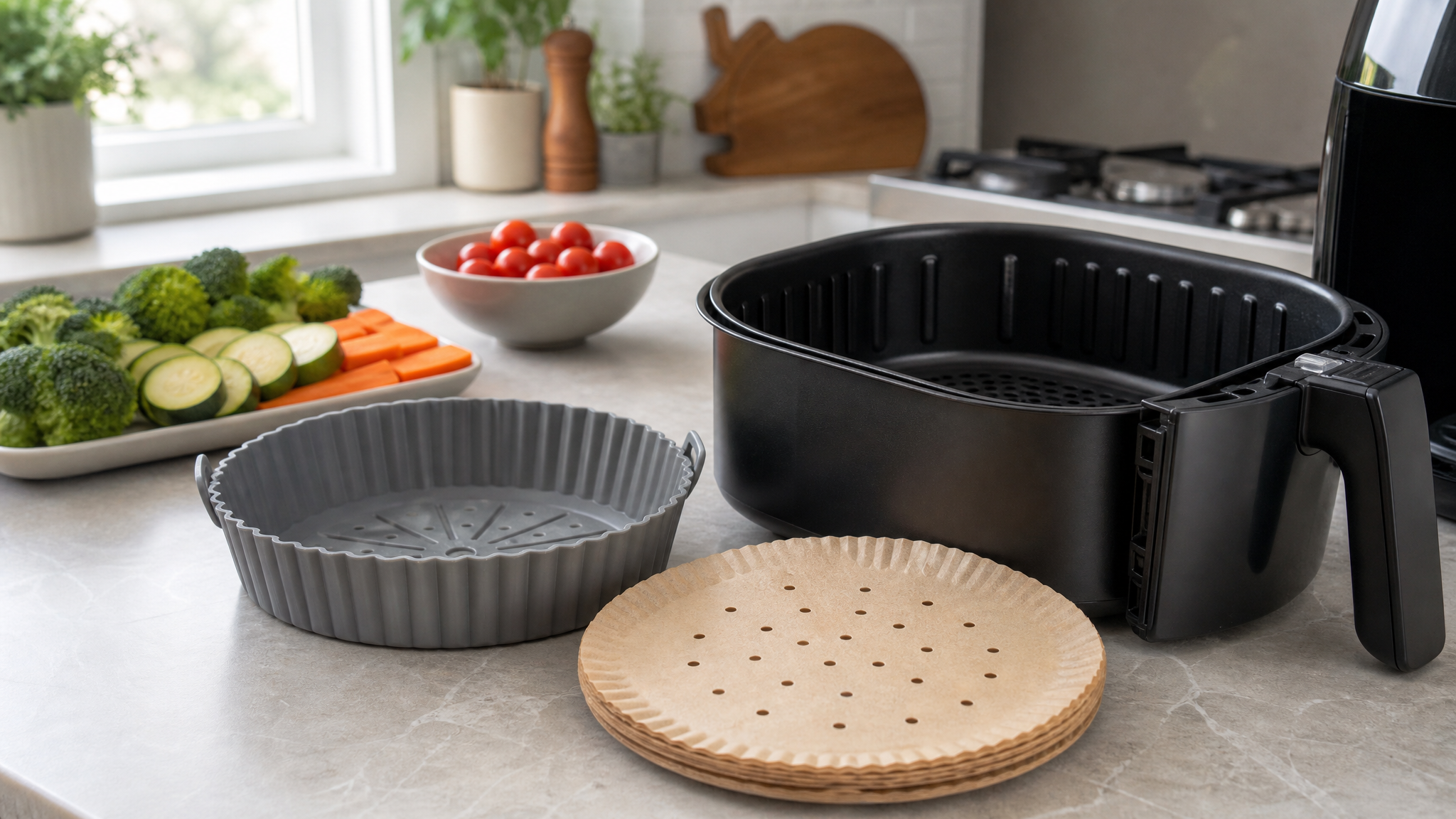
If you are trying to choose the best air fryer liners silicone vs parchment option for daily cooking, the honest answer is that silicone and parchment solve slightly different problems. Silicone liners are reusable and better for saucy or messy foods. Parchment liners are thinner, disposable, and usually better when you want less interference with airflow and crisping.
The right choice depends on what frustrates you most: cleanup, sticking, waste, crisp texture, or remembering to wash one more kitchen accessory after dinner. This comparison keeps the focus on real air fryer use, cautious safety habits, and which liner is worth buying for your kitchen.
Disclosure: This article may contain affiliate links. If you buy through them, Healthy Kitchen Reviews may earn a commission at no extra cost to you.
Quick Verdict: Which Air Fryer Liner Should You Buy?
Choose silicone air fryer liners if you want a reusable liner for sticky marinades, vegetables with oil, wings, tofu, fish, or foods that leave a lot of residue in the basket. Silicone is the better fit when cleanup is your main pain point and you do not mind washing the liner after each use.
Choose parchment air fryer liners if you want convenience, lighter cleanup, and better airflow for foods that need crisp edges. Parchment is usually the easier option for fries, nuggets, breaded foods, reheating pizza, and single-use cooking where washing a silicone insert feels like a chore.
For most home cooks, the best setup is not either/or. Keep parchment liners for crisp foods and quick meals, then use a silicone liner when the food is wet, sticky, or likely to make the basket annoying to clean.
Silicone vs Parchment Air Fryer Liners: Side-by-Side Comparison
| Factor | Silicone liner | Parchment liner |
|---|---|---|
| Best use | Messy, saucy, oily, or sticky foods | Dry, crisp, breaded, or quick convenience foods |
| Cleanup | Reusable, but must be washed | Disposable, usually fastest cleanup |
| Airflow | Can block more basket airflow if deep or poorly fitted | Usually less obstructive when perforated and properly sized |
| Crisping | Good enough for many foods, but can soften results | Usually better for crisping because it is thinner |
| Cost over time | Higher upfront cost, lower repeated buying | Low upfront cost, repeated replacement cost |
| Waste | Less disposable waste | Single-use waste unless compostable and accepted locally |
| Safety habit | Must match food-contact and heat-rating claims | Must be weighted with food and kept away from exposed heating elements |
| Best buyer | Frequent air fryer user who hates scrubbing | Convenience-focused cook who wants easy release and crisp results |
How Silicone Air Fryer Liners Work
Silicone air fryer liners are usually flexible bowls, mats, or trays designed to sit inside the air fryer basket. They catch drips and crumbs before they bake onto the basket surface. Many have ridges, perforations, or raised channels meant to keep some airflow moving under the food.
The practical advantage is easy to understand: instead of scrubbing the basket every time you cook sticky chicken, glazed vegetables, salmon, or tofu, you wash the silicone liner. That can make air frying feel less annoying during busy weeks. If you already care about basket materials and coatings, our guide to air fryers with ceramic coating covers related nonstick considerations.
Where silicone liners are strongest
- Sticky marinades, saucy foods, and foods that drip as they cook
- Vegetables tossed with oil or seasoning
- Fish, tofu, wings, and small items that can leave residue
- Frequent cooking where buying disposable liners feels wasteful
- Air fryer baskets that are difficult to scrub around corners or grate patterns
Where silicone liners can disappoint
- They can reduce airflow if the liner is too deep, too solid, or too tight in the basket
- They need washing, which defeats the point for some convenience-focused cooks
- They can hold moisture around food, so fries and breaded foods may crisp less aggressively
- Cheap liners may have unclear heat ratings, vague material claims, or a poor basket fit
How Parchment Air Fryer Liners Work
Parchment air fryer liners are thin disposable sheets, often round or square, that sit under the food. The better ones are perforated so hot air can still move through the basket. They reduce sticking and crumbs without adding much thickness between the food and the basket.
Parchment is especially useful when you want a quick meal and do not want to wash an accessory afterward. It also tends to interfere less with crisping than a deeper silicone bowl. For lower-oil cooking habits, pair liners with sensible food choices rather than assuming the liner itself makes the meal healthier; our low-oil air fryer guide explains that distinction in more detail.
Where parchment liners are strongest
- Crisp foods such as fries, nuggets, breaded vegetables, and reheated pizza
- Quick snacks or single meals where convenience matters most
- Foods that stick lightly but do not release heavy sauces or grease
- Small kitchens where storing another reusable accessory is annoying
- People who want the simplest cleanup possible after occasional air fryer use
Where parchment liners can disappoint
- They are disposable, so repeated use adds cost and waste
- They can move around if placed in the basket before food weighs them down
- They are not meant to touch exposed heating elements
- They may tear or soak through with wet, greasy, or heavily sauced foods
Safety Notes Buyers Should Not Skip
Air fryer liners sit in a high-heat, high-airflow appliance, so safety depends on fit, material, and use. Look for liners clearly sold for air fryers, check the stated maximum temperature, and follow both the liner instructions and your air fryer manual. The FDA regulates food-contact substances, but vague marketplace claims like food grade are not a substitute for checking the actual product details and seller credibility.
With parchment, the big rule is simple: never preheat the air fryer with loose parchment inside. Lightweight parchment can lift toward the heating element if food is not holding it down. Reynolds also advises using air fryer parchment with food on top and avoiding contact with the heating element. With silicone, avoid liners that smell strongly, feel flimsy, or do not list a clear heat rating.
Liners also do not replace basic food safety. If you cook chicken, fish, burgers, or leftovers in an air fryer, use a thermometer and follow safe internal-temperature guidance from USDA rather than relying on color alone.
Which Liner Is Better for Crisping?
Parchment usually wins for crisping, especially when it is perforated and properly sized. Because it is thin, it tends to interfere less with the basket airflow. That matters for foods where dry heat and circulating air create the texture people expect from an air fryer.
Silicone can still cook food well, but deeper silicone bowls may trap moisture and reduce direct air movement around the bottom of the food. If crisping is your priority, use silicone mainly for foods where cleanup matters more than crunch. For best results, avoid overcrowding, shake or turn food when needed, and choose a liner that does not cover more of the basket than necessary.
Which Liner Is Better for Cleanup?
Silicone wins when the mess is heavy. Sticky glaze, oil, melted cheese, fish juices, and seasoning paste are easier to wash off a removable silicone liner than a fixed basket. If you air fry often and hate scrubbing, silicone can make the appliance feel easier to live with.
Parchment wins when the mess is light and you want the least work after cooking. You lift out the liner, throw it away, and wipe the basket if needed. The trade-off is that parchment is not as protective with wet foods and does not always catch everything. For deeper cleaning habits, this site already has a practical guide on how to clean an air fryer properly.
Cost and Waste: Reusable vs Disposable
Silicone usually costs more upfront but can be cheaper over time if you use your air fryer several times a week. It also creates less single-use waste, which matters if you are trying to make your kitchen routine less disposable.
Parchment costs less at the start and feels more convenient, but the cost adds up if you use one every day. Some parchment may be compostable in theory, but local composting rules vary, and greasy food residue can complicate disposal. For occasional air fryer users, parchment may still be the more realistic choice because it asks less of you.
Fit Matters More Than Most Shoppers Think
A good liner should match the shape and size of your basket without covering important airflow areas more than necessary. A liner that is too large can curl up, crowd the food, or touch areas it should not touch. A liner that is too small may not protect the basket well enough to justify using it.
For basket air fryers, measure the flat cooking surface before buying. For air fryer ovens, make sure the liner is intended for tray use and does not block the fan path. If you are still choosing the appliance itself, our guide to air fryer accessories every cook needs can help you think through which extras are genuinely useful.
Best Choice by Cooking Style
| Factor | Silicone liner | Parchment liner |
|---|---|---|
| Fries and frozen snacks | Usable, but may soften the bottom slightly | Best choice for crisping and convenience |
| Wings or saucy chicken | Best choice for catching sticky residue | Can soak through or tear if very wet |
| Fish or tofu | Good for delicate foods and easy cleanup | Good if lightly oiled and not too wet |
| Vegetables | Best for oily or seasoned vegetables | Best for dry-roasted vegetables when crisp edges matter |
| Reheating pizza | Not ideal if it traps moisture | Usually better for crisping the crust |
| Daily air fryer use | Best if you will wash it consistently | Best if you value no-wash convenience |
What I Would Buy First
If I were buying one liner type first, I would start with perforated parchment liners for the exact basket size. They are inexpensive, easy to test, and less likely to change the texture of crisp foods. That makes them the safer first purchase for most people.
Then I would add one well-fitting silicone liner if I used the air fryer often for sticky or oily foods. Silicone is not automatically better, but it is genuinely useful when the alternative is scrubbing baked-on residue after dinner.
Frequently Asked Questions
Are silicone air fryer liners safe?
They can be safe when they are clearly intended for air fryer use, made for food contact, used within the stated heat limit, and kept away from direct contact with heating elements. Avoid vague listings that do not provide temperature guidance or material details.
Can parchment paper catch fire in an air fryer?
Loose parchment can be risky if it lifts into the heating element, especially during preheating. Do not preheat with empty parchment in the basket. Add parchment only when food will weigh it down, and follow the liner instructions.
Do air fryer liners block airflow?
Some do. Deep silicone liners and solid sheets can block more airflow than perforated parchment. That can affect browning and crisping, especially on the bottom of food.
Are perforated liners better than solid liners?
Usually, yes. Perforations help preserve airflow, which is central to air fryer cooking. Solid liners can still be useful for messy foods, but they may reduce crisping.
Can I use regular parchment paper instead of air fryer parchment liners?
You can only do this cautiously if the parchment is rated for the temperature you use, cut to fit properly, and weighted down with food. Pre-cut perforated air fryer liners are usually easier and safer to use correctly.
Should I use liners every time I air fry?
No. Skip the liner when maximum crisping matters or when the food is not likely to stick. Use a liner when cleanup, sticking, or delicate food handling is the bigger concern.
Conclusion
The best air fryer liners silicone vs parchment choice depends on how you cook. Parchment is usually better for crisping, convenience, and quick cleanup. Silicone is better for reusable cleanup support, sticky foods, and frequent air fryer users who hate scrubbing baskets.
For most healthy home kitchens, the practical answer is to keep both: perforated parchment for crisp foods and a good silicone liner for messy meals. That combination gives you flexibility without pretending one accessory is perfect for every air fryer recipe.