How to Clean a Wooden Cutting Board: Everyday Care and Food-Safe Cleaning
Disclosure: Healthy Kitchen Reviews may earn a commission from qualifying purchases made through links on some pages. This practical care guide does not recommend a specific product.
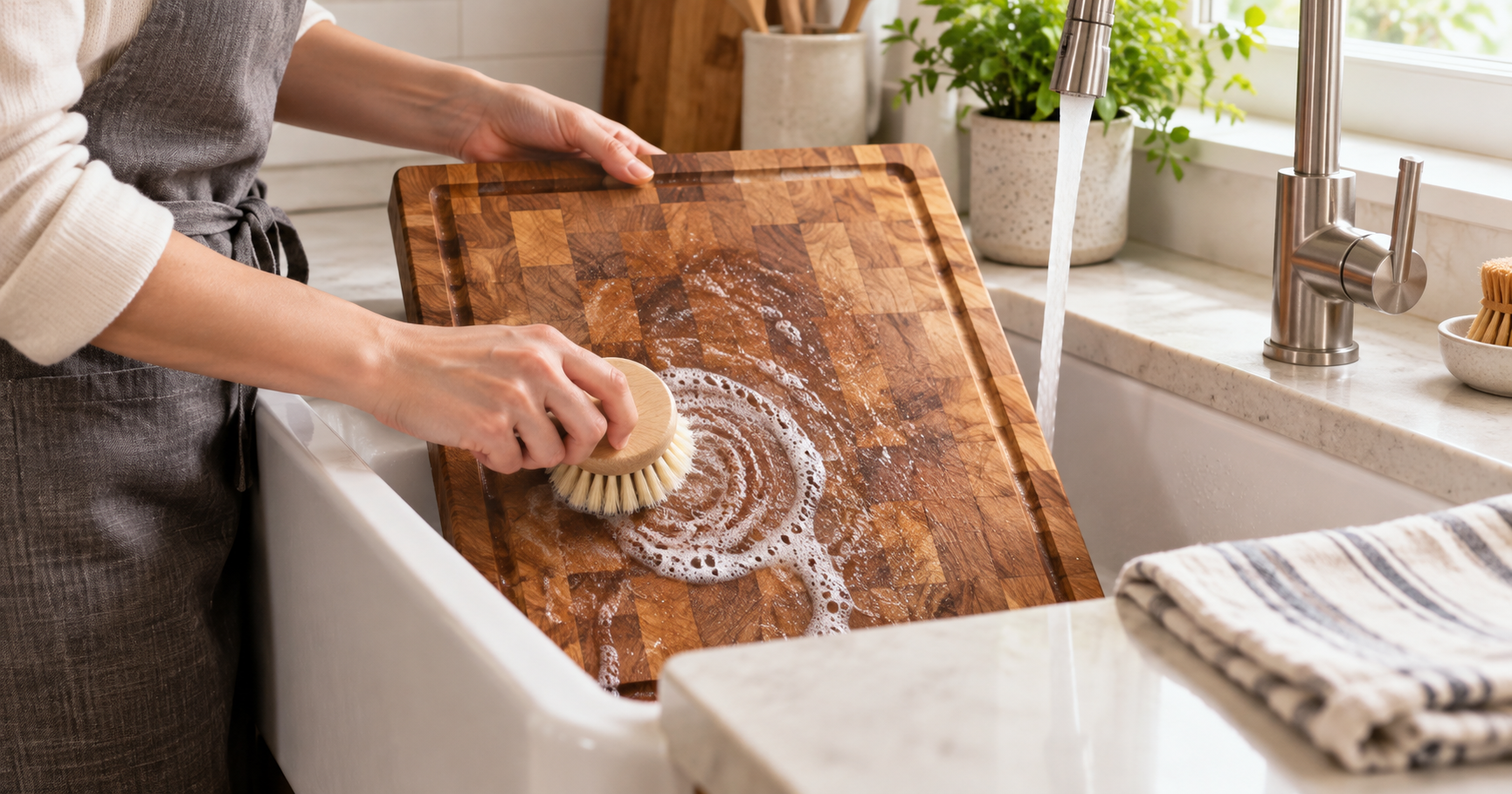
To clean a wooden cutting board, wash it promptly with hot, soapy water, rinse it, and dry it thoroughly. That simple routine is the starting point. For food-prep safety, the USDA says cutting boards should be washed with hot, soapy water after each use, then rinsed and air-dried or patted dry with clean paper towels.
How to Clean a Wooden Cutting Board After Everyday Use
- Remove loose food with a scraper or brush.
- Wash the surface with hot, soapy water.
- Rinse away soap residue.
- Dry the board thoroughly before storing it.
Keep the wash brief and focused on the surface. A wooden board is not a sink-soaking project. If your board came with care instructions, follow those first—especially for a board with glued joints, a special finish, or a handle.
After Raw Meat, Poultry, or Seafood
Use a clean board for ready-to-eat foods and clean the board, knife, and counter after working with raw animal foods. The USDA’s cutting-board guidance also describes sanitizing a cleaned board with a solution of 1 tablespoon of unscented liquid chlorine bleach per gallon of water. Follow the product label and the board manufacturer’s care instructions; when in doubt, use a separate board for raw proteins.
How to Handle Odors and Stains
Start with the ordinary wash-and-dry routine. If an odor or stain remains, avoid escalating to harsh methods without checking the board maker’s instructions. The goal is a clean food-prep surface, not a cosmetically perfect board. Deep cuts, splinters, loose joints, or a surface you cannot clean confidently are good reasons to stop using that board for food preparation and replace it.
Conditioning a Dry Wooden Board
Conditioning is separate from washing. John Boos, a cutting-board manufacturer, recommends food-grade mineral oil for its wood boards and advises applying it when the wood looks dry. Use the care instructions for your own board rather than assuming every finish needs the same treatment.
Common Mistakes to Avoid
- Leaving a wet board flat on the counter instead of drying it thoroughly.
- Using the same unwashed board for raw proteins and ready-to-eat foods.
- Ignoring deep cracks, splinters, or loose pieces.
- Using a cleaning or conditioning method that conflicts with the manufacturer’s instructions.
Related Healthy Kitchen Guides
- Wood vs. Plastic Cutting Boards: Which Is Safer and Better?
- Best Non-Toxic Cutting Boards for Raw Meat
- Best Dishwasher-Safe Non-Toxic Cutting Boards
Frequently Asked Questions
Can a wooden cutting board go in the dishwasher?
Check the manufacturer’s instructions for your board. This guide focuses on hand-washing with hot, soapy water, rinsing, and thorough drying.
How often should I oil a wooden cutting board?
Follow your board maker’s instructions. For example, John Boos says a dry appearance is a cue to oil its wood boards.
The Bottom Line
Cleaning a wooden cutting board does not need a complicated routine: wash it with hot, soapy water after use, rinse it, dry it thoroughly, and use authoritative food-safety guidance after raw-protein prep. Use the board maker’s instructions for conditioning and for any problem that calls for more than everyday cleaning.
Sources
- USDA Food Safety and Inspection Service: Cutting Boards (accessed September 22, 2026)
- USDA Food Safety and Inspection Service: Cleanliness Helps Prevent Foodborne Illness (accessed September 22, 2026)
- John Boos: Care and Maintenance (accessed September 22, 2026)