How to Remove Rust From a Cast-Iron Skillet and Re-Season It
Disclosure: This article may contain affiliate links. If you buy through them, Healthy Kitchen Reviews may earn a commission at no extra cost to you.
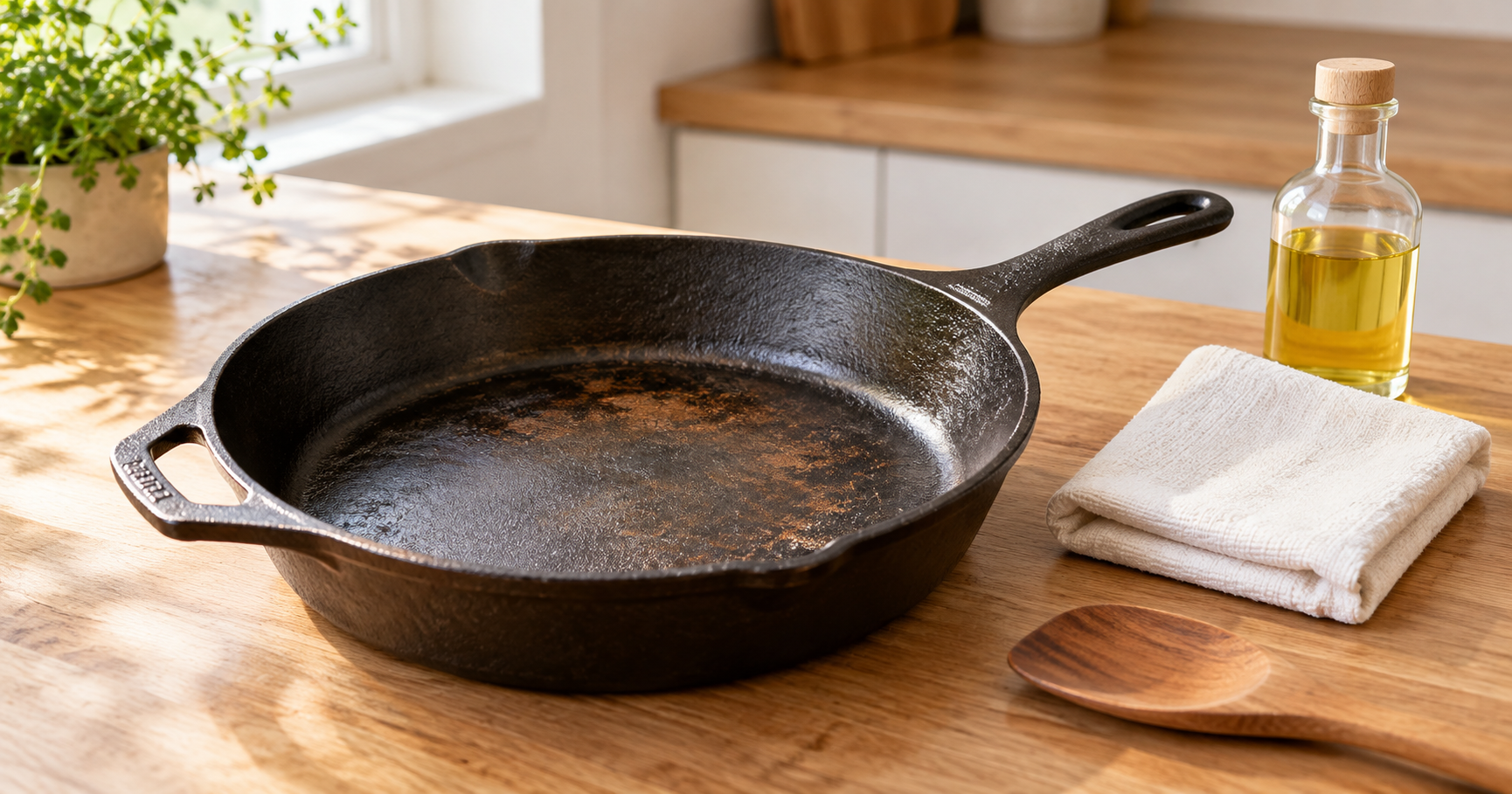
If you are looking for how to remove rust from a cast-iron skillet, the practical answer is to remove the rust, dry the bare iron completely, apply a very thin layer of oil, and re-season it in the oven. A little rust does not mean the pan is finished; it means the protective seasoning needs to be rebuilt.
This guide follows the restoration sequence published by Lodge Cast Iron. It is for bare, seasoned cast iron—not enamel-coated cookware. If your pan has an enamel finish, use its manufacturer’s care instructions instead.
| What you see | What to do |
|---|---|
| Light orange surface rust | Scrub the rusty area, wash, dry thoroughly, then re-season. |
| Rust across much of the pan | Use the same restoration sequence, allowing enough time to remove rust before seasoning. |
| Enamel-coated cookware | Do not use this bare-cast-iron restoration method; check the manufacturer’s care guide. |
Why Cast Iron Rusts
Bare cast iron relies on a layer of baked-on oil, called seasoning, for protection. Lodge notes that a pan can rust when it is left to soak, put in a dishwasher, allowed to air-dry, or stored in a damp place. The fix is not a special coating or a shortcut: remove the rust and rebuild a thin, cured seasoning layer.
What You Need
- Steel wool or another suitable rust-removal scrubber
- Warm water and dish soap
- A lint-free cloth or paper towels
- Cooking oil
- An oven and aluminum foil for the lower rack
How to Remove Rust From a Cast-Iron Skillet
1. Scrub the rusty areas and wash the pan
Scour the rust with steel wool, then wash the skillet with warm, soapy water. This can remove some remaining seasoning, which is expected during a restoration. The goal at this stage is a clean surface that is ready to be dried and re-seasoned.
2. Dry it completely
Dry the skillet immediately with a lint-free cloth or paper towel. Lodge also suggests placing it on low stovetop heat for a few minutes to make sure moisture is gone. Do not leave the freshly washed pan to air-dry.
3. Apply a very thin layer of oil
Rub a small amount of cooking oil over the entire pan. Thin is the important word: the surface should look lightly coated, not wet or drippy. Too much oil can leave the new seasoning sticky rather than smooth.
4. Bake upside down for one hour
Preheat the oven to 450–500°F. Put aluminum foil on the bottom rack to catch any excess oil, then place the skillet upside down on the center rack. Lodge’s restoration guide calls for one hour of baking so the oil can cure into seasoning instead of pooling in the pan.
5. Let the skillet cool in the oven
Turn the oven off and allow the skillet to cool inside. Once it is cool enough to handle, inspect the surface. If you removed extensive rust or the finish still looks uneven, repeat the thin-oil seasoning process rather than applying a heavy coat of oil.
Avoid These Rust-Return Mistakes
- Leaving the skillet in the sink: wash it, dry it, and put it away promptly.
- Putting bare cast iron in the dishwasher: dishwasher exposure can damage the protection that keeps the iron from rusting.
- Air-drying after washing: dry with a cloth and use brief low heat if needed.
- Using too much seasoning oil: a thin coat cures more reliably than a glossy, wet layer.
- Storing it somewhere damp: choose a dry cabinet or shelf.
How This Fits Into Regular Cast-Iron Care
Restoration is occasional maintenance; daily care is mostly about keeping water from lingering on the pan and keeping the seasoning in use. When you are choosing a new pan, see our guide to cast-iron skillets for healthy cooking. If you are deciding between materials for everyday meals, our carbon steel vs. cast iron comparison explains the practical trade-offs.
Frequently Asked Questions
Can you use soap on a rusty cast-iron skillet?
Yes, during this restoration process. Lodge’s published method calls for washing the scrubbed pan with warm, soapy water before drying and re-seasoning it.
Do you need to re-season cast iron after removing rust?
Yes. Rust removal exposes bare iron and can remove remaining seasoning. Re-seasoning with a very thin layer of oil is the final part of the manufacturer-backed restoration sequence.
Should you use this method on an enameled cast-iron Dutch oven?
No. Enameled cast iron has a different surface and its own care instructions. Check the manual or official care page for your specific brand before using any abrasive or seasoning method.
The Bottom Line
To remove rust from a cast-iron skillet, scrub and wash the rust away, dry the pan completely, add a very thin layer of oil, and bake it upside down for one hour at 450–500°F. The steady routine after that is simple: keep the pan dry, avoid long soaking or dishwasher cycles, and store it in a dry place.
Source
Lodge Cast Iron: How to Restore and Season a Rusty Cast Iron Skillet (accessed September 24, 2026).