Best Compact Juicers for Small Kitchens: Space-Saving Picks That Still Feel Useful
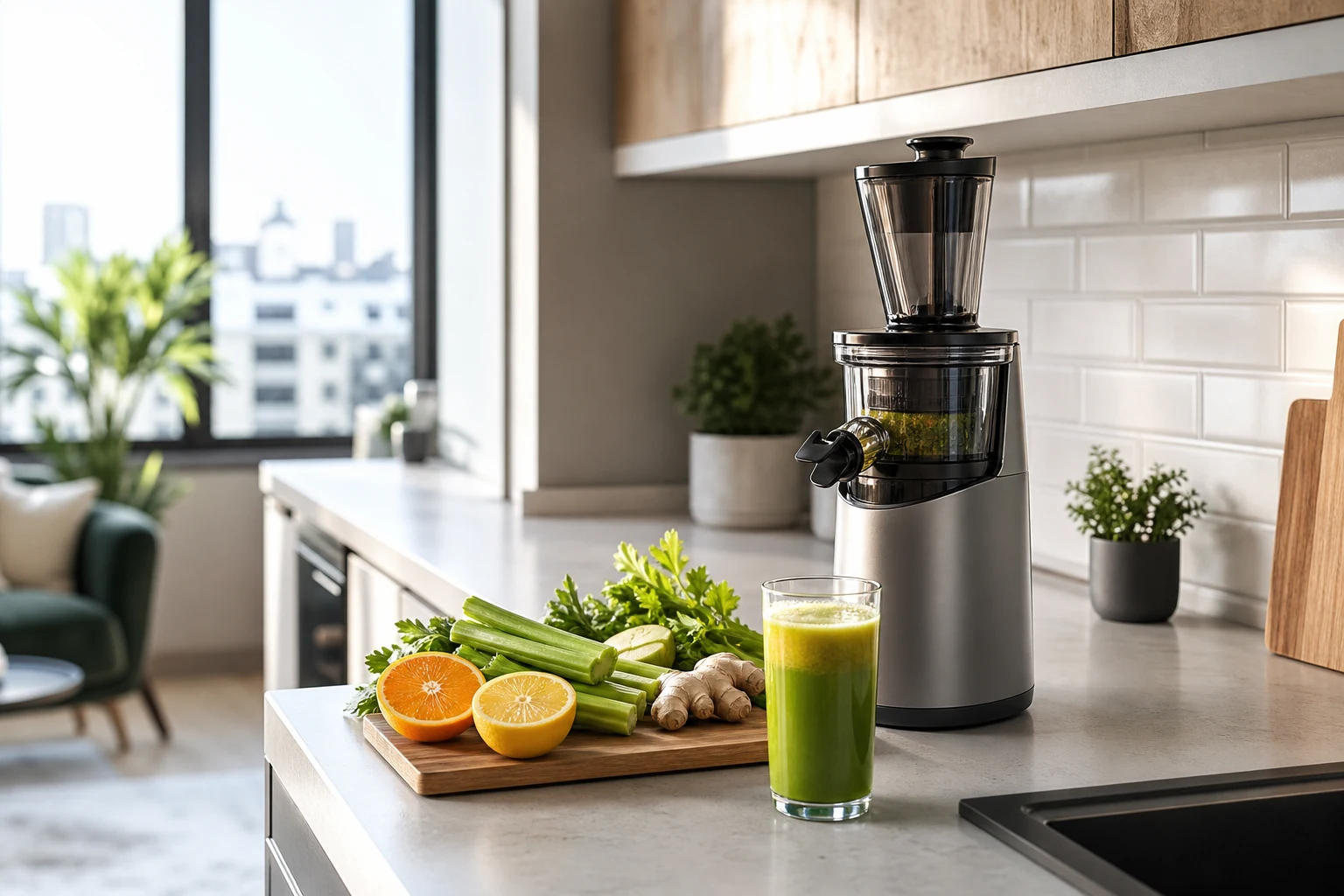
If you are looking for the best compact juicers for small kitchens, the real problem is not just finding a juicer that looks small online. It is finding one that fits your counter, stores without drama, cleans quickly in a small sink, and still makes enough juice to feel worth owning. Tiny kitchens have a way of exposing bad purchases fast. If an appliance is awkward to move, messy to rinse, or too tall for the cabinet gap, it usually stops getting used.
This guide focuses on compact juicers that make sense for apartments, narrow counters, shared kitchens, and one- or two-person juice routines. Some are fast centrifugal models for quick cups. Others are slim slow juicers for buyers who care more about calm extraction and cleanup. The best choice depends on whether you need the smallest footprint, the fastest morning routine, or the most realistic slow-juicer experience in limited space.
Disclosure: This article may contain affiliate links. If you buy through them, Healthy Kitchen Reviews may earn a commission at no extra cost to you.
Quick Comparison Table
| Rank | Product | Best For | Capacity | Key Feature | CTA |
|---|---|---|---|---|---|
| 1 | Hurom H310 Easy Clean Slow Juicer | Best overall compact slow juicer | Not clearly specified | Hurom lists a 4-inch diameter, less-than-8-pound weight, self-feeding hopper, and 43 RPM Slow Squeeze Technology | View on Amazon |
| 2 | magic bullet Mini Juicer | Best budget-friendly mini juicer for quick cups | 16 oz juice cup and 52 oz pulp bin are listed by nutribullet | 400 W motor, 2-inch feed chute, centrifugal juicing, and top-rack dishwasher-safe removable attachments | View on Amazon |
| 3 | Breville Juice Fountain Compact | Best compact centrifugal juicer with a wider chute | 25 oz juice jug is listed by Breville | 9.1 x 9.8 x 15.7-inch dimensions, 3-inch feed chute, built-in pulp collection, and stainless steel cutters | View on Amazon |
| 4 | Breville Big Squeeze Slow Juicer | Best slim slow juicer if height is easier than width | Not clearly specified | 8.9 x 8.1 x 17.5-inch dimensions, 240 W low-impact motor, slow compression design, and quick-rinse technology | View on Amazon |
Our Top Picks
- Best Overall: Hurom H310 Easy Clean Slow Juicer because it is directly designed around small-kitchen footprint and easy cleaning.
- Best Budget-Friendly Mini Pick: magic bullet Mini Juicer for quick personal cups and tight counters.
- Best Compact Centrifugal Pick: Breville Juice Fountain Compact for a wider chute inside a space-saving footprint.
- Best Slim Slow Juicer: Breville Big Squeeze Slow Juicer for buyers who can spare height more easily than counter width.
Detailed Reviews of the Best Compact Juicers for Small Kitchens
1. Hurom H310 Easy Clean Slow Juicer
The Hurom H310 is the strongest overall pick for small kitchens because Hurom directly positions it for compact storage and tight spaces. The brand says it has the smallest footprint among Hurom juicers, a 4-inch diameter, a weight under 8 pounds, a self-feeding hopper, and 43 RPM Slow Squeeze Technology. That combination makes it more small-kitchen specific than a full-size juicer that merely looks slim in a photo.
Key Features
- Best for: Best overall compact slow juicer
- Capacity: Not clearly specified
- Key feature: Hurom lists a 4-inch diameter, less-than-8-pound weight, self-feeding hopper, and 43 RPM Slow Squeeze Technology
- Verification source: manufacturer product information
What Makes It Stand Out
Its biggest advantage is that it solves two small-kitchen problems at once: counter footprint and cleaning friction. A juicer can be compact and still annoying if it has a messy strainer. Hurom’s H310 uses an Easy Clean, no-strainer chamber design, which is useful when storage space and sink space are both limited.
How It Helps Your Kitchen Routine
Choose this if you want fresh juice often enough to justify a slow juicer, but you do not have room for a large horizontal machine. It makes the most sense for one- or two-person households, apartment kitchens, and buyers who want the juicer to tuck away without feeling like a storage project.
How to Use It
Cut firm produce into manageable pieces, load the hopper sensibly, and rinse the chamber soon after use. Small kitchens punish clutter, so the best routine is to clean and put the machine away before pulp dries.
Pros and Cons
Pros:
- Specifically described by Hurom as compact and small-kitchen friendly
- Listed 4-inch diameter and less-than-8-pound weight are useful space cues
- Easy Clean chamber can reduce cleanup friction
Cons:
- Capacity is not clearly specified in the fetched product text
- Premium compact slow juicer may be more than an occasional user needs
Customer Feedback Snapshot
The likely satisfaction point is habit fit. A juicer that is light, narrow, and easier to rinse has a better chance of staying in rotation when a kitchen has limited counter and cabinet space.
Best For
This is best for shoppers who want best overall compact slow juicer. Skip it if your real priority is a larger batch machine or a juicer that can stay permanently on a big counter.
2. magic bullet Mini Juicer
The magic bullet Mini Juicer is the obvious pick for buyers who want a small, simple, fast machine rather than a premium slow juicer. Nutribullet lists a 400-watt motor, 2-inch feed chute, 16-ounce juice cup, 52-ounce pulp bin, and top-rack dishwasher-safe removable attachments. That makes it especially appealing for renters, beginners, and anyone making one glass at a time.
Key Features
- Best for: Best budget-friendly mini juicer for quick cups
- Capacity: 16 oz juice cup and 52 oz pulp bin are listed by nutribullet
- Key feature: 400 W motor, 2-inch feed chute, centrifugal juicing, and top-rack dishwasher-safe removable attachments
- Verification source: manufacturer product information
What Makes It Stand Out
This is a high-speed centrifugal juicer, so it is not trying to compete with slow juicers on calm extraction style. Its advantage is convenience. You juice directly into the 16-ounce cup, twist on the to-go lid, and keep the workflow small enough for a tight counter.
How It Helps Your Kitchen Routine
Pick this if you mostly want quick green juice, apple-celery juice, or carrot-orange juice without buying a large appliance. It is best for light daily use or occasional fresh juice, not for serious batch juicing.
How to Use It
Prep produce to fit the 2-inch chute, keep the 16-ounce cup under the spout, and clean the stainless steel sieve with the included brush after juicing. Centrifugal screens are easier to clean before pulp dries.
Pros and Cons
Pros:
- Compact mini format suits apartments and small counters
- Verified 400 W motor and 16 oz cup
- Faster than slow juicing for quick single servings
Cons:
- Not the best style for quiet slow juicing or leafy-green yield
- Small cup size means it is not ideal for family batches
Customer Feedback Snapshot
The happy buyer is someone who values speed, low cost, and tiny-kitchen practicality. The wrong buyer is someone expecting a full cold-press routine from a mini centrifugal machine.
Best For
This is best for shoppers who want best budget-friendly mini juicer for quick cups. Skip it if your real priority is a larger batch machine or a juicer that can stay permanently on a big counter.
3. Breville Juice Fountain Compact
The Breville Juice Fountain Compact is a strong choice if you want a small-kitchen juicer but still prefer the feel of a more capable centrifugal model. Breville lists dimensions of 9.1 by 9.8 by 15.7 inches, a 25-ounce juice jug, a 3-inch extra-wide chute, stainless steel cutters, and pulp collection inside the unit footprint. That integrated pulp design is a real space saver compared with models that need a large external pulp bin behind or beside the machine.
Key Features
- Best for: Best compact centrifugal juicer with a wider chute
- Capacity: 25 oz juice jug is listed by Breville
- Key feature: 9.1 x 9.8 x 15.7-inch dimensions, 3-inch feed chute, built-in pulp collection, and stainless steel cutters
- Verification source: manufacturer product information
What Makes It Stand Out
The 3-inch chute is the headline small-kitchen convenience feature. Less chopping means less prep mess on a narrow counter. The built-in pulp container also keeps the juicer visually cleaner while you work, which matters when every inch of counter space is doing something.
How It Helps Your Kitchen Routine
Choose this if you want faster juice and a wider feed chute but still need a compact footprint. It is a practical fit for carrot-apple, orange, celery, cucumber, and mixed breakfast juices where speed matters more than a slow-juicer ritual.
How to Use It
Use firm produce that fits safely through the chute, keep the 25-ounce jug in place, and rinse the cutter basket and pulp area promptly. Compact does not mean no cleanup; it means the workflow takes less room.
Pros and Cons
Pros:
- Breville lists compact 9.1 x 9.8 x 15.7-inch dimensions
- 3-inch chute reduces chopping for many ingredients
- Pulp collects inside the unit footprint to conserve counter space
Cons:
- Centrifugal style can be louder and foamier than slow juicing
- Not as tiny as the magic bullet Mini Juicer
Customer Feedback Snapshot
This is for the buyer who wants compact, but not toy-like. It still feels like a real juicer while staying more manageable than many full-size centrifugal models.
Best For
This is best for shoppers who want best compact centrifugal juicer with a wider chute. Skip it if your real priority is a larger batch machine or a juicer that can stay permanently on a big counter.
4. Breville Big Squeeze Slow Juicer
The Breville Big Squeeze is not the smallest machine here, but it belongs in the discussion because its footprint is slim for a slow juicer. Breville lists dimensions of 8.9 by 8.1 by 17.5 inches, a 240-watt low-impact motor, a slow compression design, stainless steel mesh filter, Tritan juice jug, and quick-rinse technology. If you have vertical clearance under cabinets, it can be easier to place than a long horizontal masticating juicer.
Key Features
- Best for: Best slim slow juicer if height is easier than width
- Capacity: Not clearly specified
- Key feature: 8.9 x 8.1 x 17.5-inch dimensions, 240 W low-impact motor, slow compression design, and quick-rinse technology
- Verification source: manufacturer product information
What Makes It Stand Out
The useful small-kitchen point is shape. Some buyers have shallow counter depth but enough height. Others can store a vertical juicer more easily than a horizontal model. The Big Squeeze gives you slow-juicer behavior without the long horizontal footprint that can dominate a small counter.
How It Helps Your Kitchen Routine
Choose this if you want slow compression for leafy greens, berries, tomatoes, and mixed juices, but you still need a narrow base. It is less of a mini juicer and more of a compact-ish slow juicer for people who care about extraction style.
How to Use It
Use the chute sensibly, alternate firm and juicy ingredients, and use the rinse feature between recipes when helpful. For full cleaning, disassemble and wash the filter and juicing parts before pulp dries.
Pros and Cons
Pros:
- Slim 8.9 x 8.1-inch footprint can work on tight counters
- Verified 240 W low-impact motor and slow compression design
- Quick-rinse feature can help in small sinks between recipes
Cons:
- Taller than the other picks and may not fit every cabinet clearance
- Capacity was not clearly specified in the fetched product information
Customer Feedback Snapshot
The right buyer is someone who wants a slow juicer but cannot spare the counter width of a horizontal model. If you want the smallest possible juicer, choose Hurom H310 or magic bullet instead.
Best For
This is best for shoppers who want best slim slow juicer if height is easier than width. Skip it if your real priority is a larger batch machine or a juicer that can stay permanently on a big counter.
How These Compact Juicers Compare
These juicers split into two practical groups. The magic bullet Mini Juicer and Breville Juice Fountain Compact are centrifugal models, which means they are faster and better for quick cups, but they can be louder and may create more foam. The Hurom H310 and Breville Big Squeeze are slow juicers, which means they usually ask for a calmer routine and more patient feeding, but they can feel better for people who juice leafy greens, softer produce, or mixed recipes more often.
For the smallest kitchen, size alone should not decide the winner. A very small juicer can still be annoying if the cup is too tiny for your routine or the pulp area is messy. A slightly taller machine can be easier to live with if it cleans faster, stores upright, and does not spread parts across the counter. That is why the H310 ranks first overall: it is compact by design, but also built around the cleaning problem that often kills the juicing habit.
How to Choose the Best Compact Juicer for a Small Kitchen
Measure counter depth, cabinet height, and storage space first
Before comparing motors or juicing style, measure the actual space where the juicer will live. Small kitchens often fail appliances because of one overlooked detail: a machine may fit on the counter but not under the cabinet, or it may store in a cabinet but feel too heavy to pull out. Check height, depth, and nearby sink space before buying.
Decide between fast centrifugal juice and slow juicing
Centrifugal juicers are better when you want speed, simple fruit-and-vegetable juice, and a lower barrier to entry. Slow juicers are better when you want a calmer routine, leafy-green flexibility, and a more deliberate process. Neither style is automatically healthier. The better choice is the one you will use and clean consistently.
Take cleanup seriously
Cleanup matters even more in a small kitchen because there is less room to spread out parts. Look for fewer awkward components, easy-rinse designs, dishwasher-safe removable pieces when clearly listed, and included brushes for mesh screens. If cleanup feels like a project, the juicer will probably become cabinet clutter.
Do not overbuy for imaginary batch cooking
Many people imagine they will make big pitchers of juice every morning. In a small kitchen, a personal cup or two may be more realistic. Buy for the routine you will actually keep. A compact juicer that makes one good glass quickly can be more valuable than a larger machine that technically does more but feels annoying to set up.
Healthy Kitchen Notes for Small-Space Juicing
A compact juicer can support healthier home habits if it helps you use fresh produce more often, but juice is still not the same as eating whole fruits and vegetables. Juicing removes some fiber depending on the machine and recipe, and portions can add up quickly when fruit-heavy blends are involved. Use juice as part of a broader routine, not as a shortcut around balanced meals.
Food safety also matters because juicing usually uses raw produce. Wash fruits and vegetables well, trim damaged areas, keep cutting boards clean, and clean juicer parts promptly. The CDC notes that raw fruits and vegetables can carry germs, so careful washing and clean prep habits are especially important when juice is consumed fresh.
For more buying help, see our guides to best juicers for beginners, best masticating juicers, best cold press juicers, best centrifugal juicers, best juicers for ginger, and best juicers for carrots and beets.
Frequently Asked Questions
What type of juicer is best for a small kitchen?
The best type depends on your routine. A mini centrifugal juicer is usually best for fast single cups, while a compact slow juicer is better if you care more about leafy greens, quieter operation, and a more deliberate juice routine.
Are compact juicers powerful enough?
Some are. Power and performance vary by model, so it is better to look at verified product details and real use case fit than assume small means weak. For example, the magic bullet Mini Juicer lists a 400 W motor, while Breville lists a 3-inch chute and compact footprint for the Juice Fountain Compact.
Is a slow juicer too big for an apartment kitchen?
Not always. Some slow juicers are large, but models like the Hurom H310 are designed around a small footprint. The key is checking height, weight, storage, and cleaning needs before buying.
Which compact juicer is easiest to clean?
Among these picks, the Hurom H310 is the most cleanup-focused because Hurom emphasizes its Easy Clean, no-strainer chamber design. The magic bullet Mini Juicer is also practical for quick cleanup because nutribullet lists top-rack dishwasher-safe removable attachments.
Should I buy a compact juicer or a blender?
Buy a juicer if you specifically want separated juice. Buy a blender if you want smoothies that keep more whole-food fiber. In a small kitchen, a blender may be more versatile, but a compact juicer makes sense if fresh juice is the habit you actually want.
Can compact juicers handle carrots and ginger?
Many can handle firm ingredients when cut properly, but some compact models are better suited to softer produce or quick mixed juices. For frequent carrots, beets, and ginger, choose a model that clearly fits dense produce routines and clean it promptly after use.
What is the biggest mistake when buying a small juicer?
The biggest mistake is buying for the fantasy routine instead of the real kitchen. If you have limited counter space, choose a juicer you can lift, rinse, store, and use on an ordinary weekday.
Conclusion
The best compact juicers for small kitchens are the ones that respect your space as much as your produce. The Hurom H310 is the best overall pick because it is clearly designed for a small footprint and easier cleanup. The magic bullet Mini Juicer is the best quick personal option, while the Breville Juice Fountain Compact gives centrifugal buyers a wider chute without a sprawling setup. The Breville Big Squeeze is the better fit if you want slow juicing and can spare vertical space.
For most small-kitchen buyers, the smartest choice is the juicer that creates the least friction. If it fits, rinses quickly, and makes the amount of juice you actually drink, it has a much better chance of becoming part of your routine instead of another appliance you have to work around.