Best Juicers for Carrots and Beets: Strong Picks for Hard Produce
Best Juicers for Carrots and Beets: Strong Picks for Hard Produce
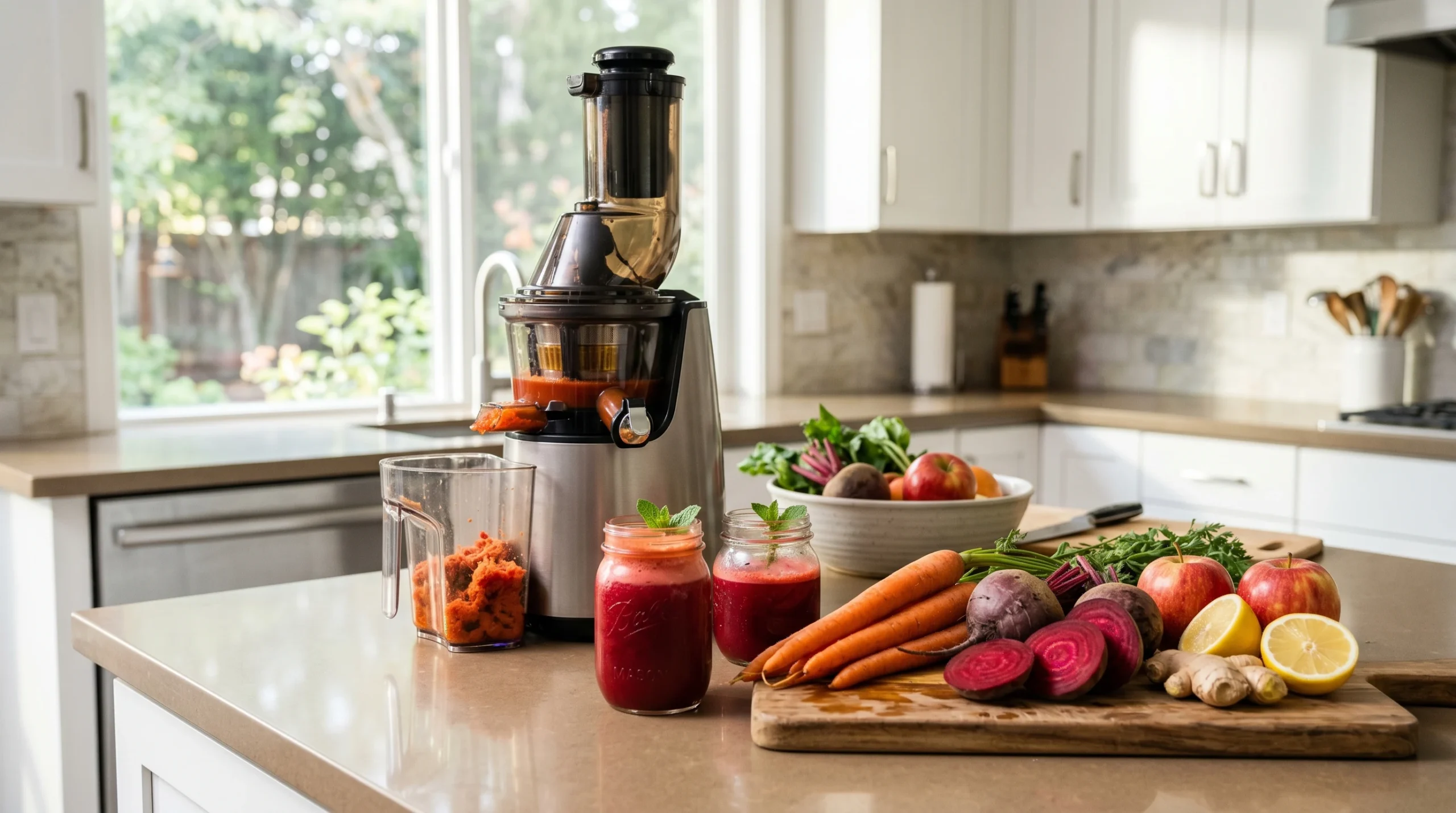
If you are looking for the best juicers for carrots and beets, you need a machine that can handle dense, fibrous, colorful produce without turning the routine into a chore. Carrots are firm and dry compared with oranges or cucumbers. Beets are dense, stain easily, and can leave stubborn pulp behind. A good juicer for this job needs steady pressure, sensible feeding, and cleanup that does not make you regret the whole idea.
For most buyers, the choice comes down to slow extraction versus speed. Slow juicers usually make more sense if carrot-beet juice is a regular habit and you care about a calmer process. Centrifugal juicers can still work if you want fast carrot-beet-apple juice and do not mind more foam or mesh-filter cleanup. This guide compares both styles so you can choose for your real kitchen, not just the prettiest product page.
Disclosure: This article may contain affiliate links. If you buy through them, Healthy Kitchen Reviews may earn a commission at no extra cost to you.
Quick Comparison Table
| Rank | Product | Best For | Capacity | Key Feature | CTA |
|---|---|---|---|---|---|
| 1 | Nama J2 Cold Press Juicer | Best overall for carrot-beet juice routines | Juice container maximum capacity is listed at 40 oz by Nama support | Self-feeding hopper, 50 RPM auger speed, and 200 W rated power consumption | View on Amazon |
| 2 | Kuvings AUTO10 Hands-Free Slow Juicer | Best large-hopper option for bigger carrot and beet batches | Not clearly specified | Hands-free slow juicer format with an automatic hopper design | View on Amazon |
| 3 | Hurom H400 Easy Clean Slow Juicer | Best easy-clean slow juicer for beet-stained pulp | Hurom lists a 550 ml chamber capacity | Easy Clean chamber set, self-feeding hopper, 90 RPM auger speed, and 150 W power use | View on Amazon |
| 4 | Omega NC900HDC Cold Press Juicer | Best classic horizontal juicer for controlled hard-produce feeding | Not clearly specified | 80 RPM, 150 W motor, 5 adjustable pressure settings, and automatic pulp ejection | View on Amazon |
| 5 | Breville Juice Fountain Cold Plus | Best fast option for carrot-beet-apple juice | Breville lists a 70 fl oz juice jug | 3.5-inch feed chute, 2 speed settings, 1000 W power, and Cold Spin Technology | View on Amazon |
Our Top Picks
- Best Overall: Nama J2 Cold Press Juicer because its hopper workflow makes regular carrot-beet juice easier to repeat.
- Best Large-Hopper Pick: Kuvings AUTO10 for bigger mixed-produce batches with less active feeding.
- Best Easy-Clean Pick: Hurom H400 Easy Clean Slow Juicer for buyers worried about beet-stained cleanup.
- Best Controlled Slow Juicer: Omega NC900HDC for careful feeding of dense carrots and beets.
- Best Fast Option: Breville Juice Fountain Cold Plus for quick carrot-beet-apple juice when speed matters most.
Detailed Reviews of the Best Juicers for Carrots and Beets
1. Nama J2 Cold Press Juicer
The Nama J2 is the most balanced pick for people who want carrot-beet juice often enough that convenience matters. Nama support specs list a 50 RPM auger speed, 200 W rated power consumption, and a juice container with measurement lines up to 35 oz and a maximum capacity of 40 oz. For hard produce, that slow, steady approach is more useful than chasing speed alone.
Key Features
- Best for: Best overall for carrot-beet juice routines
- Capacity: Juice container maximum capacity is listed at 40 oz by Nama support
- Key feature: Self-feeding hopper, 50 RPM auger speed, and 200 W rated power consumption
- Verification source: manufacturer product information
What Makes It Stand Out
The self-feeding hopper is the reason it ranks first. Carrots and beets are dense, and most people pair them with apples, citrus, cucumber, celery, or ginger. A hopper-style slow juicer lets you build a mixed recipe with less constant feeding, which makes the habit easier to keep.
How It Helps Your Kitchen Routine
Choose this if you want to make red-orange juice several times per week and do not want every batch to feel like a project. It is especially appealing for carrot-beet-apple recipes where you want slow extraction but still care about daily convenience.
How to Use It
Trim beet ends, scrub carrots and beets well, cut hard produce into pieces the hopper can handle, and alternate dense roots with juicier ingredients. Do not force the machine; let the auger pull produce steadily.
Pros and Cons
Pros:
- Self-feeding hopper can reduce active feeding time
- Official support specs list 50 RPM and 200 W
- Good fit for mixed carrot, beet, apple, ginger, citrus, and celery juice
Cons:
- Premium-style price may be hard to justify for occasional juicing
- Hard produce still requires careful prep and prompt cleaning
Customer Feedback Snapshot
The likely buyer satisfaction point is consistency. A juicer that removes some feeding friction is easier to use three mornings a week than a machine that demands constant attention.
Best For
This is best for shoppers who want best overall for carrot-beet juice routines. Skip it if your real priority is a smaller, cheaper, or lower-maintenance setup.
2. Kuvings AUTO10 Hands-Free Slow Juicer
The Kuvings AUTO10 is the pick for buyers who want a bigger hands-free workflow for hard produce. Kuvings positions it around an automatic hopper design, which is exactly the kind of feature that matters when carrots, beets, apples, and celery are being prepped together. It is not the smallest or simplest option, but it is built for people who want batching to feel less hands-on.
Key Features
- Best for: Best large-hopper option for bigger carrot and beet batches
- Capacity: Not clearly specified
- Key feature: Hands-free slow juicer format with an automatic hopper design
- Verification source: manufacturer product information
What Makes It Stand Out
The advantage is batch rhythm. With carrots and beets, the annoying part is not only the juicing; it is washing, trimming, cutting, feeding, and cleaning. A large hopper-style machine can make the middle of that process feel calmer if you regularly juice for more than one glass.
How It Helps Your Kitchen Routine
This makes the most sense for households that prep larger mixed juices, not someone who wants one tiny glass on rare weekends. If carrot-beet juice is part of a meal-prep or morning routine, the hands-free format becomes more meaningful.
How to Use It
Cut hard produce to a reasonable size, keep beet pieces from crowding the hopper, and alternate roots with wetter produce. Watch the first few batches closely until you learn how the hopper handles your preferred recipe.
Pros and Cons
Pros:
- Hands-free hopper concept suits larger mixed-produce routines
- Useful for carrot-beet recipes with apples, celery, lemon, or ginger
- Good option for buyers who want less active feeding
Cons:
- Capacity details were not clearly specified in the verified product page text
- Likely more machine than a casual beginner needs
Customer Feedback Snapshot
The appeal is convenience at scale. Buyers who make family-size juice or prep a pitcher are more likely to appreciate it than buyers who only want occasional single servings.
Best For
This is best for shoppers who want best large-hopper option for bigger carrot and beet batches. Skip it if your real priority is a smaller, cheaper, or lower-maintenance setup.
3. Hurom H400 Easy Clean Slow Juicer
The Hurom H400 deserves a high spot because carrots and beets can make cleanup feel like the real barrier. Hurom lists a 550 ml chamber capacity, 90 RPM auger speed, and 150 W power use, and positions this model around an Easy Clean chamber set. That matters with beet juice because pulp and color can cling to parts if you wait too long.
Key Features
- Best for: Best easy-clean slow juicer for beet-stained pulp
- Capacity: Hurom lists a 550 ml chamber capacity
- Key feature: Easy Clean chamber set, self-feeding hopper, 90 RPM auger speed, and 150 W power use
- Verification source: manufacturer product information
What Makes It Stand Out
Its standout feature is not a dramatic performance claim. It is the cleaning experience. Beet pulp is vivid, carrot pulp is fibrous, and both are more pleasant to handle when the juicer is designed to be rinsed without a long battle.
How It Helps Your Kitchen Routine
Pick the H400 if your biggest fear is that the juicer will become another appliance you avoid because cleaning is annoying. It is a strong match for people who want healthy homemade juice but know maintenance decides whether the habit lasts.
How to Use It
Juice carrots and beets with apples, cucumber, celery, or citrus for smoother processing. Rinse the chamber, auger, and spout immediately after juicing, especially before beet color dries on surfaces.
Pros and Cons
Pros:
- Hurom lists 550 ml chamber capacity, 90 RPM, and 150 W
- Easy Clean design is useful for fibrous, colorful pulp
- Self-feeding hopper supports mixed produce recipes
Cons:
- Still requires cleaning right after beet-heavy juice
- May be too large or costly for occasional users
Customer Feedback Snapshot
This is the practical pick for people who know themselves. If cleanup ruins the habit, an easier-clean slow juicer may beat a technically stronger but more irritating machine.
Best For
This is best for shoppers who want best easy-clean slow juicer for beet-stained pulp. Skip it if your real priority is a smaller, cheaper, or lower-maintenance setup.
4. Omega NC900HDC Cold Press Juicer
The Omega NC900HDC is the classic horizontal slow juicer for people who like a controlled process. Omega lists 80 RPM operation, 150 W wattage, a 15-year limited warranty, 5 adjustable pressure settings, automatic pulp ejection, and dimensions of 19.22 inches wide by 7.25 inches deep by 12.96 inches high. That makes it a sensible workhorse for carrots and beets if you do not mind feeding pieces more deliberately.
Key Features
- Best for: Best classic horizontal juicer for controlled hard-produce feeding
- Capacity: Not clearly specified
- Key feature: 80 RPM, 150 W motor, 5 adjustable pressure settings, and automatic pulp ejection
- Verification source: manufacturer product information
What Makes It Stand Out
The adjustable pressure settings are the most interesting detail for this topic. Hard roots benefit from patient feeding and consistent pressure. This is not the lowest-effort machine, but it gives careful home juicers a lot of control.
How It Helps Your Kitchen Routine
Choose this if you see juicing as a small kitchen ritual and want a machine that feels steady rather than flashy. It works well for carrot-beet recipes, ginger accents, leafy add-ins, and other slow-juicer tasks beyond one narrow use case.
How to Use It
Cut carrots and beets into smaller pieces, feed slowly, and alternate dense roots with juicy produce. Use firm but gentle pressure instead of pushing aggressively, then clean the screen and auger before pulp dries.
Pros and Cons
Pros:
- Omega lists 80 RPM, 150 W, and a 15-year limited warranty
- Horizontal format gives careful control with dense roots
- Automatic pulp ejection supports longer juicing sessions
Cons:
- More hands-on than self-feeding hopper models
- Long footprint may not suit small counters
Customer Feedback Snapshot
People who like this style usually value control, repairability cues, and routine. People who want the least active work may prefer Nama, Kuvings, or Hurom.
Best For
This is best for shoppers who want best classic horizontal juicer for controlled hard-produce feeding. Skip it if your real priority is a smaller, cheaper, or lower-maintenance setup.
5. Breville Juice Fountain Cold Plus
The Breville Juice Fountain Cold Plus is the speed pick, not the slow-juicing purist pick. Breville lists a 70 fl oz juice jug, 3.5-inch feed chute, 2 speed settings, 1000 W power, brushed stainless steel construction, and Cold Spin Technology. For carrots and beets, it makes sense if you mostly want fast mixed juice and are comfortable with a centrifugal juicer.
Key Features
- Best for: Best fast option for carrot-beet-apple juice
- Capacity: Breville lists a 70 fl oz juice jug
- Key feature: 3.5-inch feed chute, 2 speed settings, 1000 W power, and Cold Spin Technology
- Verification source: manufacturer product information
What Makes It Stand Out
The wide chute and large jug are the practical advantages. If your recipe is carrot, beet, apple, lemon, and ginger, speed can matter. You can move through a larger batch quickly, though you should still expect mesh-filter cleanup and more foam than with many slow juicers.
How It Helps Your Kitchen Routine
This is best for busy households that prioritize speed over slow extraction. It is a strong candidate if hard-produce juice is one part of your morning routine and you do not want a slow, careful feed every time.
How to Use It
Use the right speed setting for hard produce, trim beets and carrots to fit safely, and clean the mesh filter immediately after juicing. Pair beets with apples or citrus if you want a more balanced flavor.
Pros and Cons
Pros:
- Breville lists 1000 W power and a 70 fl oz jug
- 3.5-inch feed chute can reduce prep time
- Fast option for carrot-beet-apple juice
Cons:
- Centrifugal style is not the best fit for slow-juicer fans
- Mesh-filter cleanup matters with fibrous roots and beet color
Customer Feedback Snapshot
The happy buyer is someone who values speed and volume. The unhappy buyer is someone who expected slow-juicer quietness, low foam, or a more meditative routine.
Best For
This is best for shoppers who want best fast option for carrot-beet-apple juice. Skip it if your real priority is a smaller, cheaper, or lower-maintenance setup.
How These Juicers Compare for Hard Produce
Carrots and beets change the buying decision because they are not soft fruits. They need either slow pressure or enough speed and power to move through the machine cleanly. Hopper-style slow juicers such as the Nama J2, Kuvings AUTO10, and Hurom H400 are easier to live with if you want to prep several ingredients and reduce constant feeding. A horizontal slow juicer such as the Omega NC900HDC is more hands-on, but it gives careful cooks more control over dense roots.
The Breville Juice Fountain Cold Plus sits in a different lane. It is not the quiet, slow-extraction pick, but it is fast and practical for carrot-beet-apple juice when volume matters. If you want concentrated, slow-pressed root juice, choose a masticating model. If you want a pitcher quickly before the workday starts, a centrifugal model can be the more realistic tool.
How to Choose the Best Juicer for Carrots and Beets
Decide whether you care more about speed or extraction style
Slow juicers are usually the safer starting point for hard produce if you plan to juice regularly. They work more patiently and often feel calmer with carrots, beets, ginger, celery, and apples. Centrifugal juicers are faster, but they are louder and can require more mesh-filter cleaning after fibrous ingredients.
Look closely at feeding style
A self-feeding hopper can make a big difference. With carrots and beets, you are often prepping several dense pieces at once. A hopper-style juicer reduces the feeling that you are standing over the chute the entire time. A traditional horizontal juicer gives more control but asks for more attention.
Put cleanup on the same level as performance
Beet color is unforgiving. Carrot pulp can be dry and clingy. If cleanup feels painful, the juicer will probably sit unused. Easy-clean chamber designs, prompt rinsing, and fewer awkward parts are not small details. They are what decide whether homemade juice stays part of your week.
Match capacity to your household
If you make juice for one person, a huge batch machine may be overkill. If you juice for a family or prep multiple glasses, a larger hopper or jug can be worth it. Do not buy for the fantasy version of your routine. Buy for the amount you will realistically make and clean afterward.
Healthy Kitchen Notes for Carrot and Beet Juice
Carrot-beet juice can be a flavorful way to use whole produce, but it should not be treated like a medical shortcut. It can fit into a healthy kitchen routine when the rest of your diet is balanced, but no juicer turns juice into a cure or a replacement for meals. Beets and carrots also contain natural sugars, so portions still matter.
Food safety matters because these ingredients are usually juiced raw. Scrub carrots and beets well, trim damaged spots, keep cutting boards clean, and wash juicer parts promptly. The CDC notes that raw fruits and vegetables can carry germs that make people sick, so clean prep habits are part of the routine, not an optional extra.
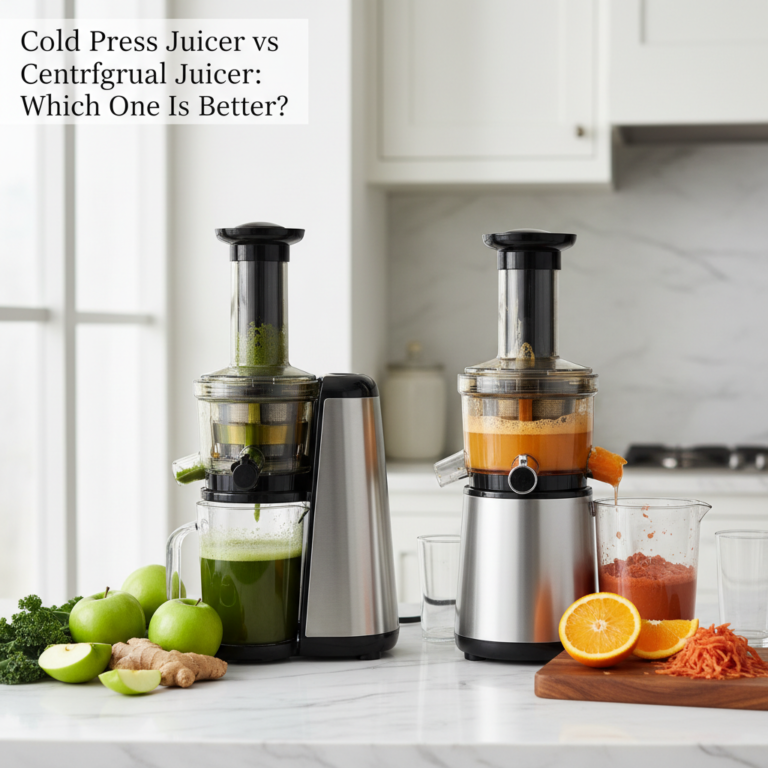
For more focused shopping help, see our guides to best cold press juicers, best masticating juicers, best centrifugal juicers, best juicers for ginger, best juicers for leafy greens, and cold press vs centrifugal juicer.
Frequently Asked Questions
What type of juicer is best for carrots and beets?
A slow masticating juicer is usually the best fit if carrots and beets are regular ingredients. It gives you more control with dense roots and works well when you alternate them with wetter produce such as apple, cucumber, celery, citrus, or ginger.
Can a centrifugal juicer handle carrots and beets?
Yes. A centrifugal juicer can handle carrots and beets, especially when speed is the priority. It may be louder and more prone to mesh-filter cleanup, but it can be practical for fast carrot-beet-apple juice.
Do you need to peel carrots and beets before juicing?
You do not always need to peel clean carrots, but you should scrub them well and trim rough or damaged areas. Beets should also be scrubbed carefully, and many people trim the ends or peel rough skin depending on freshness and preference.
How do you make carrot-beet juice taste better?
Carrot and beet juice often tastes better with apple, lemon, orange, cucumber, celery, or ginger. Those ingredients can brighten the flavor and help dense roots move through the juicer more smoothly.
Will beet juice stain juicer parts?
It can. Beet color is strong, especially if pulp dries on parts. Rinse the chamber, screen, auger, and containers right after juicing to reduce staining and make cleanup easier.
Is carrot-beet juice healthy every day?
It can be part of a healthy routine for some people, but daily juice is not automatically better. Portions, total diet, medical conditions, and blood sugar considerations matter. If you have a health condition or take medication, ask a clinician about frequent beet-heavy juice.
Which juicer is easiest to clean after beets?
Among these picks, the Hurom H400 is the most cleanup-focused because Hurom emphasizes its Easy Clean chamber set. Even then, the best cleaning habit is rinsing immediately after juicing.
Conclusion
The best juicers for carrots and beets are the ones that make dense roots feel manageable, not messy. For most buyers, the Nama J2 is the best overall choice because the self-feeding hopper makes regular carrot-beet juice easier to repeat. The Kuvings AUTO10 is better for larger hands-free batches, while the Hurom H400 is the cleanup-focused pick. The Omega NC900HDC suits patient slow-juicer fans, and the Breville Juice Fountain Cold Plus is the fast option for people who value speed and volume.
If carrot-beet juice is going to be a real habit, choose a machine that fits your patience level, counter space, batch size, and cleanup tolerance. The right juicer is not just the one that can handle hard produce. It is the one you will still want to use next month.