Best Juicers for Leafy Greens: Slow Juicers That Handle Kale, Spinach, and Herbs Well
Best Juicers for Leafy Greens: Slow Juicers That Handle Kale, Spinach, and Herbs Well
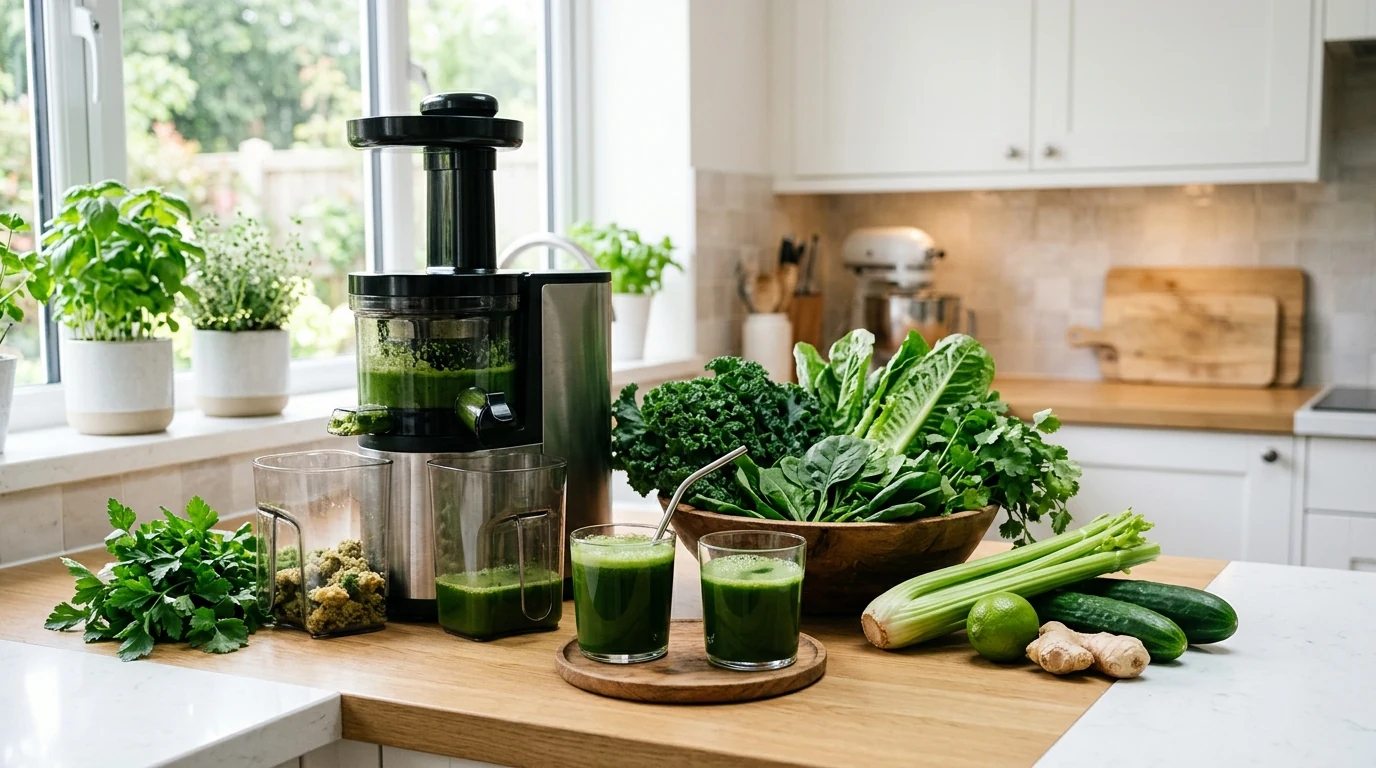
If you are looking for the best juicers for leafy greens, the main question is not simply which machine is popular. Kale, spinach, parsley, wheatgrass-style greens, celery leaves, and herbs behave differently from apples or oranges. They are light, fibrous, and easy to waste in the wrong juicer. A good greens juicer should pull juice steadily, keep prep realistic, and clean up without making the habit feel like work.
For most green-juice drinkers, a slow masticating juicer is the better starting point than a fast centrifugal model. Slow juicers generally give you more control with leafy produce, especially when you alternate greens with cucumber, apple, carrot, celery, or lemon. That said, not every buyer needs the same machine. Some people need a hands-off hopper. Others need easier cleaning, a classic horizontal design, or a fast mixed-produce option.
Disclosure: This article may contain affiliate links. If you buy through them, Healthy Kitchen Reviews may earn a commission at no extra cost to you.
Quick Comparison Table
| Rank | Product | Best For | Capacity | Key Feature | CTA |
|---|---|---|---|---|---|
| 1 | Nama J2 Cold Press Juicer | Best overall for leafy green juice routines | Juice container max capacity is listed at 40 oz by Nama support | Self-feeding hopper and 50 RPM auger speed | View on Amazon |
| 2 | Hurom H400 Easy Clean Slow Juicer | Best easy-clean juicer for greens and family batches | Hurom lists a 550 ml chamber capacity | Easy Clean chamber set, self-feeding hopper, and 90 RPM auger speed | View on Amazon |
| 3 | Omega NC900HDC Cold Press Juicer | Best classic horizontal juicer for deliberate green juicing | Not clearly specified | 80 RPM, 150 W motor, and 5 adjustable pressure settings | View on Amazon |
| 4 | Breville Big Squeeze Slow Juicer | Best vertical slow juicer from a mainstream appliance brand | Not clearly specified | 240 W low-impact motor and slow compression design | View on Amazon |
| 5 | Breville Juice Fountain Cold Plus | Best fast option if you mostly juice mixed produce | Breville lists a 70 fl oz juice jug | 3.5-inch wide chute and Cold Spin Technology | View on Amazon |
Our Top Picks
- Best Overall: Nama J2 Cold Press Juicer because the self-feeding hopper makes regular green juice easier to stick with.
- Best Easy-Clean Pick: Hurom H400 Easy Clean Slow Juicer for buyers who know cleanup is the habit-breaker.
- Best Classic Horizontal Pick: Omega NC900HDC for deliberate, controlled leafy-green juicing.
- Best Mainstream Slow Juicer: Breville Big Squeeze for buyers who want slow compression in a familiar appliance line.
- Best Fast Mixed-Produce Option: Breville Juice Fountain Cold Plus for busy kitchens that juice greens with lots of wetter produce.
Detailed Reviews of the Best Juicers for Leafy Greens
1. Nama J2 Cold Press Juicer
The Nama J2 is the easiest overall recommendation for many leafy-green buyers because it reduces the part of juicing that wears people down: standing over the chute and feeding produce piece by piece. Nama describes the J2 as a cold press juicer with a self-feeding hopper, and its support specs list a 50 RPM auger speed, 200 W rated power consumption, and a 40 oz maximum juice-container capacity.
Key Features
- Best for: Best overall for leafy green juice routines
- Capacity: Juice container max capacity is listed at 40 oz by Nama support
- Key feature: Self-feeding hopper and 50 RPM auger speed
- Verification source: manufacturer product information
What Makes It Stand Out
Leafy greens are light, awkward, and easy to underfeed if you rush them. A hopper-style slow juicer helps because you can combine greens with juicier ingredients such as cucumber, apple, lemon, or celery, then let the machine work with less babysitting.
How It Helps Your Kitchen Routine
This is the model I would point toward someone who wants green juice several times per week but knows a fussy setup will kill the habit. It is especially useful if your usual recipe includes kale, spinach, cucumber, celery, parsley, apple, and ginger.
How to Use It
Layer leafy greens with firmer, wetter produce instead of loading a giant dry wad of greens by itself. Cut ingredients so they fit comfortably, avoid forcing produce through, and rinse the auger and strainer area right after use before pulp dries.
Pros and Cons
Pros:
- Self-feeding format can reduce active prep and feeding time
- 50 RPM slow-juicing speed is listed in Nama support specs
- Good fit for mixed green juices with kale, spinach, cucumber, celery, and apple
Cons:
- Premium-style juicer may be more machine than occasional users need
- Still needs prompt cleaning after fibrous greens
Customer Feedback Snapshot
The buyer appeal is convenience. Shoppers comparing slow juicers often worry that green juice will become a weekend-only project, and the J2 directly addresses that friction with its hopper workflow.
Best For
This is best for shoppers who want best overall for leafy green juice routines. Skip it if your real priority is a cheaper, simpler, or lower-maintenance juicing setup.
2. Hurom H400 Easy Clean Slow Juicer
The Hurom H400 is a strong leafy-greens pick if cleanup fatigue is your biggest concern. Hurom positions it as part of its Easy Clean Series, with a strainer-free chamber approach, a self-feeding hopper, a 550 ml chamber capacity, 90 RPM auger speed, and 150 W power rating.
Key Features
- Best for: Best easy-clean juicer for greens and family batches
- Capacity: Hurom lists a 550 ml chamber capacity
- Key feature: Easy Clean chamber set, self-feeding hopper, and 90 RPM auger speed
- Verification source: manufacturer product information
What Makes It Stand Out
Fine strainers are one of the reasons people abandon slow juicing. Hurom’s H400 design focuses on easier cleaning and lower-pulp juice, which matters when you are juicing stringy greens, herbs, and celery regularly.
How It Helps Your Kitchen Routine
This fits households that make more than one glass or prep juice for later. It is also attractive for anyone who wants a slower juicer but does not want a classic horizontal model spread across the counter.
How to Use It
Use the hopper for sensible batches, add wetter produce between handfuls of greens, and keep an eye on the chamber so you do not overfill it. Disassemble and rinse promptly, even though the design is easier-clean than many traditional screened juicers.
Pros and Cons
Pros:
- Hurom lists a 550 ml chamber and 150 W motor
- Easy Clean design is useful for pulp-heavy green recipes
- Good option for families or batch juicing
Cons:
- Likely more expensive and larger than a casual juicer needs
- Easy-clean does not mean no-clean
Customer Feedback Snapshot
The likely satisfaction point is maintenance. Buyers who have owned older slow juicers often care less about another tiny yield claim and more about whether cleanup is manageable on a normal weekday.
Best For
This is best for shoppers who want best easy-clean juicer for greens and family batches. Skip it if your real priority is a cheaper, simpler, or lower-maintenance juicing setup.
3. Omega NC900HDC Cold Press Juicer
The Omega NC900HDC is the classic horizontal-style pick in this roundup. Omega lists 80 RPM operation, 150 W wattage, 5 adjustable pressure settings, automatic pulp ejection, and a horizontal cold press nutrition-system design aimed at fruits, vegetables, leafy greens, and wheatgrass.
Key Features
- Best for: Best classic horizontal juicer for deliberate green juicing
- Capacity: Not clearly specified
- Key feature: 80 RPM, 150 W motor, and 5 adjustable pressure settings
- Verification source: manufacturer product information
What Makes It Stand Out
Horizontal masticating juicers can be appealing for leafy greens because they encourage slower, more controlled feeding. You do more hands-on work than with a hopper model, but you also get a very deliberate workflow for kale, spinach, wheatgrass-style ingredients, celery, and herbs.
How It Helps Your Kitchen Routine
This is a better fit for someone who already expects juicing to be a small kitchen ritual. If you enjoy feeding produce steadily and do not mind a longer body on the counter, the Omega remains a sensible greens-focused comparison point.
How to Use It
Cut greens and celery into manageable lengths, alternate leafy ingredients with apple, cucumber, or carrot, and use steady pressure rather than forcing the pusher. Clean the screen and auger area immediately because dried green pulp can become stubborn.
Pros and Cons
Pros:
- Official Omega page lists 80 RPM and 150 W
- Horizontal format suits careful feeding of greens and fibrous produce
- Adjustable pressure settings are listed by Omega
Cons:
- More hands-on than self-feeding hopper juicers
- Long horizontal footprint may not suit every counter
Customer Feedback Snapshot
The satisfaction divide is patience. Buyers who like a controlled slow-juicing routine may appreciate the Omega; buyers who want the least active work may prefer Nama or Hurom.
Best For
This is best for shoppers who want best classic horizontal juicer for deliberate green juicing. Skip it if your real priority is a cheaper, simpler, or lower-maintenance juicing setup.
4. Breville Big Squeeze Slow Juicer
The Breville Big Squeeze is worth considering if you want a slow compression juicer from a familiar mainstream kitchen brand. Breville describes it as a slow juicer that crushes and squeezes, with a 240 W low-impact motor, stainless steel mesh filter, Tritan juice jug, ABS housing, and dimensions of 8.9 x 8.1 x 17.5 inches.
Key Features
- Best for: Best vertical slow juicer from a mainstream appliance brand
- Capacity: Not clearly specified
- Key feature: 240 W low-impact motor and slow compression design
- Verification source: manufacturer product information
What Makes It Stand Out
Breville specifically calls out wheatgrass, small berries, and tomatoes as examples of ingredients this slow-juicing design can handle. For leafy-greens buyers, the draw is a vertical slow juicer that still feels approachable if you already trust the brand.
How It Helps Your Kitchen Routine
This is a practical middle-ground option for someone who wants slow juicing but does not necessarily want a large auto-hopper model or a long horizontal machine. It makes the most sense for mixed green juices rather than huge batch sessions.
How to Use It
Feed greens steadily with juicier produce and use the spout plug for mixing before pouring. The quick-rinse feature can help between recipes, but you should still take the juicer apart for a proper clean after greens.
Pros and Cons
Pros:
- Breville lists a 240 W motor and slow compression design
- Compact vertical footprint compared with many horizontal juicers
- Mainstream brand familiarity may appeal to cautious buyers
Cons:
- Not as hands-off as large hopper juicers
- Capacity details were not clearly specified in the fetched product information
Customer Feedback Snapshot
This pick is about approachability. It will not be the most specialized greens machine for every serious juicer, but it may feel less intimidating for buyers who want a reliable-looking slow juicer from a known appliance line.
Best For
This is best for shoppers who want best vertical slow juicer from a mainstream appliance brand. Skip it if your real priority is a cheaper, simpler, or lower-maintenance juicing setup.
5. Breville Juice Fountain Cold Plus
The Breville Juice Fountain Cold Plus is not my first choice for leafy greens if your main recipes are kale, spinach, parsley, and wheatgrass. It is a centrifugal juicer, but it earns a place as the fast option for buyers who mostly juice apples, cucumbers, carrots, citrus, celery, and only moderate amounts of greens.
Key Features
- Best for: Best fast option if you mostly juice mixed produce
- Capacity: Breville lists a 70 fl oz juice jug
- Key feature: 3.5-inch wide chute and Cold Spin Technology
- Verification source: manufacturer product information
What Makes It Stand Out
Speed matters for some kitchens. Breville lists a 3.5-inch extra-wide chute, a 70 fl oz jug, brushed stainless steel construction, and a space-saving design with the pulp bin behind the base. That makes it easier to justify if prep time is your biggest barrier.
How It Helps Your Kitchen Routine
Choose this only if you understand the trade-off. It is better for quick mixed juices than for greens-heavy extraction. If leafy greens are the star of your recipes, a slow juicer above is the more natural fit.
How to Use It
Use greens as part of a mixed recipe with wetter produce rather than expecting a centrifugal model to be the strongest greens specialist. Roll leafy greens tightly, feed them with cucumber or apple, and clean the mesh filter carefully after use.
Pros and Cons
Pros:
- Very fast compared with slow juicers
- Breville lists a 70 fl oz jug and 3.5-inch chute
- Good fit for busy households that juice mixed produce
Cons:
- Not the best style for greens-heavy recipes
- Mesh-filter cleanup still matters after fibrous produce
Customer Feedback Snapshot
The buyer appeal is speed. The risk is mismatch: people searching specifically for leafy greens may be happier with slow extraction unless they value fast prep above greens performance.
Best For
This is best for shoppers who want best fast option if you mostly juice mixed produce. Skip it if your real priority is a cheaper, simpler, or lower-maintenance juicing setup.
How These Juicers Compare for Leafy Greens
For leafy greens, the biggest difference is workflow. Hopper-style slow juicers such as the Nama J2 and Hurom H400 are easier to live with if you want to prep a whole green juice recipe and keep moving. Horizontal slow juicers such as the Omega NC900HDC ask for more hands-on feeding, but they give you a controlled rhythm that many greens-focused juicers like. Fast centrifugal juicers can work for mixed produce, but they are usually less ideal when greens are the main ingredient.
Cleaning is the second major difference. Kale, spinach, parsley, and celery can leave fine pulp around screens, augers, and mesh filters. If you hate scrubbing, prioritize an easy-clean design over a tiny performance advantage. A juicer that gets cleaned immediately and used three times a week is more valuable than a more impressive model that sits dirty or hidden in a cabinet.
How to Choose a Juicer for Kale, Spinach, and Herbs
Choose slow extraction if greens are the main ingredient
If your recipes are built around kale, spinach, romaine, parsley, cilantro, celery, cucumber, and ginger, start with a masticating or slow compression juicer. These machines are generally better suited to fibrous, leafy produce than high-speed centrifugal juicers. They also let you feed ingredients more thoughtfully, which matters when greens need help from wetter produce.
Think about the produce you actually buy
A buyer who juices kale, cucumber, apple, and lemon every morning has different needs than someone who makes occasional carrot-orange juice with a handful of spinach. If leafy greens are a small add-in, a fast model may be enough. If leafy greens are the reason you are buying the juicer, choose a slow juicer first.
Do not ignore cleaning
Cleaning is not a side detail. It determines whether the juicer becomes part of your routine. Greens can dry into screens and pulp channels quickly, so rinse parts as soon as the juice is poured. If you have quit juicing before because cleanup was annoying, put easy cleaning near the top of your list.
Use wetter ingredients to help greens move
Leafy greens are easier to juice when you alternate them with cucumber, apple, celery, carrot, citrus, or other juicier ingredients. This helps push greens through the auger or filter and can reduce wasted pulp. It also tends to make the finished juice more balanced and less grassy.
Healthy Kitchen Notes for Green Juice
Green juice can be a useful way to add produce to your routine, but it should not be treated as a cure or a replacement for whole vegetables. Juicing removes much of the fiber that whole greens provide. If your goal is a healthier kitchen routine, use juice as one tool alongside whole vegetables, balanced meals, and realistic habits.
Food safety also matters. Wash greens, herbs, celery, cucumber, and fruit before juicing. The FDA’s produce safety guidance recommends rinsing fresh fruits and vegetables under running water and cutting away damaged or bruised areas before preparation. That is especially important when ingredients are consumed raw.
For related buyer guidance, see our guides to best cold press juicers, best masticating juicers, best juicers for celery juice, and best juicers for beginners. If you are deciding between slow and fast machines, our cold press vs centrifugal juicer comparison is the better next read.
Frequently Asked Questions
What type of juicer is best for leafy greens?
A slow masticating juicer is usually the best choice when leafy greens are the main ingredient. It gives you more control with kale, spinach, herbs, celery, and wheatgrass-style ingredients than most fast centrifugal juicers.
Can a centrifugal juicer juice leafy greens?
Yes, but it is usually better for mixed juices where greens are only part of the recipe. If your recipes are mostly apples, cucumbers, carrots, and celery with a handful of spinach, a centrifugal model may be acceptable. If kale and herbs are central, choose a slow juicer.
How do you get more juice from spinach or kale?
Alternate greens with wetter produce such as cucumber, apple, celery, citrus, or carrot. Roll leafy greens when helpful, feed slowly, and avoid forcing dry handfuls through the chute by themselves.
Are cold press juicers better for green juice?
Cold press and masticating juicers are generally a better fit for green juice because they handle fibrous produce more patiently. The best choice still depends on cleanup, counter space, budget, and how often you will actually use it.
Is green juice healthier than eating whole greens?
Not necessarily. Green juice can help you consume more produce, but whole greens provide fiber that juice often reduces or removes. Treat juice as a helpful addition, not a replacement for whole vegetables.
What is the easiest leafy-green juicer to clean?
Among the picks here, the Hurom H400 is the most cleanup-focused option because Hurom emphasizes its Easy Clean chamber design. Still, every juicer needs prompt rinsing after greens.
Should beginners buy an expensive greens juicer?
Only if you are confident you will juice often. Beginners who are unsure should prioritize easy use, easy cleaning, and realistic counter fit over buying the most expensive machine.
Conclusion
The best juicers for leafy greens are the ones that make green juice repeatable. For most buyers, the Nama J2 is the best overall fit because its hopper workflow reduces friction. The Hurom H400 is the better pick if easy cleaning matters most. The Omega NC900HDC suits patient, deliberate greens-focused juicers. The Breville Big Squeeze is a useful mainstream slow-juicer option, while the Breville Juice Fountain Cold Plus is mainly for people who value speed and mostly juice mixed produce.
If kale, spinach, herbs, and celery are central to your routine, start with a slow juicer. If greens are only a small add-in and speed matters more, a centrifugal model can still make sense. The right choice is the one that fits your counter, your cleanup tolerance, and the habit you can actually keep.