Best Juicers for Beginners: Easy Picks for Fresh Juice at Home
Best Juicers for Beginners: Easy Picks for Fresh Juice at Home
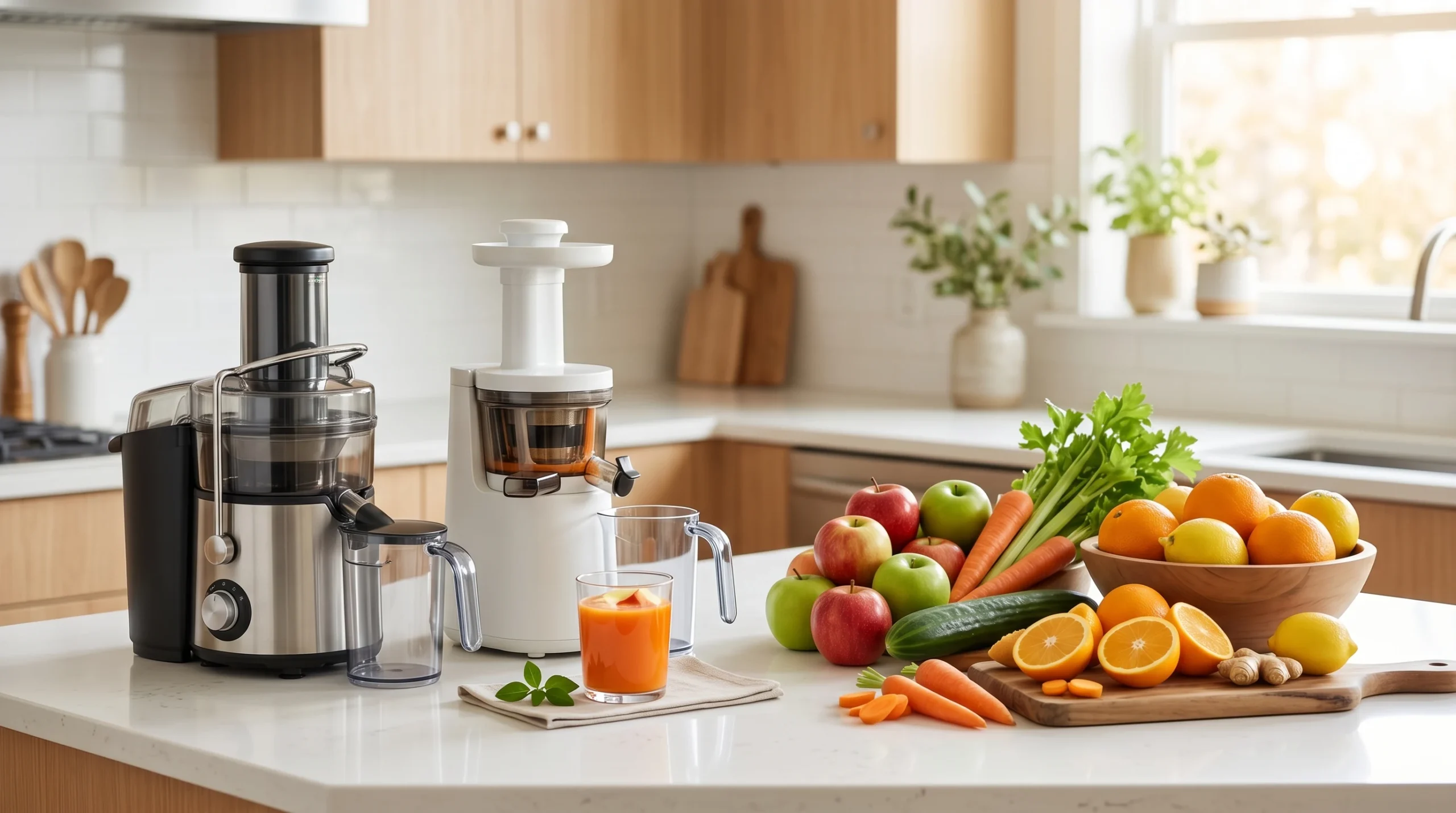
Choosing the best juicers for beginners is less about buying the most powerful machine and more about buying one you will actually use. A first juicer should be easy to assemble, forgiving with common produce, realistic to clean, and suited to the amount of juice you plan to make. If the machine feels complicated after the first week, even a premium model can become countertop clutter.
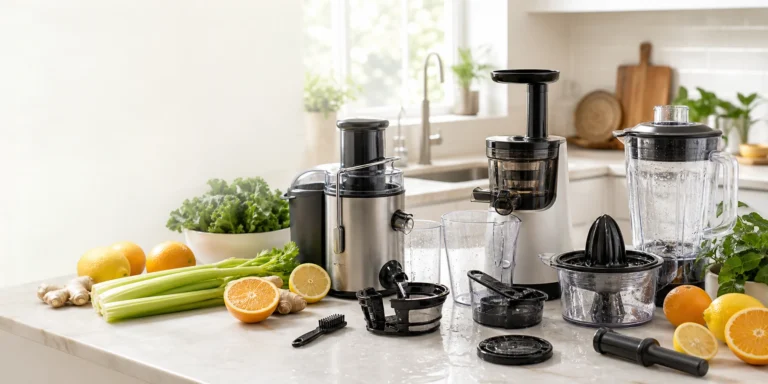
This guide compares beginner-friendly juicers by real kitchen fit: speed, chute size, batch capacity, cleanup, noise, and whether a centrifugal or cold press style makes more sense. I included simple fast juicers for people who want quick apple-carrot-celery juice, compact options for small kitchens, and premium hands-free slow juicers for beginners who already know they want a serious habit.
Disclosure: This article may contain affiliate links. If you buy through them, Healthy Kitchen Reviews may earn a commission at no extra cost to you.
Quick Comparison Table
| Rank | Product | Best For | Capacity | Key Feature | CTA |
|---|---|---|---|---|---|
| 1 | Breville Juice Fountain Plus | Best overall beginner juicer | 1.1 qt juice jug and 2.6 qt pulp container listed by Breville | 3 inch extra-wide chute with two-speed electronic control | View on Amazon |
| 2 | Breville Juice Fountain Compact | Best beginner juicer for small kitchens | 25 oz juice jug listed by Breville | Compact footprint with pulp collected inside the unit footprint | View on Amazon |
| 3 | Breville Juice Fountain Cold Plus | Best beginner juicer for families | 70 fl oz jug listed by Breville | 3.5 inch extra-wide chute and space-saving rear pulp bin | View on Amazon |
| 4 | nutribullet Juicer | Best simple budget-minded beginner option | Not clearly specified in the fetched product text | Official page identifies it as an 800 watt whole fruit and vegetable juicer | View on Amazon |
| 5 | Nama J2 Cold Press Juicer | Best hands-free cold press juicer for beginners | Nama support snippet lists measurement lines up to 35 oz and max container capacity of 40 oz | Self-feeding cold press format with 50 rpm auger speed listed in Nama support snippet | View on Amazon |
| 6 | Kuvings AUTO10 | Best premium large-hopper beginner juicer | 3,000 cc hopper listed by Kuvings | Hands-free slow juicer with auto cutting, wide pulp outlet, and triple-interlock safety mechanism | View on Amazon |
Our Top Picks
- Best Overall: Breville Juice Fountain Plus, because it gives beginners simple two-speed control and less produce prep.
- Best Small-Kitchen Pick: Breville Juice Fountain Compact, because it keeps the footprint realistic.
- Best for Families: Breville Juice Fountain Cold Plus, because the 70 fl oz jug is better for bigger batches.
- Best Simple Budget-Minded Option: nutribullet Juicer, because it feels approachable for casual beginners.
- Best Hands-Free Cold Press Pick: Nama J2, because its hopper style can reduce active feeding.
- Best Premium Large-Hopper Pick: Kuvings AUTO10, because its 3,000 cc hopper is built to reduce prep friction.
Detailed Reviews of the Best Juicers for Beginners
1. Breville Juice Fountain Plus
The Breville Juice Fountain Plus is the easiest all-around recommendation for most people buying their first juicer. Breville describes it as a simple no-nonsense juicer with dual speeds, a 3 inch extra-wide feed chute, a 1.1 qt juice jug with froth separator, and a large 2.6 qt pulp container.
Key Features
- Best for: Best overall beginner juicer
- Capacity: 1.1 qt juice jug and 2.6 qt pulp container listed by Breville
- Key feature: 3 inch extra-wide chute with two-speed electronic control
- Source: official product information or support information
What Makes It Stand Out
Beginners usually need speed, obvious controls, and less chopping before they need niche features. This model gives you low speed for softer fruits and leafy vegetables and high speed for denser produce, so the learning curve is simple.
How It Helps Your Kitchen Routine
It fits the person who wants fresh apple, carrot, celery, cucumber, or citrus juice without turning breakfast into a project. The wide chute and separate pulp container make it less stop-and-start than tiny entry-level machines.
How to Use It
Start with firm, juicy produce and use the included pusher. Use low speed for softer items and high speed for hard produce. Rinse the filter basket and jug soon after juicing so pulp does not dry into the mesh.
Pros and Cons
Pros:
- Simple two-speed setup
- Wide chute can reduce prep time
- Useful juice jug and pulp-container capacity
- Good first serious centrifugal juicer
Cons:
- Louder than slow juicers
- Not the most compact option for small kitchens
Customer Feedback Snapshot
For beginners, the feedback signals that matter most are not hype or star counts. Look for repeated comments about easy assembly, quick cleanup, manageable noise, pulp handling, and whether the machine is simple enough to use several times a week. Those are the details that decide whether a first juicer becomes a habit or goes back in the cabinet.
Best For
This is best for shoppers who want best overall beginner juicer. Skip it if your first priority points toward a different style, such as ultra-quiet slow juicing, tiny storage, or the lowest possible entry price.
2. Breville Juice Fountain Compact
The Breville Juice Fountain Compact is the beginner pick for people who want centrifugal speed but do not want a large appliance owning the counter. Breville lists a 25 oz juice jug with froth separator, a 3 inch extra-wide chute, and pulp collection within the unit footprint.
Key Features
- Best for: Best beginner juicer for small kitchens
- Capacity: 25 oz juice jug listed by Breville
- Key feature: Compact footprint with pulp collected inside the unit footprint
- Source: official product information or support information
What Makes It Stand Out
Small-kitchen buyers often fail with juicing because the machine is annoying to store. This model keeps the setup more approachable while still giving beginners the wide-chute convenience that makes centrifugal juicers attractive.
How It Helps Your Kitchen Routine
It works best for one or two people, apartments, occasional breakfast juice, and buyers who want a juicer they can keep nearby. It is not the right pick if you want large batches for a family.
How to Use It
Make modest batches, empty the internal pulp area before it becomes crowded, and clean promptly. Treat it as a small routine appliance rather than a family-size batch machine.
Pros and Cons
Pros:
- Compact counter footprint
- 3 inch chute is generous for its size
- Good fit for one or two people
- Simpler to store than larger juicers
Cons:
- Smaller 25 oz jug limits batch size
- Internal pulp collection can require more frequent pauses
Customer Feedback Snapshot
For beginners, the feedback signals that matter most are not hype or star counts. Look for repeated comments about easy assembly, quick cleanup, manageable noise, pulp handling, and whether the machine is simple enough to use several times a week. Those are the details that decide whether a first juicer becomes a habit or goes back in the cabinet.
Best For
This is best for shoppers who want best beginner juicer for small kitchens. Skip it if your first priority points toward a different style, such as ultra-quiet slow juicing, tiny storage, or the lowest possible entry price.
3. Breville Juice Fountain Cold Plus
The Breville Juice Fountain Cold Plus is the beginner-friendly choice when one glass is not enough. Breville lists a 70 fl oz jug, 3.5 inch extra-wide chute, Cold Spin Technology, and a space-saving design with the pulp bin behind the product base.
Key Features
- Best for: Best beginner juicer for families
- Capacity: 70 fl oz jug listed by Breville
- Key feature: 3.5 inch extra-wide chute and space-saving rear pulp bin
- Source: official product information or support information
What Makes It Stand Out
The larger jug is the reason to consider this over a smaller beginner model. If two or more people want juice, stopping every few minutes to pour and empty pulp can make the habit feel more annoying than it needs to be.
How It Helps Your Kitchen Routine
It suits families, couples, and anyone who wants to juice after a grocery run and store some for later. Breville notes the seal-and-store jug can be used in the refrigerator for up to 3 days, but fresh juice quality still depends on ingredients and storage habits.
How to Use It
Use the large jug for batch sessions, keep the spout aligned before starting, and trim awkward produce even though the chute is wide. Clean the cutting disc and mesh basket quickly after each session.
Pros and Cons
Pros:
- Large 70 fl oz jug helps with bigger batches
- 3.5 inch chute reduces prep on suitable produce
- Rear pulp-bin placement can save counter width
- Good for households making more than one serving
Cons:
- More appliance than a casual single-glass buyer needs
- Larger parts take more cleaning and storage space
Customer Feedback Snapshot
For beginners, the feedback signals that matter most are not hype or star counts. Look for repeated comments about easy assembly, quick cleanup, manageable noise, pulp handling, and whether the machine is simple enough to use several times a week. Those are the details that decide whether a first juicer becomes a habit or goes back in the cabinet.
Best For
This is best for shoppers who want best beginner juicer for families. Skip it if your first priority points toward a different style, such as ultra-quiet slow juicing, tiny storage, or the lowest possible entry price.
4. nutribullet Juicer
The nutribullet Juicer is worth considering if you want a familiar, straightforward juicer and do not need a premium machine. The fetched nutribullet page identifies it as an 800 watt whole fruit and vegetable juicer and explains that juicers separate liquid from pulp, skin, and fiber.
Key Features
- Best for: Best simple budget-minded beginner option
- Capacity: Not clearly specified in the fetched product text
- Key feature: Official page identifies it as an 800 watt whole fruit and vegetable juicer
- Source: official product information or support information
What Makes It Stand Out
This is less about advanced specs and more about a low-friction start. A beginner who already knows nutribullet from personal blenders may feel more comfortable choosing this than jumping straight into a larger premium juicer.
How It Helps Your Kitchen Routine
It fits casual juice drinkers, smoothie fans who want to add occasional juice, and shoppers who want a simple countertop appliance. It is less ideal for someone who needs clearly listed large-batch capacity before buying.
How to Use It
Use it for straightforward fruit and vegetable juices, wash produce well, and clean the pulp basin, basin cover, and juice pitcher after use. Nutribullet notes that liquid is not required when juicing fruits and vegetables.
Pros and Cons
Pros:
- Familiar brand for many beginners
- Official page identifies it as 800 watts
- Good simple alternative to larger machines
- Helpful official explanation of juice vs smoothie trade-offs
Cons:
- Capacity was not clearly specified in the fetched product text
- Less detailed public product information was available than with the Breville picks
Customer Feedback Snapshot
For beginners, the feedback signals that matter most are not hype or star counts. Look for repeated comments about easy assembly, quick cleanup, manageable noise, pulp handling, and whether the machine is simple enough to use several times a week. Those are the details that decide whether a first juicer becomes a habit or goes back in the cabinet.
Best For
This is best for shoppers who want best simple budget-minded beginner option. Skip it if your first priority points toward a different style, such as ultra-quiet slow juicing, tiny storage, or the lowest possible entry price.
5. Nama J2 Cold Press Juicer
The Nama J2 Cold Press Juicer is the beginner upgrade for someone who wants less hands-on feeding and a slower juicing style. Search-visible Nama support information lists the J2 model at 50 rpm, with dimensions of 9.8 in wide, 9.0 in long, and 17.7 in high, plus a juice container with measurement lines up to 35 oz and max capacity of 40 oz.
Key Features
- Best for: Best hands-free cold press juicer for beginners
- Capacity: Nama support snippet lists measurement lines up to 35 oz and max container capacity of 40 oz
- Key feature: Self-feeding cold press format with 50 rpm auger speed listed in Nama support snippet
- Source: official product information or support information
What Makes It Stand Out
Most slow juicers ask beginners to feed produce piece by piece. The J2 is known for a self-feeding hopper approach, which can make cold press juicing feel less demanding if you are willing to pay more for convenience.
How It Helps Your Kitchen Routine
It is best for people who want leafy greens, celery, ginger, and slower extraction but do not want the constant push-and-feed rhythm of a traditional horizontal slow juicer.
How to Use It
Prep produce according to the manual, do not overload the hopper, and clean the juicing parts after each session. Because this is a slow juicer, expect a calmer pace than a centrifugal model.
Pros and Cons
Pros:
- Better fit for greens-focused beginners than many centrifugal juicers
- Hands-free hopper style can reduce active feeding
- Support snippet lists compact footprint measurements
- Good premium path if the habit is likely to stick
Cons:
- Much more expensive than basic beginner centrifugal juicers
- Support page fetch was blocked, so article uses search-visible support snippet details only
Customer Feedback Snapshot
For beginners, the feedback signals that matter most are not hype or star counts. Look for repeated comments about easy assembly, quick cleanup, manageable noise, pulp handling, and whether the machine is simple enough to use several times a week. Those are the details that decide whether a first juicer becomes a habit or goes back in the cabinet.
Best For
This is best for shoppers who want best hands-free cold press juicer for beginners. Skip it if your first priority points toward a different style, such as ultra-quiet slow juicing, tiny storage, or the lowest possible entry price.
6. Kuvings AUTO10
The Kuvings AUTO10 is the premium beginner pick for someone who wants the least fussy slow-juicer workflow. Kuvings lists a 3,000 cc large-capacity hopper, auto cutting, a wide pulp outlet, simplified parts, included cleaning tools, and a triple-interlock safety mechanism.
Key Features
- Best for: Best premium large-hopper beginner juicer
- Capacity: 3,000 cc hopper listed by Kuvings
- Key feature: Hands-free slow juicer with auto cutting, wide pulp outlet, and triple-interlock safety mechanism
- Source: official product information or support information
What Makes It Stand Out
The large hopper is the practical advantage. Beginners often quit juicing because prep and feeding feel repetitive. A large-hopper slow juicer can make the process feel closer to loading ingredients and letting the machine work.
How It Helps Your Kitchen Routine
It fits committed beginners, families who want slow juice, and people who know they will juice often enough to justify a premium machine. It is not the first model I would suggest for a casual one-glass experiment.
How to Use It
Load ingredients within the hopper limits, make sure parts are correctly aligned, and use the cleaning tools after juicing. The triple-interlock mechanism means the unit should not run unless components are correctly fastened.
Pros and Cons
Pros:
- Large 3,000 cc hopper can reduce prep friction
- Auto cutting supports easier use
- Wide pulp outlet and cleaning tools help with cleanup
- Triple-interlock safety mechanism is a meaningful beginner feature
Cons:
- Premium price and size may be too much for casual beginners
- Large hopper does not remove the need for safe trimming and cleaning
Customer Feedback Snapshot
For beginners, the feedback signals that matter most are not hype or star counts. Look for repeated comments about easy assembly, quick cleanup, manageable noise, pulp handling, and whether the machine is simple enough to use several times a week. Those are the details that decide whether a first juicer becomes a habit or goes back in the cabinet.
Best For
This is best for shoppers who want best premium large-hopper beginner juicer. Skip it if your first priority points toward a different style, such as ultra-quiet slow juicing, tiny storage, or the lowest possible entry price.
How These Beginner Juicers Compare
The easiest way to compare beginner juicers is to separate speed-focused centrifugal juicers from slower cold press juicers. Centrifugal models are usually better when you want quick juice, wide chutes, lower prep time, and a simpler first purchase. Slow juicers are usually better when you care more about leafy greens, quieter operation, and a slower routine.
If you want the fastest start, compare this list with our guide to the best centrifugal juicers. If you already know you want slow extraction, the best cold press juicers and best masticating juicers guides go deeper. If you are still unsure, our cold press vs centrifugal juicer comparison explains the trade-off more directly.
How to Choose Your First Juicer
Start With the Kind of Juice You Actually Want
If your first recipes are apple, carrot, cucumber, celery, citrus, and ginger, a centrifugal juicer can make sense because speed and chute width matter. If your goal is green juice with spinach, kale, wheatgrass, parsley, celery, and ginger, a slow juicer may be more satisfying even though it costs more and takes more patience.
Choose Cleaning Ease Before Fancy Features
Cleaning is the beginner deal-breaker. Every juicer has parts that need rinsing, but some routines are much easier to repeat. Look for clear assembly, accessible pulp areas, a basket or screen you can scrub quickly, and parts you can rinse before pulp dries. A juicer that cleans easily is more valuable than one with features you never use.
Match Capacity to Your Household
A 25 oz jug can be plenty for one person, but it is easy to outgrow if two or three people want juice. A 70 fl oz jug can be useful for families, but bigger machines also take more space and produce more parts to clean. Beginner-friendly does not always mean smallest; it means realistic for your household.
Be Honest About Counter Space
A juicer that lives within reach gets used more often than one buried in a cabinet. Measure height if you plan to keep it under cabinets, and think about where the pulp container and juice jug sit during use. Compact models are not always the highest-performing models, but they can be the most realistic for daily life.
Do Not Let Health Claims Do the Thinking for You
Juicing can help you use more fruits and vegetables, but it is not automatically healthier than eating whole produce. Juice removes much of the pulp and fiber, especially compared with smoothies or whole fruits and vegetables. A good beginner routine uses vegetable-forward recipes, moderate portions, and fresh ingredients rather than treating juice as a cure-all.
Centrifugal vs Cold Press for Beginners
Choose a centrifugal juicer if you want the lowest-friction start. These machines are usually fast, easier to understand, and more forgiving when you just want a glass of juice without learning a slow-juicer workflow. The trade-offs are noise, foam, and often weaker performance with delicate leafy greens.
Choose a cold press juicer if you are patient enough for slower extraction and you care about greens, celery, or a quieter routine. Newer hopper-style cold press machines can feel beginner-friendly because they reduce active feeding, but they are usually much more expensive. For a first purchase, the right answer depends on whether you are experimenting or committing.
Beginner Mistakes to Avoid
- Buying too large too soon. A premium juicer is only worth it if the habit is realistic.
- Ignoring cleanup. If cleaning feels annoying, the machine will not get used.
- Expecting juice to replace whole produce. Whole fruits and vegetables still provide fiber and chewing satisfaction.
- Forcing produce through the chute. Wide chutes reduce prep, but safe trimming still matters.
- Starting with complicated recipes. Begin with simple produce combinations before chasing elaborate green juices.
- Leaving pulp to dry. Rinse the basket, screen, and pulp areas immediately after use.
Safety and Healthy Juicing Notes
Wash produce well before juicing, especially leafy greens, celery, apples, cucumbers, and anything juiced with skin. Use the pusher supplied with the machine, never your fingers, and stop the juicer before clearing blockages or adjusting parts. If the machine has an interlock or overload warning, treat it as a real safety feature rather than an inconvenience.
For healthier juice habits, use vegetables as the base and fruit for flavor. Carrot, cucumber, celery, spinach, citrus, ginger, and green apple are common beginner ingredients, but portions still matter. If you have a medical condition that affects blood sugar, digestion, kidney health, or medication interactions, ask a qualified clinician before making large daily juice servings a habit.
Frequently Asked Questions
What type of juicer is best for beginners?
For most beginners, a simple centrifugal juicer is the easiest place to start because it is fast, familiar, and usually less expensive than premium cold press machines. A cold press juicer is better if leafy greens, celery, quieter operation, or a slower routine matter more to you.
Is a cold press juicer too complicated for a beginner?
Not always. Traditional slow juicers can require more feeding and patience, but hopper-style cold press models can be beginner-friendly if you are willing to pay more. The real question is whether you want a casual first juicer or a long-term slow-juicing machine.
How much should I spend on my first juicer?
Spend enough to get a machine you will clean and use, but do not assume the most expensive option is the smartest first buy. If you are testing the habit, a simple centrifugal model may be more sensible. If you already know you will juice often, a better slow juicer can be easier to justify.
Are juicers hard to clean?
Some are, and cleaning is the biggest reason many beginners quit. Filter baskets, screens, pulp bins, and chutes need prompt rinsing. Choose a machine with a cleaning routine you can tolerate on a normal weekday, not just on the day you buy it.
Can beginners juice leafy greens?
Yes, but leafy greens are easier with a good slow juicer. Centrifugal juicers can handle some greens, especially when alternated with juicier produce, but they are usually not the best choice if green juice is your main goal.
Should I buy a blender instead of a juicer?
Buy a blender if you want smoothies that keep pulp and fiber. Buy a juicer if you specifically want extracted juice with pulp separated out. Many healthy kitchens use both, but they solve different problems.
What is the easiest beginner juice recipe?
A simple starting point is carrot, apple, cucumber, celery, lemon, and a small piece of ginger. It is forgiving, not too grassy, and easy to adjust. Use more vegetables and less fruit if you want a less sweet routine.
How often should beginners juice?
Start a few times per week instead of forcing a daily routine immediately. This helps you learn cleaning, shopping, and portion habits before committing to bigger produce hauls or a premium machine.
Sources and Further Reading
- FDA: Selecting and Serving Produce Safely
- USDA MyPlate: Fruits
- USDA MyPlate: Vegetables
- Breville Juice Fountain Plus product information
- Breville Juice Fountain Compact product information
- Breville Juice Fountain Cold Plus product information
- nutribullet Juicer product information
- Kuvings AUTO10 product information
Conclusion
The best juicers for beginners are the ones that make the habit easy enough to repeat. The Breville Juice Fountain Plus is the strongest overall first pick because it is fast, simple, and well suited to common beginner recipes. The Breville Juice Fountain Compact is better for small kitchens, while the Juice Fountain Cold Plus makes more sense for families.
If you want a simple lower-friction start, the nutribullet Juicer is an approachable alternative. If you already know you want slow juicing, the Nama J2 and Kuvings AUTO10 are premium beginner-friendly paths because their hopper designs reduce active feeding. Buy the juicer that matches your real routine, then make cleanup part of the habit from day one.