How Much Blender Power Do You Actually Need?
How Much Blender Power Do You Actually Need?
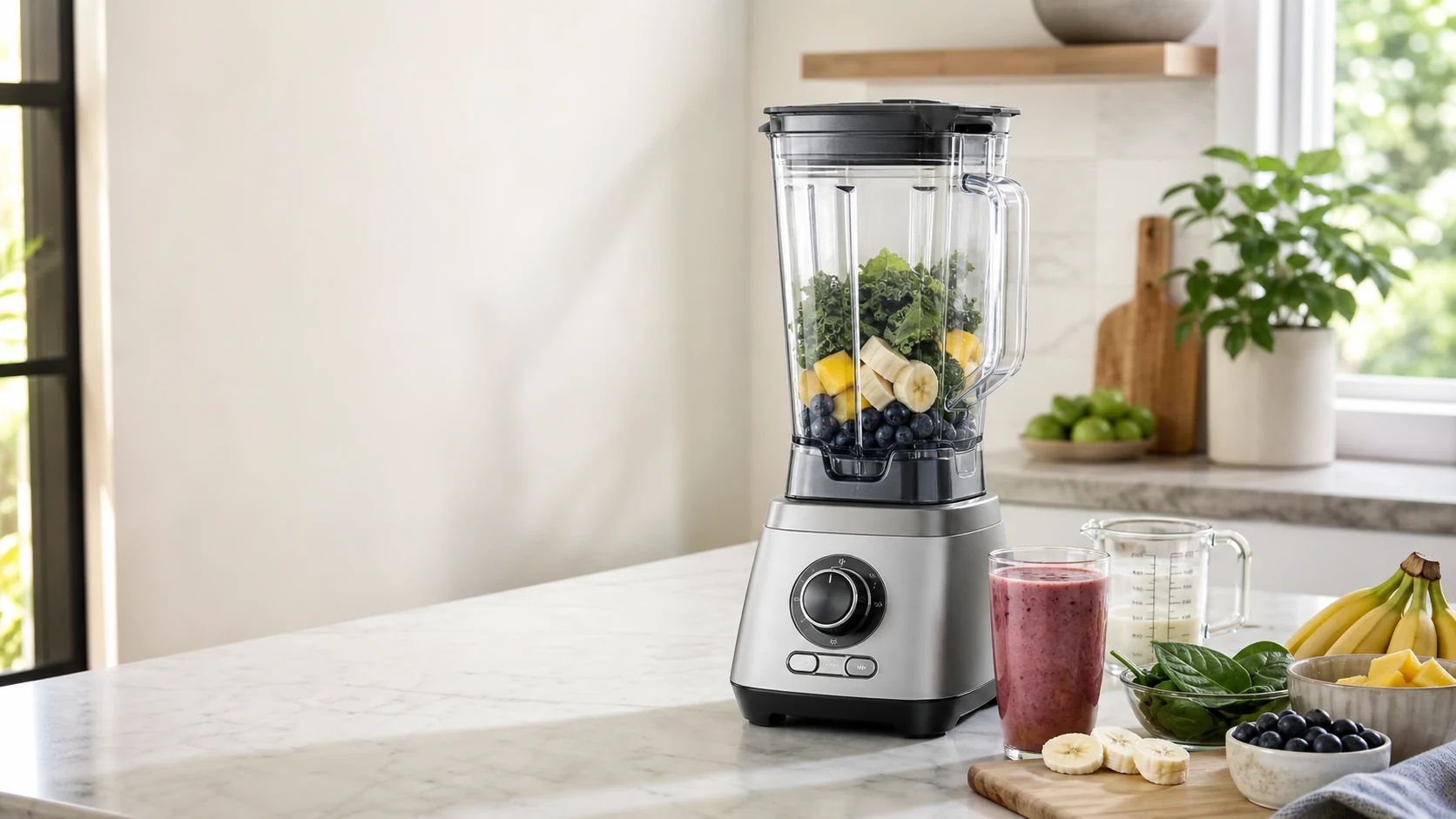
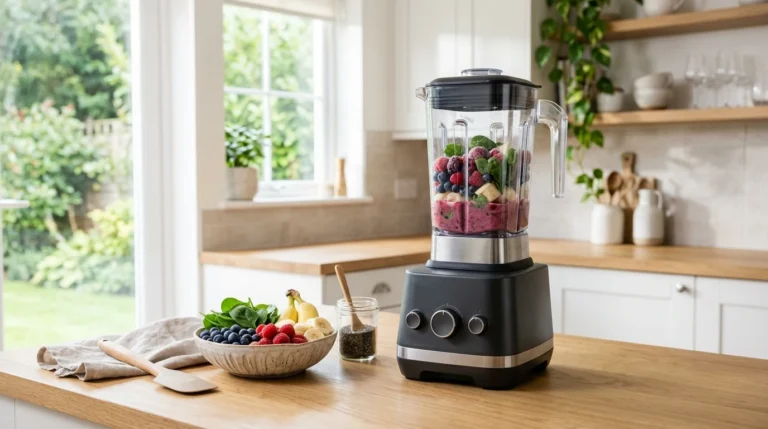
How much blender power do you actually need? For most home kitchens, the honest answer is less dramatic than blender marketing makes it sound. A basic smoothie does not require the same motor strength as thick smoothie bowls, nut butters, frozen fruit packs, or daily meal-prep blending. Watts matter, but they are only one part of the decision.
The better question is what you blend most often. A compact personal blender can be enough for soft fruit and protein shakes. A mid-power countertop blender is usually more comfortable for frozen fruit and family-size batches. A high-power blender starts to make sense when you regularly blend dense, icy, fibrous, or thick mixtures and want smoother results with less stopping and scraping.
This guide breaks blender power into real kitchen tasks so you can avoid overbuying, underbuying, or assuming the biggest number on the box automatically means the best blender.
Quick Answer: How Much Blender Power Do You Actually Need?
Most casual smoothie drinkers can do well with a blender in the lower-to-mid power range, especially if the recipes include enough liquid and softer ingredients. If you use frozen fruit daily, blend greens, make thick shakes, or prepare larger batches, stepping up to a stronger motor usually feels worthwhile. For nut butters, thick smoothie bowls, hummus, and heavy frozen blends, high-power performance matters much more.
As a practical rule, buy for your hardest regular task, not for the easiest thing you might blend. If your toughest recipe is a banana smoothie, you do not need a premium high-performance machine. If your weekly routine includes frozen berries, kale, ice, and very little liquid, power becomes more important.
Blender Power by Kitchen Task
| Blending Task | Power Need | What to Watch For |
|---|---|---|
| Soft smoothies and protein shakes | Low to moderate | Enough liquid, softer fruit, simple cleanup |
| Frozen fruit smoothies | Moderate to high | Motor strain, blade design, jar shape |
| Thick smoothie bowls | High | Tamper support, torque, overheating protection |
| Nut milk and oat milk | Moderate to high | Smooth texture and longer blend times |
| Soups and sauces | Moderate | Hot-liquid safety and lid design |
| Nut butters and dips | High | Heat buildup, scraping, heavy load handling |
| Crushing ice often | High | Blade durability and jar strength |
This is why two blenders with similar wattage can feel different. A stronger number helps, but blade geometry, jar design, speed control, airflow, and how the motor handles load also affect the result.
What Blender Watts Really Tell You
Watts describe electrical power consumption, not a guaranteed blending outcome. A blender with a higher watt rating usually has more potential motor strength, but wattage alone does not tell you how efficiently that power reaches the blades or how well the jar pulls ingredients into the vortex.
That distinction matters because shoppers often compare boxes by wattage as if it were a direct quality score. It is useful information, but not a full performance review. A well-designed mid-power blender can outperform a poorly designed high-watt blender for ordinary smoothies, while a serious high-power blender can make dense blends easier because it has more torque, better airflow, and stronger blending geometry.
Low-Power Blenders: Who They Actually Suit
Lower-power blenders make sense for people who mostly blend softer foods with enough liquid. Think protein shakes, bananas, yogurt, softer berries, light sauces, and single-serve drinks. They can be affordable, compact, and easy to store, which matters if you have a small kitchen or only blend a few times per week.
The trade-off is patience. You may need to add more liquid, cut ingredients smaller, avoid large ice loads, and stop to shake or stir the jar. If you keep asking a small blender to handle dense frozen mixtures, it may feel frustrating even if it technically works. For travel-style blending, our guide to best portable blenders is a better fit than a full-size power comparison.
Mid-Power Blenders: The Sweet Spot for Many Kitchens
A mid-power countertop blender is often the most sensible choice for everyday home use. It usually gives enough headroom for frozen fruit, greens, meal replacement shakes, and larger servings without pushing you into premium pricing. If you make smoothies most mornings but are not trying to make nut butter or spoon-thick bowls, this range is where many buyers should start.
Mid-power blenders also tend to be more forgiving than small personal blenders. You can use a larger jar, blend for more than one person, and get a smoother drink without cutting everything into tiny pieces. If your routine is mainly shakes, our best blenders for meal replacement shakes guide gives more task-specific buying context.
High-Power Blenders: When More Power Is Worth Paying For
High-power blenders are worth considering when your recipes are genuinely demanding. Thick smoothie bowls, frozen fruit with minimal liquid, fibrous greens, hummus, nut sauces, and frequent ice crushing all put more load on the motor. In those situations, more power can mean smoother texture, shorter blend times, less stalling, and less irritation during daily use.
The downside is cost, noise, size, and sometimes a heavier jar. A premium blender can be a smart long-term buy if you use it often, but it is overkill if your normal recipe is milk, banana, and protein powder. If spoon-thick blends are your goal, start with our best blenders for thick smoothie bowls guide because jar shape and tamper design matter there as much as raw watts.
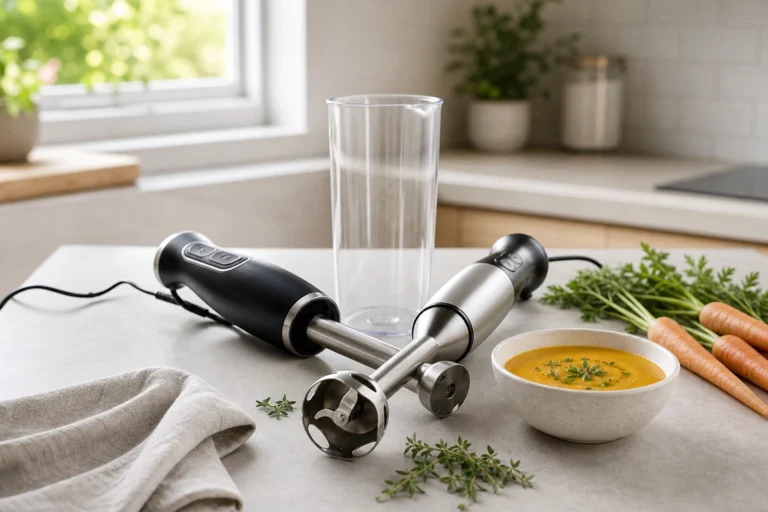
If your needs are lighter and mostly involve soups, sauces, or soft foods, a full-size high-power blender may not be necessary. A stick blender can be easier to clean and store, so compare the trade-offs in our best immersion blenders guide before buying more motor than your routine needs.
Power Is Not the Only Performance Factor
- Blade design: Blade shape affects how ingredients move, chop, and recirculate.
- Jar shape: A good vortex pulls ingredients down instead of leaving chunks stuck above the blades.
- Liquid ratio: Even powerful blenders struggle if a recipe is too dry for the jar design.
- Speed control: Variable speed helps you start gently and build texture without splattering or air pockets.
- Tamper support: A tamper is useful for thick bowls, nut butters, and low-liquid blends.
- Thermal protection: Dense blends can heat the motor, so overload protection is a useful safety feature.
- Jar material: Plastic and glass jars have different weight, safety, and durability trade-offs.
Jar material is its own decision. If you are worried about plastic pitchers, read are plastic blender jars safe? and our comparison of glass vs plastic blender jars. Power matters, but the jar still shapes how the blender feels every day.
A Simple Buyer Framework
Choose lower power if your blends are soft and simple
Choose a simpler blender if you mostly make soft smoothies, protein shakes, and light sauces. This is the value-minded choice for occasional use, dorm rooms, office kitchens, and small apartments. The key is to be realistic about limitations before you buy.
Choose mid-power if smoothies are part of your routine
Choose a stronger countertop model if you blend several times per week, use frozen fruit, add greens, or make drinks for more than one person. This is the practical middle ground for many healthy kitchens because it balances price, space, and performance.
Choose high power if texture and heavy loads matter
Choose a high-power blender if you care about very smooth texture, thick blends, nut-based recipes, frozen bowls, or frequent ice-heavy drinks. You are paying for headroom and convenience, not just a bigger number.
Common Blender Power Mistakes
- Buying only by wattage. A watt number is useful, but design and task fit still matter.
- Underestimating frozen fruit. Frozen strawberries, mango, and thick greens are harder than soft bananas.
- Using too little liquid. Many blending problems are recipe-ratio problems, not only motor problems.
- Ignoring jar size. A huge jar can be awkward for tiny servings, while a small jar can overload quickly.
- Expecting a personal blender to act like a premium countertop model. Compact convenience has limits.
- Overbuying for rare tasks. Do not pay for nut-butter performance if you will make nut butter twice a year.
Safety and Longevity Tips for Stronger Blending
Stronger blending creates more friction, noise, and heat. Give the motor breaks during dense recipes, follow fill lines, secure the lid, and avoid blending boiling liquids unless the manual clearly allows it. Hot ingredients can create pressure and burn risk, so the safest habit is to let hot foods cool and start at a low speed.
Also listen to the machine. A struggling motor, burning smell, repeated shutoffs, or a jar that stops circulating ingredients is feedback. Add liquid, reduce the load, cut ingredients smaller, or move to a blender built for heavier tasks.
Bottom Line: Buy for Your Hardest Normal Recipe
So, how much blender power do you actually need? You need enough for the hardest recipe you make regularly, plus a little headroom so the blender does not feel strained. For soft smoothies, keep it simple. For daily frozen blends, choose a capable mid-power countertop blender. For thick bowls, nut butters, and heavy frozen loads, high power is easier to justify.
The best choice is not automatically the most powerful one. It is the blender that fits your recipes, kitchen space, cleanup tolerance, and budget without making everyday blending harder than it needs to be.
Frequently Asked Questions
Is a 500-watt blender enough for smoothies?
A 500-watt blender can be enough for simple smoothies with soft fruit, yogurt, protein powder, and enough liquid. It may struggle with large frozen fruit pieces, lots of ice, thick greens, or low-liquid recipes. If smoothies are a daily habit and you like frozen ingredients, a stronger countertop blender will usually feel easier.
Do higher watts always mean a better blender?
No. Higher watts can help, but they do not guarantee smoother results. Blade design, jar shape, speed control, motor cooling, and ingredient flow all matter. Use wattage as one signal, then compare how the blender is designed for the foods you actually make.
How much power do I need for frozen fruit?
Frozen fruit benefits from moderate to high power, especially if you use large pieces or limited liquid. For occasional frozen fruit smoothies, a decent mid-power blender can work. For daily frozen blends or thick smoothie bowls, high-power performance is much more comfortable.
What blender power is best for nut butter?
Nut butter is a demanding task because it is thick, dry, and heavy on the motor. A high-power blender with strong torque, good cooling, and tamper support is usually the better choice. A weaker blender may overheat, stall, or require too much scraping.
Is a personal blender powerful enough for daily use?
A personal blender can be powerful enough for daily simple shakes and smoothies, especially if you keep recipes soft and liquid-friendly. It is less ideal for family batches, thick bowls, heavy frozen blends, and recipes that need a larger jar or more airflow around the motor.
Does blender power affect smoothie texture?
Yes, but it is not the only factor. More power can help break down frozen fruit, greens, seeds, and fibrous ingredients more smoothly. Texture also depends on blade design, liquid amount, blend time, jar shape, and whether ingredients circulate properly.