Best Non-Toxic Muffin Pans
Best Non-Toxic Muffin Pans
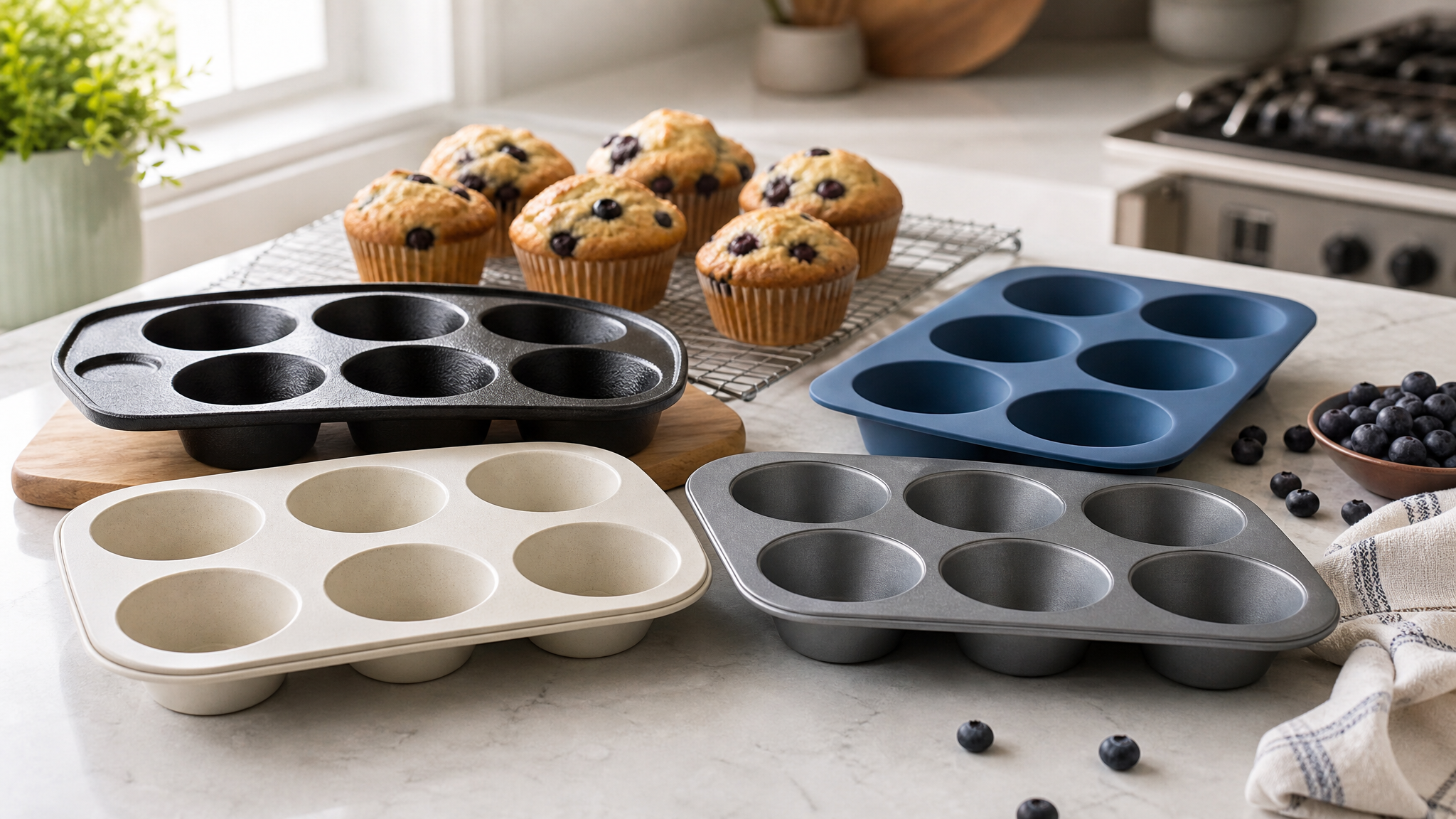
If you are shopping for the best non-toxic muffin pans, the real question is not just whether a pan says “nonstick.” It is what the pan is made from, how the release surface is created, how carefully it needs to be cleaned, and whether it fits the way you actually bake muffins, egg bites, mini frittatas, and lunchbox snacks.
For this roundup, I treated “non-toxic” as a materials-and-care question, not a magic label. Uncoated aluminum, silicone, and ceramic-style coatings all have tradeoffs. The best choice is the pan that keeps your baking routine simple while avoiding the material concerns you personally want to minimize.
Disclosure: This article may contain affiliate links. If you buy through them, Healthy Kitchen Reviews may earn a commission at no extra cost to you.
Quick Comparison of the Best Non-Toxic Muffin Pans
| Rank | Product | Best For | Capacity | Material / Coating | CTA |
|---|---|---|---|---|---|
| 1 | USA Pan 12 Cup Muffin Pan | best overall nonstick muffin pan | 12 standard cups | Aluminized steel with Americoat silicone nonstick coating | View on Amazon |
| 2 | Nordic Ware Naturals 12 Cavity Muffin Pan | best uncoated aluminum muffin pan | 12 cavities | Pure aluminum with a reinforced steel rim, based on Nordic Ware product information | View on Amazon |
| 3 | Caraway Non-Stick Ceramic 12-Cup Muffin Pan | best ceramic-coated muffin pan | 12 cups | Ceramic-coated aluminized steel, based on major retailer product listings | View on Amazon |
| 4 | GreenPan Premiere Ceramic Nonstick 12-Cup Muffin Pan | best PFAS-free ceramic-style shortlist | 12 cups | Ceramic nonstick bakeware; exact construction should be verified on the seller page before purchase | View on Amazon |
| 5 | Silpat Perfect Muffin Mold | best flexible silicone muffin mold | Not clearly specified from an accessible official source during this run | Silicone-based flexible baking mold; verify current material details before purchase | View on Amazon |
Top Picks Summary
- Best overall: USA Pan 12 Cup Muffin Pan because it balances easy release, sturdy construction, and clear manufacturer material details.
- Best uncoated option: Nordic Ware Naturals 12 Cavity Muffin Pan because pure aluminum avoids a coating while baking evenly when used with liners or proper prep.
- Best ceramic-coated option: Caraway Non-Stick Ceramic 12-Cup Muffin Pan for shoppers who want a slick ceramic-style surface and a cleaner-looking bakeware line.
- Best PFAS-free ceramic-style shortlist: GreenPan Premiere Ceramic Nonstick 12-Cup Muffin Pan, with the caveat that current seller details should be checked before buying.
- Best flexible mold: Silpat Perfect Muffin Mold for bakers who prefer silicone-style release and do not mind using a sheet pan underneath.
If you are building out a healthier bakeware drawer, it also helps to compare this decision with broader cookware choices. Our guides to non-toxic baking sheets, carbon steel pans, and cast iron skillets for healthy cooking cover nearby material questions in more depth.
Detailed Reviews of the Best Non-Toxic Muffin Pans
1. USA Pan 12 Cup Muffin Pan
USA Pan 12 Cup Muffin Pan is the pick for best overall nonstick muffin pan. It earns a place here because its material story is practical for home baking and the tradeoffs are clear enough for a buyer to judge before adding it to the kitchen.
Key Features
- Capacity: 12 standard cups
- Material: Aluminized steel with Americoat silicone nonstick coating
- Heat guidance: Oven safe up to 450°F, according to USA Pan
- Best use case: home bakers who want easy release without choosing a generic PTFE-style muffin tin
What Makes It Stand Out
USA Pan gives unusually clear material details: aluminized steel, a silicone nonstick coating approved for food contact by the FDA, oversized rims, and a ridged surface designed to help airflow and release.
For muffin pans, release matters because batter sits in small cavities where sticking can ruin the shape. But release is only one part of the decision. You also want a pan that feels stable going in and out of the oven, cleans without a fight, and does not require care habits that you will ignore after two uses.
How It Helps Your Kitchen Routine
This pan makes the most sense for home bakers who want easy release without choosing a generic PTFE-style muffin tin. In a real kitchen, that can mean Sunday muffin batches, egg bites for breakfast prep, cornbread muffins, mini meatloaves, baked oatmeal cups, or portioned snacks. The healthier angle is not that the pan changes the food by itself; it is that reliable bakeware makes homemade options easier to repeat.
How to Use It
Match the pan to the recipe and material. With coated pans, avoid sharp metal tools and harsh scrubbing. With uncoated pans, use liners, oil, butter, or recipe-appropriate flouring when needed. With silicone-style molds, place the mold on a sturdy baking sheet before filling so it stays stable on the way to the oven. Let muffins cool briefly before removing them, because rushing release can tear even a well-baked batch.
Pros and Cons
Pros:
- Good fit for best overall nonstick muffin pan
- Useful for muffins, egg bites, baked oatmeal cups, and portioned snacks
- Material tradeoff is clearer than many generic nonstick muffin tins
Cons:
- It is still coated bakeware, so it needs gentle utensils, no harsh scrubbing, and careful washing to preserve the surface.
- Buyers should confirm the current seller page before purchase because materials, coatings, and care instructions can change.
Customer Feedback Snapshot
The most useful review themes to check before buying are release performance after repeated use, whether the pan warps, how easy it is to clean around the cup edges, and whether the pan feels sturdy when full. I avoided quoting ratings or review counts here because those numbers change frequently and were not needed to make the core material comparison.
Best For
Choose this if your priority is best overall nonstick muffin pan and you are comfortable with the care habits that come with its material. Skip it if its main limitation sounds like something that would annoy you every week.
2. Nordic Ware Naturals 12 Cavity Muffin Pan
Nordic Ware Naturals 12 Cavity Muffin Pan is the pick for best uncoated aluminum muffin pan. It earns a place here because its material story is practical for home baking and the tradeoffs are clear enough for a buyer to judge before adding it to the kitchen.
Key Features
- Capacity: 12 cavities
- Material: Pure aluminum with a reinforced steel rim, based on Nordic Ware product information
- Heat guidance: Not clearly specified in the accessible source used for this article
- Best use case: bakers who prefer liners, parchment-style separation, or greasing instead of relying on a coating
What Makes It Stand Out
The coating-free design is the appeal. Pure aluminum conducts heat well, and the reinforced rim helps the pan feel more substantial than thin bargain tins.
For muffin pans, release matters because batter sits in small cavities where sticking can ruin the shape. But release is only one part of the decision. You also want a pan that feels stable going in and out of the oven, cleans without a fight, and does not require care habits that you will ignore after two uses.
How It Helps Your Kitchen Routine
This pan makes the most sense for bakers who prefer liners, parchment-style separation, or greasing instead of relying on a coating. In a real kitchen, that can mean Sunday muffin batches, egg bites for breakfast prep, cornbread muffins, mini meatloaves, baked oatmeal cups, or portioned snacks. The healthier angle is not that the pan changes the food by itself; it is that reliable bakeware makes homemade options easier to repeat.
How to Use It
Match the pan to the recipe and material. With coated pans, avoid sharp metal tools and harsh scrubbing. With uncoated pans, use liners, oil, butter, or recipe-appropriate flouring when needed. With silicone-style molds, place the mold on a sturdy baking sheet before filling so it stays stable on the way to the oven. Let muffins cool briefly before removing them, because rushing release can tear even a well-baked batch.
Pros and Cons
Pros:
- Good fit for best uncoated aluminum muffin pan
- Useful for muffins, egg bites, baked oatmeal cups, and portioned snacks
- Material tradeoff is clearer than many generic nonstick muffin tins
Cons:
- Uncoated aluminum is not the right comfort choice for everyone, especially for acidic recipes or people who prefer a lined surface every time.
- Buyers should confirm the current seller page before purchase because materials, coatings, and care instructions can change.
Customer Feedback Snapshot
The most useful review themes to check before buying are release performance after repeated use, whether the pan warps, how easy it is to clean around the cup edges, and whether the pan feels sturdy when full. I avoided quoting ratings or review counts here because those numbers change frequently and were not needed to make the core material comparison.
Best For
Choose this if your priority is best uncoated aluminum muffin pan and you are comfortable with the care habits that come with its material. Skip it if its main limitation sounds like something that would annoy you every week.
3. Caraway Non-Stick Ceramic 12-Cup Muffin Pan
Caraway Non-Stick Ceramic 12-Cup Muffin Pan is the pick for best ceramic-coated muffin pan. It earns a place here because its material story is practical for home baking and the tradeoffs are clear enough for a buyer to judge before adding it to the kitchen.
Key Features
- Capacity: 12 cups
- Material: Ceramic-coated aluminized steel, based on major retailer product listings
- Heat guidance: Retail listings commonly describe it as oven safe up to 550°F; confirm on the current product page before purchase
- Best use case: buyers who want a ceramic nonstick surface for muffins, cupcakes, egg bites, and modern kitchen storage
What Makes It Stand Out
Caraway is the design-forward pick for shoppers who want a ceramic-coated pan and a more polished bakeware look.
For muffin pans, release matters because batter sits in small cavities where sticking can ruin the shape. But release is only one part of the decision. You also want a pan that feels stable going in and out of the oven, cleans without a fight, and does not require care habits that you will ignore after two uses.
How It Helps Your Kitchen Routine
This pan makes the most sense for buyers who want a ceramic nonstick surface for muffins, cupcakes, egg bites, and modern kitchen storage. In a real kitchen, that can mean Sunday muffin batches, egg bites for breakfast prep, cornbread muffins, mini meatloaves, baked oatmeal cups, or portioned snacks. The healthier angle is not that the pan changes the food by itself; it is that reliable bakeware makes homemade options easier to repeat.
How to Use It
Match the pan to the recipe and material. With coated pans, avoid sharp metal tools and harsh scrubbing. With uncoated pans, use liners, oil, butter, or recipe-appropriate flouring when needed. With silicone-style molds, place the mold on a sturdy baking sheet before filling so it stays stable on the way to the oven. Let muffins cool briefly before removing them, because rushing release can tear even a well-baked batch.
Pros and Cons
Pros:
- Good fit for best ceramic-coated muffin pan
- Useful for muffins, egg bites, baked oatmeal cups, and portioned snacks
- Material tradeoff is clearer than many generic nonstick muffin tins
Cons:
- Ceramic coatings can lose slickness over time if overheated, sprayed heavily, or cleaned aggressively.
- Buyers should confirm the current seller page before purchase because materials, coatings, and care instructions can change.
Customer Feedback Snapshot
The most useful review themes to check before buying are release performance after repeated use, whether the pan warps, how easy it is to clean around the cup edges, and whether the pan feels sturdy when full. I avoided quoting ratings or review counts here because those numbers change frequently and were not needed to make the core material comparison.
Best For
Choose this if your priority is best ceramic-coated muffin pan and you are comfortable with the care habits that come with its material. Skip it if its main limitation sounds like something that would annoy you every week.
4. GreenPan Premiere Ceramic Nonstick 12-Cup Muffin Pan
GreenPan Premiere Ceramic Nonstick 12-Cup Muffin Pan is the pick for best PFAS-free ceramic-style shortlist. It earns a place here because its material story is practical for home baking and the tradeoffs are clear enough for a buyer to judge before adding it to the kitchen.
Key Features
- Capacity: 12 cups
- Material: Ceramic nonstick bakeware; exact construction should be verified on the seller page before purchase
- Heat guidance: Not clearly specified from an accessible official page during this run
- Best use case: people who already like GreenPan ceramic cookware and want matching bakeware for muffins or egg cups
What Makes It Stand Out
GreenPan is strongly associated with ceramic nonstick cookware, so it belongs on the shortlist for shoppers comparing ceramic bakeware lines.
For muffin pans, release matters because batter sits in small cavities where sticking can ruin the shape. But release is only one part of the decision. You also want a pan that feels stable going in and out of the oven, cleans without a fight, and does not require care habits that you will ignore after two uses.
How It Helps Your Kitchen Routine
This pan makes the most sense for people who already like GreenPan ceramic cookware and want matching bakeware for muffins or egg cups. In a real kitchen, that can mean Sunday muffin batches, egg bites for breakfast prep, cornbread muffins, mini meatloaves, baked oatmeal cups, or portioned snacks. The healthier angle is not that the pan changes the food by itself; it is that reliable bakeware makes homemade options easier to repeat.
How to Use It
Match the pan to the recipe and material. With coated pans, avoid sharp metal tools and harsh scrubbing. With uncoated pans, use liners, oil, butter, or recipe-appropriate flouring when needed. With silicone-style molds, place the mold on a sturdy baking sheet before filling so it stays stable on the way to the oven. Let muffins cool briefly before removing them, because rushing release can tear even a well-baked batch.
Pros and Cons
Pros:
- Good fit for best PFAS-free ceramic-style shortlist
- Useful for muffins, egg bites, baked oatmeal cups, and portioned snacks
- Material tradeoff is clearer than many generic nonstick muffin tins
Cons:
- The official product page was not accessible during this run, so buyers should verify current materials, oven limits, and care details before buying.
- Buyers should confirm the current seller page before purchase because materials, coatings, and care instructions can change.
Customer Feedback Snapshot
The most useful review themes to check before buying are release performance after repeated use, whether the pan warps, how easy it is to clean around the cup edges, and whether the pan feels sturdy when full. I avoided quoting ratings or review counts here because those numbers change frequently and were not needed to make the core material comparison.
Best For
Choose this if your priority is best PFAS-free ceramic-style shortlist and you are comfortable with the care habits that come with its material. Skip it if its main limitation sounds like something that would annoy you every week.
5. Silpat Perfect Muffin Mold
Silpat Perfect Muffin Mold is the pick for best flexible silicone muffin mold. It earns a place here because its material story is practical for home baking and the tradeoffs are clear enough for a buyer to judge before adding it to the kitchen.
Key Features
- Capacity: Not clearly specified from an accessible official source during this run
- Material: Silicone-based flexible baking mold; verify current material details before purchase
- Heat guidance: Not clearly specified from an accessible official source during this run
- Best use case: bakers who want a softer mold for muffins, egg bites, freezer prep, and easy release
What Makes It Stand Out
A flexible mold is different from a rigid pan: it can release delicate baked goods well and stores easily, but it needs more support when full.
For muffin pans, release matters because batter sits in small cavities where sticking can ruin the shape. But release is only one part of the decision. You also want a pan that feels stable going in and out of the oven, cleans without a fight, and does not require care habits that you will ignore after two uses.
How It Helps Your Kitchen Routine
This pan makes the most sense for bakers who want a softer mold for muffins, egg bites, freezer prep, and easy release. In a real kitchen, that can mean Sunday muffin batches, egg bites for breakfast prep, cornbread muffins, mini meatloaves, baked oatmeal cups, or portioned snacks. The healthier angle is not that the pan changes the food by itself; it is that reliable bakeware makes homemade options easier to repeat.
How to Use It
Match the pan to the recipe and material. With coated pans, avoid sharp metal tools and harsh scrubbing. With uncoated pans, use liners, oil, butter, or recipe-appropriate flouring when needed. With silicone-style molds, place the mold on a sturdy baking sheet before filling so it stays stable on the way to the oven. Let muffins cool briefly before removing them, because rushing release can tear even a well-baked batch.
Pros and Cons
Pros:
- Good fit for best flexible silicone muffin mold
- Useful for muffins, egg bites, baked oatmeal cups, and portioned snacks
- Material tradeoff is clearer than many generic nonstick muffin tins
Cons:
- Flexible molds usually need a baking sheet underneath for stability, and browning may differ from metal pans.
- Buyers should confirm the current seller page before purchase because materials, coatings, and care instructions can change.
Customer Feedback Snapshot
The most useful review themes to check before buying are release performance after repeated use, whether the pan warps, how easy it is to clean around the cup edges, and whether the pan feels sturdy when full. I avoided quoting ratings or review counts here because those numbers change frequently and were not needed to make the core material comparison.
Best For
Choose this if your priority is best flexible silicone muffin mold and you are comfortable with the care habits that come with its material. Skip it if its main limitation sounds like something that would annoy you every week.
How to Choose a Non-Toxic Muffin Pan
Start With the Material, Not the Marketing
“Non-toxic” is not a regulated shopping shortcut in the way many product pages imply. A better approach is to ask what touches the food, what coating is used, what temperature limit applies, and how the brand tells you to clean it. If those details are hidden or vague, treat that as a reason to slow down.
Coated vs. Uncoated Pans
Coated pans are convenient because muffins release more easily and cleanup can be faster. The tradeoff is that coatings need more careful use: lower-to-moderate oven temperatures, no sharp utensils, no abrasive pads, and usually hand washing. Uncoated pans avoid the coating question, but they often need liners or greasing and may require more cleanup patience.
Ceramic Nonstick Is Not Maintenance-Free
Ceramic-coated bakeware is popular with shoppers avoiding PTFE-style coatings, but it still has a surface that can wear. To keep it useful longer, avoid overheating empty pans, avoid aerosol cooking sprays unless the manufacturer allows them, and wash gently. A ceramic pan that loses its release too quickly can become more frustrating than a simple uncoated pan used with paper liners.
Think About Your Actual Recipes
For sweet muffins, almost any good pan can work. For egg bites, mini frittatas, and higher-protein recipes, sticking can be worse, so release and cleanup matter more. For meal prep, a 12-cup metal pan is usually more efficient than a small mold. For small kitchens or occasional baking, silicone-style bakeware can be easier to store but less rigid in use.
Avoid Overstating the Health Benefit
A muffin pan can support healthier eating by making homemade breakfasts and snacks easier. It does not make sugar-heavy muffins healthy by itself. The more meaningful choice is a pan that helps you bake at home more often, control ingredients, and avoid replacing cookware every few months.
Coating and Safety Notes Worth Knowing
USA Pan states that its muffin pan uses Americoat, a silicone nonstick coating approved for food contact by the FDA, and lists an oven limit of 450°F. Nordic Ware describes its Naturals muffin pan as pure aluminum and uncoated with a reinforced steel rim. Retail listings for Caraway describe a ceramic-coated 12-cup pan that is PTFE and PFOA free. For any coated product, check the current manufacturer or seller page before purchase because care limits and formulations can change.
For general food-contact context, the FDA regulates food-contact substances and materials in the United States. Useful references include USA Pan’s 12 Cup Muffin Pan details, Nordic Ware’s Naturals muffin pan page, and the FDA’s food contact substances overview.
Which Muffin Pan Should You Buy?
For most people, the USA Pan 12 Cup Muffin Pan is the most balanced choice because it has clear specifications, a practical 12-cup layout, sturdy construction, and easy release. If you want to avoid coatings altogether, the Nordic Ware Naturals pan is the cleaner material choice, especially if you already use liners. If your priority is a ceramic-coated bakeware set, Caraway is the more design-forward pick.
GreenPan and Silpat are better as preference-based choices: GreenPan if you already trust ceramic-style nonstick and verify the current listing, Silpat if flexible silicone-style bakeware fits your habits. The wrong choice is the one that sounds healthy on the product page but creates cleanup friction you will not tolerate.
Frequently Asked Questions
What is the safest material for a muffin pan?
There is no single safest material for every household. Uncoated aluminum, cast iron, stainless steel, silicone, and ceramic-coated pans all have tradeoffs. The better question is which material you are comfortable using and maintaining according to its care instructions.
Are ceramic muffin pans non-toxic?
Ceramic-coated muffin pans are often marketed as alternatives to traditional PTFE-style nonstick coatings. They can be a good fit, but they still require careful use and can lose release over time. Always verify the current product page and avoid overheating or abrasive cleaning.
Are silicone muffin molds safe for baking?
Food-grade silicone bakeware is widely used, but quality varies. Buy from reputable brands, check the temperature limit, avoid direct flame or broiler use unless specifically allowed, and place flexible molds on a baking sheet for stability.
Should I use paper liners with non-toxic muffin pans?
Liners are useful with uncoated pans and can extend the life of coated pans by reducing sticking and scrubbing. If you dislike liners, choose a pan with strong release performance and follow the brand’s care instructions closely.
Can I put nonstick muffin pans in the dishwasher?
Some brands say their pans are dishwasher safe, but hand washing is often recommended to extend coating life. If the pan has a ceramic or silicone-based nonstick surface, gentle hand washing is usually the safer long-term habit.
What is the best non-toxic muffin pan for egg bites?
For egg bites, easy release and cleanup matter more than they do for dry muffins. A well-cared-for coated pan or silicone mold can work well, while uncoated pans may need liners or careful greasing.
Final Verdict
The best non-toxic muffin pans for most kitchens is the USA Pan 12 Cup Muffin Pan because it offers a useful balance of release, structure, and transparent manufacturer details. Nordic Ware is the stronger pick if you want uncoated aluminum, while Caraway is the better fit if you specifically want ceramic-coated bakeware.
My practical advice: choose the material you will care for properly. A well-maintained pan that fits your recipes will do more for healthy home baking than a trendy label that does not match your routine.