Best Juicers for Celery Juice: Slow Juicers That Handle Fibrous Stalks Well
Best Juicers for Celery Juice: Slow Juicers That Handle Fibrous Stalks Well
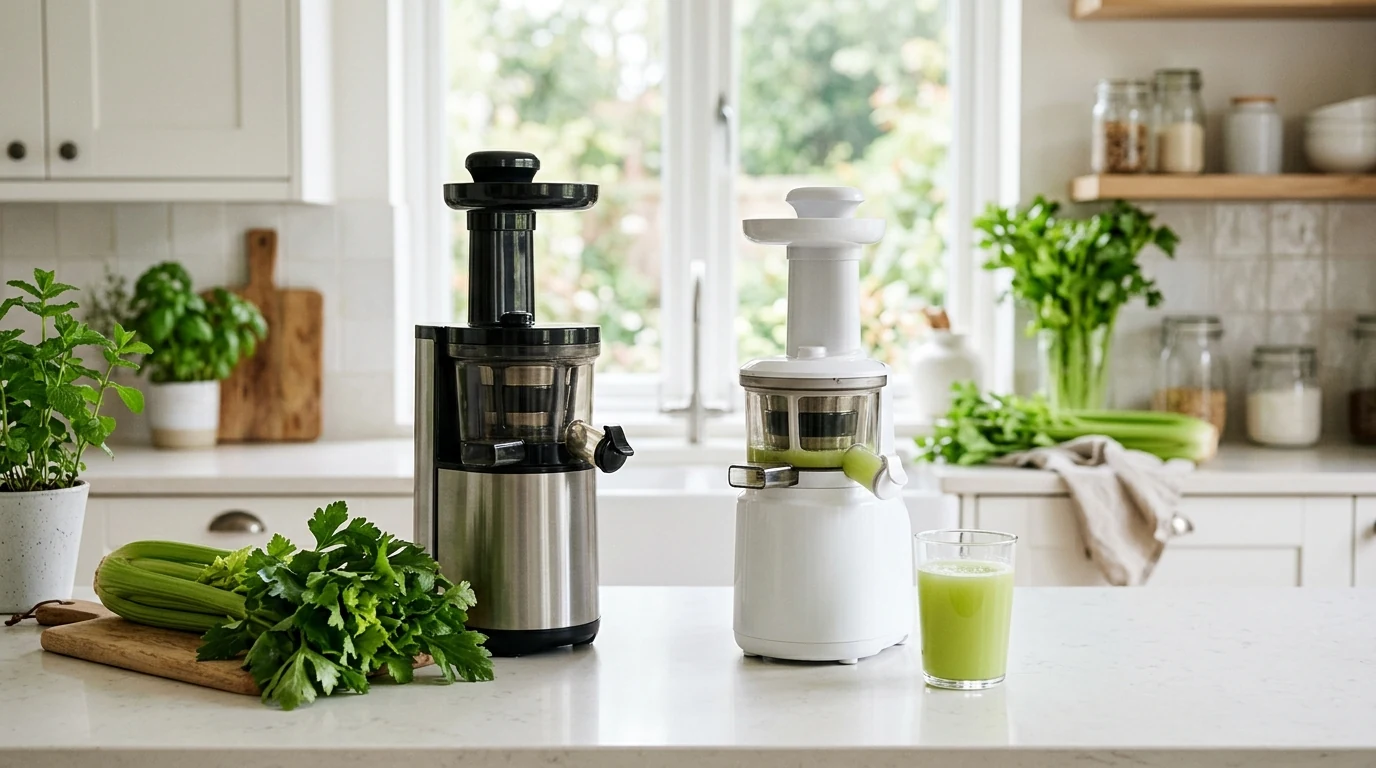
Choosing the best juicers for celery juice is a little different from choosing a general-purpose juicer. Celery is long, watery, and stringy, so a machine that looks fine for apples or oranges can still clog, foam, or leave wet pulp when you run several stalks through it every morning.
This guide focuses on juicers that make sense for real celery juice routines: slow masticating models for fibrous stalks, wide-chute designs for easier prep, and one fast centrifugal option for readers who care more about speed than maximum extraction. I kept the recommendations cautious, avoided invented specs, and called out trade-offs clearly so you can buy for your kitchen rather than for marketing copy.
Disclosure: This article may contain affiliate links. If you buy through them, Healthy Kitchen Reviews may earn a commission at no extra cost to you.
Quick Comparison Table
| Rank | Product | Best For | Capacity | Key Feature | CTA |
|---|---|---|---|---|---|
| 1 | Nama J2 Cold Press Juicer | overall for hands-free celery prep | Large self-feeding hopper; exact batch capacity varies by setup | Self-feeding cold press design | View on Amazon |
| 2 | Omega NC900HDC Nutrition System Juicer | classic masticating pick | Not clearly specified | Horizontal slow masticating extraction | View on Amazon |
| 3 | Hurom H-AA Slow Juicer | compact premium vertical slow juicer | Not clearly specified | 43 RPM Slow Squeeze Technology | View on Amazon |
| 4 | Kuvings EVO820 Whole Slow Juicer | wide-chute slow juicer | 82 mm wide feeding chute | 60 RPM slow cold press with 240 W motor | View on Amazon |
| 5 | Tribest Greenstar Elite Twin Gear Juicer | for serious green-juice drinkers | Not clearly specified | Twin-gear cold press extraction | View on Amazon |
| 6 | Breville Juice Fountain Cold Plus | fast option if convenience matters most | Not clearly specified | Centrifugal juicing with a wide feed chute | View on Amazon |
Our Top Picks
- Best Overall: Nama J2 Cold Press Juicer – easiest premium pick for frequent celery juice.
- Best Classic Slow Juicer: Omega NC900HDC Nutrition System Juicer – a horizontal masticating format for patient users.
- Best Compact Premium Pick: Hurom H-AA Slow Juicer – refined vertical slow juicer for smaller counters.
- Best Wide-Chute Option: Kuvings EVO820 Whole Slow Juicer – helpful if prep time is your biggest complaint.
- Best Fast Option: Breville Juice Fountain Cold Plus – better for speed than maximum celery extraction.
Detailed Reviews of the Best Juicers for Celery Juice
1. Nama J2 Cold Press Juicer
The Nama J2 is the easiest recommendation for readers who want celery juice often but do not want to stand over the feed chute the whole time. The self-feeding hopper is the practical advantage: you can load chopped produce, close the lid, and let the machine work while you prep the next ingredient or clean the counter.
Key Features
- Best for: Best overall for hands-free celery prep
- Capacity: Large self-feeding hopper; exact batch capacity varies by setup
- Key feature: Self-feeding cold press design
- Verified detail note: Product pages change, so confirm the latest package, accessories, voltage, and warranty terms before buying.
What Makes It Stand Out
It is a slow juicer, so it is better aligned with fibrous celery than a basic high-speed centrifugal juicer. The real appeal is convenience. Celery juicing can become repetitive fast, and a self-feeding design removes some of that friction.
How It Helps Your Kitchen Routine
Celery juice only becomes useful if the routine is realistic. This pick makes sense when its main strength matches your actual habit: less active prep, better extraction from fibrous stalks, faster morning workflow, or a more serious green-juice setup.
How to Use It
Cut celery into manageable lengths, load the hopper without overpacking it, and alternate celery with wetter produce if your recipe includes cucumber, lemon, or apple. Empty pulp before it backs up.
Pros and Cons
Pros:
- Hands-free hopper reduces active prep time
- Strong fit for frequent celery juice routines
- Good premium pick for users who juice several times per week
Cons:
- Premium pricing compared with simpler juicers
- Still needs careful cleaning after fibrous greens
- May be larger than casual users need
Customer Feedback Snapshot
The feedback pattern to watch is simple: buyers usually care most about yield, pulp dryness, clogging with stringy celery, noise, and cleaning time. Treat star ratings as only one signal; read current reviews for repeated celery-specific comments before you buy.
Best For
This is best for shoppers who want best overall for hands-free celery prep and are realistic about cleanup after fibrous vegetables.
2. Omega NC900HDC Nutrition System Juicer
Omega's horizontal nutrition-system style juicers have long been popular with people who juice leafy greens, wheatgrass-style ingredients, and fibrous produce. For celery juice, that horizontal auger format makes sense because it pulls stalks steadily through the chamber instead of relying on high-speed shredding alone.
Key Features
- Best for: Best classic masticating pick
- Capacity: Not clearly specified
- Key feature: Horizontal slow masticating extraction
- Verified detail note: Product pages change, so confirm the latest package, accessories, voltage, and warranty terms before buying.
What Makes It Stand Out
This is the sensible pick for someone who wants a proven slow-juicer format and does not mind feeding celery stalks more actively. It is less hands-free than the Nama J2, but it gives careful shoppers a familiar masticating layout.
How It Helps Your Kitchen Routine
Celery juice only becomes useful if the routine is realistic. This pick makes sense when its main strength matches your actual habit: less active prep, better extraction from fibrous stalks, faster morning workflow, or a more serious green-juice setup.
How to Use It
Feed celery gradually rather than forcing large bunches at once. If the pulp starts looking wet, slow down, reverse briefly if needed, and keep the screen clean between larger batches.
Pros and Cons
Pros:
- Horizontal masticating format suits celery and greens
- Good fit for patient users who want control
- Useful beyond celery for many slow-juicing recipes
Cons:
- More active feeding than hopper-style models
- Counter footprint may feel long in small kitchens
- Exact current specs should be checked on the product page before purchase
Customer Feedback Snapshot
The feedback pattern to watch is simple: buyers usually care most about yield, pulp dryness, clogging with stringy celery, noise, and cleaning time. Treat star ratings as only one signal; read current reviews for repeated celery-specific comments before you buy.
Best For
This is best for shoppers who want best classic masticating pick and are realistic about cleanup after fibrous vegetables.
3. Hurom H-AA Slow Juicer
Hurom lists the H-AA as a slow juicer using its 43 RPM Slow Squeeze Technology, with an inner spinning brush and pulp-control features. That makes it a strong fit for buyers who want a refined vertical juicer that can handle leafy greens and vegetables without taking over the kitchen.
Key Features
- Best for: Best compact premium vertical slow juicer
- Capacity: Not clearly specified
- Key feature: 43 RPM Slow Squeeze Technology
- Verified detail note: Product pages change, so confirm the latest package, accessories, voltage, and warranty terms before buying.
What Makes It Stand Out
The H-AA is not the cheapest way to make celery juice, but it has the polished feel many shoppers want when the appliance will live on the counter. Hurom also describes the H-AA as suitable for juice, smoothies, nut milks, and sorbets.
How It Helps Your Kitchen Routine
Celery juice only becomes useful if the routine is realistic. This pick makes sense when its main strength matches your actual habit: less active prep, better extraction from fibrous stalks, faster morning workflow, or a more serious green-juice setup.
How to Use It
Trim celery into shorter pieces, feed gradually, and use the pulp control thoughtfully. Rinse between recipes if you are making more than one juice in a session, then fully disassemble for cleaning.
Pros and Cons
Pros:
- Vertical design can be easier to fit on some counters
- 43 RPM slow squeeze design is celery-friendly
- Good choice for shoppers who value a refined appliance
Cons:
- Premium price tier
- Small feed areas still require chopping
- Cleaning all slow-juicer parts takes patience
Customer Feedback Snapshot
The feedback pattern to watch is simple: buyers usually care most about yield, pulp dryness, clogging with stringy celery, noise, and cleaning time. Treat star ratings as only one signal; read current reviews for repeated celery-specific comments before you buy.
Best For
This is best for shoppers who want best compact premium vertical slow juicer and are realistic about cleanup after fibrous vegetables.
4. Kuvings EVO820 Whole Slow Juicer
Kuvings lists the EVO820 with an 82 mm O-shaped feed chute, 60 RPM slow cold press operation, a 240 W motor, and interchangeable strainers for juice, smoothies, and frozen desserts. For celery juice buyers, the wide chute is the main convenience advantage.
Key Features
- Best for: Best wide-chute slow juicer
- Capacity: 82 mm wide feeding chute
- Key feature: 60 RPM slow cold press with 240 W motor
- Verified detail note: Product pages change, so confirm the latest package, accessories, voltage, and warranty terms before buying.
What Makes It Stand Out
A wide chute does not mean you should force whole celery bunches through the machine, but it can reduce tedious prep compared with narrow-mouth slow juicers. That matters if your main complaint with celery juice is the time it takes before you even start juicing.
How It Helps Your Kitchen Routine
Celery juice only becomes useful if the routine is realistic. This pick makes sense when its main strength matches your actual habit: less active prep, better extraction from fibrous stalks, faster morning workflow, or a more serious green-juice setup.
How to Use It
Use the wide chute for easier loading, but still cut long stringy celery pieces enough to prevent wrapping around the auger. Alternate ingredients slowly and stop before the pulp outlet feels overloaded.
Pros and Cons
Pros:
- Wide 82 mm chute can reduce prep work
- Slow cold press design fits celery better than speed-focused machines
- Multi-strainer setup adds recipe flexibility
Cons:
- Large body may not suit tight counters
- Wide chute can tempt users to overload it
- Premium model with more parts to manage
Customer Feedback Snapshot
The feedback pattern to watch is simple: buyers usually care most about yield, pulp dryness, clogging with stringy celery, noise, and cleaning time. Treat star ratings as only one signal; read current reviews for repeated celery-specific comments before you buy.
Best For
This is best for shoppers who want best wide-chute slow juicer and are realistic about cleanup after fibrous vegetables.
5. Tribest Greenstar Elite Twin Gear Juicer
The Greenstar Elite is the kind of juicer serious green-juice buyers often consider when celery, leafy greens, and dense vegetables are regular staples. Its twin-gear format is more involved than a simple vertical juicer, but it is built around thorough extraction rather than speed.
Key Features
- Best for: Best for serious green-juice drinkers
- Capacity: Not clearly specified
- Key feature: Twin-gear cold press extraction
- Verified detail note: Product pages change, so confirm the latest package, accessories, voltage, and warranty terms before buying.
What Makes It Stand Out
This is not the friendly beginner pick. It is better for a buyer who already knows they will juice often and is willing to spend more time assembling and cleaning a more serious machine.
How It Helps Your Kitchen Routine
Celery juice only becomes useful if the routine is realistic. This pick makes sense when its main strength matches your actual habit: less active prep, better extraction from fibrous stalks, faster morning workflow, or a more serious green-juice setup.
How to Use It
Cut celery into shorter pieces, feed slowly, and do not rush the gears. Plan for a more deliberate cleanup routine than you would with a simpler centrifugal model.
Pros and Cons
Pros:
- Strong fit for dedicated green-juice routines
- Twin-gear format is designed for thorough extraction
- Appeals to buyers who prioritize juice quality over speed
Cons:
- More expensive and involved than most home juicers
- Not ideal for occasional celery juice
- Cleanup and setup require commitment
Customer Feedback Snapshot
The feedback pattern to watch is simple: buyers usually care most about yield, pulp dryness, clogging with stringy celery, noise, and cleaning time. Treat star ratings as only one signal; read current reviews for repeated celery-specific comments before you buy.
Best For
This is best for shoppers who want best for serious green-juice drinkers and are realistic about cleanup after fibrous vegetables.
6. Breville Juice Fountain Cold Plus
Breville's Juice Fountain Cold Plus is not a slow masticating celery specialist, but it earns a place here because some readers value speed more than maximum extraction. If you want celery juice quickly and do not want the slower rhythm of a masticating juicer, a centrifugal model may be more realistic.
Key Features
- Best for: Best fast option if convenience matters most
- Capacity: Not clearly specified
- Key feature: Centrifugal juicing with a wide feed chute
- Verified detail note: Product pages change, so confirm the latest package, accessories, voltage, and warranty terms before buying.
What Makes It Stand Out
This is the practical compromise pick. It can make fresh juice quickly, but fibrous celery may produce wetter pulp than a good slow juicer, and the juice may foam more.
How It Helps Your Kitchen Routine
Celery juice only becomes useful if the routine is realistic. This pick makes sense when its main strength matches your actual habit: less active prep, better extraction from fibrous stalks, faster morning workflow, or a more serious green-juice setup.
How to Use It
Use fresh firm celery, feed at a steady pace, and drink the juice soon after making it. Expect a faster workflow with a potential trade-off in extraction efficiency.
Pros and Cons
Pros:
- Fast workflow for busy mornings
- Wide-feed design can reduce prep
- Good for users who will not tolerate slow juicing
Cons:
- Less ideal for fibrous celery than slow juicers
- May create more foam
- Not the best choice if yield is your top priority
Customer Feedback Snapshot
The feedback pattern to watch is simple: buyers usually care most about yield, pulp dryness, clogging with stringy celery, noise, and cleaning time. Treat star ratings as only one signal; read current reviews for repeated celery-specific comments before you buy.
Best For
This is best for shoppers who want best fast option if convenience matters most and are realistic about cleanup after fibrous vegetables.
How These Celery Juicers Compare
For celery juice, the biggest divide is slow masticating versus centrifugal. Slow juicers usually make more sense for celery because they press fibrous stalks steadily and tend to produce less foamy juice. Centrifugal juicers are faster, but they rely on high-speed shredding and can leave wetter pulp with stringy produce.
If you are still deciding between broader juicer types, read our cold press vs centrifugal juicer comparison. If you already know you want slow extraction, the best masticating juicers guide is the closest supporting article. Beginners may also want the simpler overview in our best juicers for beginners guide.
How to Choose the Best Juicer for Celery Juice
Choose Slow Extraction If Celery Is the Main Ingredient
If celery juice is the point of the purchase, start with slow extraction. A masticating juicer is not automatically perfect, but it is usually a better match for stringy stalks than a speed-first machine. Look for steady feed behavior, manageable cleanup, and a pulp path that does not clog easily.
Do Not Ignore Prep Time
Celery prep can become the part that makes people quit. Wide chutes and self-feeding hoppers help, but they do not remove all prep. Long celery strings can still wrap around parts, so cutting stalks shorter is often worth the extra minute.
Check Cleaning Before You Buy
A juicer that takes too long to clean will not stay in your morning routine. Screens, pulp outlets, augers, strainers, and narrow corners are the parts to inspect. If you plan to juice celery daily, cleaning convenience matters almost as much as extraction.
Think About Noise and Counter Space
Slow juicers often feel calmer, while centrifugal juicers can be louder and faster. Counter space also matters. A premium machine that is too bulky to keep accessible may get used less than a simpler model you can leave within reach.
Is Celery Juice Actually Healthy? Keep the Claims Realistic
Celery juice can be a refreshing way to add more produce to your day, but it is not a cure or a shortcut around balanced eating. Celery itself is low in calories and contains water, fiber when eaten whole, and naturally occurring nutrients; juicing removes much of the fiber. For general produce safety, follow food-safety guidance from sources such as the CDC fruit and vegetable safety guidance, especially washing produce before use.
The healthiest juicer is the one that helps you maintain a realistic habit without turning fresh juice into a substitute for meals, vegetables, protein, or medical care. If you manage a medical condition or follow a restricted diet, treat celery juice as a food choice and ask a qualified professional before making major changes.
Frequently Asked Questions
What type of juicer is best for celery juice?
A slow masticating juicer is usually the best fit for celery juice because it handles fibrous stalks more steadily than most centrifugal juicers. It may also produce less foam and drier pulp, depending on the model and how you feed the celery.
Is a cold press juicer better for celery than a centrifugal juicer?
Usually, yes. Cold press and masticating juicers tend to suit celery better if your priority is extraction quality. A centrifugal juicer can still work if speed matters more than maximum yield.
Do I need to cut celery before juicing?
Yes, it is usually smart to cut celery into shorter pieces, even with wide-chute juicers. Shorter pieces reduce the chance of long fibers wrapping around the auger or clogging the pulp outlet.
Can I make celery juice in a blender?
You can blend celery with water and strain it, but that is not the same workflow as using a juicer. A blender keeps more fiber in the mixture until you strain it, while a juicer separates juice and pulp directly.
How soon should I drink celery juice after making it?
Fresh juice is generally best soon after juicing for flavor and freshness. If you store it, use a clean sealed container and refrigerate it promptly.
Is celery juice better with pulp or without pulp?
That depends on preference. Traditional celery juice is usually strained, but whole celery or blended celery retains more fiber. If fiber is important to you, eating celery or using it in smoothies may make more sense than fully strained juice.
Conclusion
The best juicers for celery juice for most people is a slow masticating model that makes celery prep and cleanup feel manageable enough to repeat. The Nama J2 is the easiest premium recommendation if hands-free loading matters, while the Omega NC900HDC and Hurom H-AA make sense for shoppers who prefer established slow-juicer formats. If speed matters more than extraction, the Breville Juice Fountain Cold Plus is the practical compromise.
Buy for your real routine. Celery juice is simple in theory, but the right juicer is the one you will clean, keep accessible, and use more than once.