Best Non-Toxic Dutch Ovens: 6 Safer Picks for Soups, Bread, and Braises
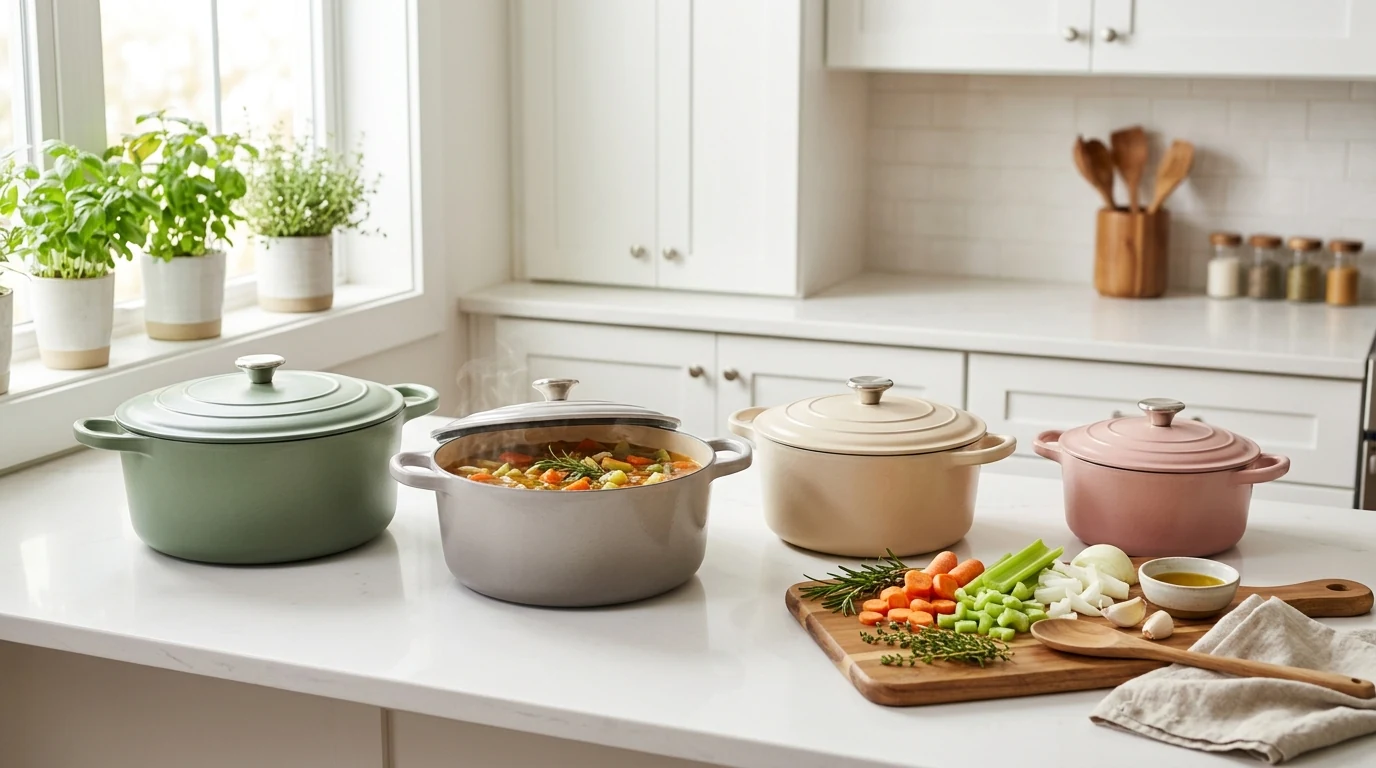
Choosing the best non-toxic dutch ovens is not just about finding a pretty pot. A Dutch oven sits at the center of the kitchen for soups, beans, sourdough, chili, short ribs, tomato sauce, and slow weekend meals. That means the cooking surface, weight, capacity, and cleanup experience matter more than the color alone.
For most health-conscious buyers, the safest practical path is a well-made enameled cast iron Dutch oven or a carefully chosen ceramic-coated alternative. Enameled cast iron avoids traditional PTFE-style nonstick coatings and handles long simmering beautifully. Ceramic-coated pots can be easier to clean, but they need gentler utensils and lower-heat habits.
This guide keeps the claims cautious. I am not calling any Dutch oven magically “safe for everyone.” Instead, I am comparing materials, size, cooking fit, and durability so you can choose a pot that supports better home cooking without falling for vague non-toxic marketing. Disclosure: This article may contain affiliate links. If you buy through them, Healthy Kitchen Reviews may earn a commission at no extra cost to you.
Quick Comparison Table
| Rank | Product | Best For | Capacity | Key Feature | CTA |
|---|---|---|---|---|---|
| 1 | Le Creuset Signature Round Dutch Oven | Best overall enameled cast iron Dutch oven | 5.5 quarts in the commonly compared round model | Durable enamel over cast iron with strong heat retention | View on Amazon |
| 2 | Staub Cast Iron Round Cocotte | Best premium braising pick | 5.5 quarts in the popular round cocotte size | Heavy lid and braising-friendly enamel interior | View on Amazon |
| 3 | Lodge Essential Enamel Dutch Oven | Best budget enameled Dutch oven | Available in multiple sizes, including 6 quarts on the Lodge Dutch oven collection page | Enameled cast iron at a more accessible price | View on Amazon |
| 4 | Great Jones The Dutchess | Best large design-forward Dutch oven | 6.75 quarts | Oval 6.75-quart shape that moves from stove to oven to table | View on Amazon |
| 5 | Caraway Dutch Oven | Best ceramic-coated lighter-feeling option | Commonly listed around 6.5 quarts; confirm current size before buying | Easy-clean ceramic-coated surface from a brand known for non-toxic cookware positioning | View on Amazon |
| 6 | Our Place Perfect Pot | Best lightweight multi-use alternative | Commonly positioned as a multi-purpose pot; confirm the current listed capacity before purchase | A Dutch-oven-adjacent pot for steaming, boiling, braising-style meals, and everyday cooking | View on Amazon |
Our Top Picks
- Best Overall: Le Creuset Signature Round Dutch Oven for premium enameled cast iron and everyday versatility.
- Best Budget: Lodge Essential Enamel Dutch Oven for an accessible enameled cast iron option.
- Best for Families: Great Jones The Dutchess because the 6.75-quart oval shape gives more room.
- Best Compact-Feeling Option: Our Place Perfect Pot for shoppers who want a lighter multi-use pot.
- Best Premium Pick: Staub Cast Iron Round Cocotte for braising-focused buyers who like Staub’s darker interior.
Detailed Reviews of the Best Non-Toxic Dutch Ovens
1. Le Creuset Signature Round Dutch Oven
Le Creuset Signature Round Dutch Oven is ranked as the best overall enameled cast iron dutch oven. It is the easiest premium recommendation for buyers who want a long-lasting Dutch oven, excellent heat retention, and a cooking surface that does not rely on PTFE-style nonstick.
Key Features
- Capacity: 5.5 quarts in the commonly compared round model
- Material: Enameled cast iron
- Key feature: Durable enamel over cast iron with strong heat retention
- Product source: official product or brand page
What Makes It Stand Out
The useful difference is how the pot behaves during long, moist cooking. Dutch ovens are often used with acidic tomatoes, salty broths, beans, wine-based braises, and bread-baking heat. A strong pick should feel stable, hold heat well, and avoid a mystery nonstick layer that may wear down quickly.
How It Helps Your Kitchen Routine
A Dutch oven earns its space when it makes healthier home cooking easier: big vegetable soups, beans from scratch, lentil stews, whole-grain bread, shredded chicken, and batch meals for leftovers. The right pot turns those jobs into a routine instead of a project.
How to Use It
Use moderate heat on the stovetop, let the pot heat gradually, and avoid shocking hot enamel with cold water. For enameled cast iron, wooden or silicone utensils are usually the calmer choice. For ceramic-coated options, stay away from metal tools and unnecessary high heat.
Pros and Cons
Pros:
- Strong fit for best overall enameled cast iron dutch oven.
- Useful for soups, stews, braises, beans, sauces, and bread-style cooking.
- Fits the healthier-kitchen goal better than relying on old, scratched nonstick cookware.
Cons:
- The biggest drawback is price, and the weight can be tiring when the pot is full.
- Not every buyer needs a large Dutch oven if they mostly cook single servings.
- Current compatibility and care details should be confirmed on the product page before purchase.
Customer Feedback Snapshot
For Dutch ovens, the most useful buyer feedback is about weight, enamel durability, how easy the pot is to clean after tomato sauce or beans, and whether the lid sits securely. I would pay more attention to those details than to vague comments about a pot being simply beautiful.
Best For
This pick is best for shoppers who want best overall enameled cast iron dutch oven and understand the care trade-offs of the material.
2. Staub Cast Iron Round Cocotte
Staub Cast Iron Round Cocotte is ranked as the best premium braising pick. Staub is especially compelling for braises, stews, and slow cooking because the design feels built around moisture retention and deeper savory cooking.
Key Features
- Capacity: 5.5 quarts in the popular round cocotte size
- Material: Enameled cast iron with a textured black enamel interior
- Key feature: Heavy lid and braising-friendly enamel interior
- Product source: official product or brand page
What Makes It Stand Out
The useful difference is how the pot behaves during long, moist cooking. Dutch ovens are often used with acidic tomatoes, salty broths, beans, wine-based braises, and bread-baking heat. A strong pick should feel stable, hold heat well, and avoid a mystery nonstick layer that may wear down quickly.
How It Helps Your Kitchen Routine
A Dutch oven earns its space when it makes healthier home cooking easier: big vegetable soups, beans from scratch, lentil stews, whole-grain bread, shredded chicken, and batch meals for leftovers. The right pot turns those jobs into a routine instead of a project.
How to Use It
Use moderate heat on the stovetop, let the pot heat gradually, and avoid shocking hot enamel with cold water. For enameled cast iron, wooden or silicone utensils are usually the calmer choice. For ceramic-coated options, stay away from metal tools and unnecessary high heat.
Pros and Cons
Pros:
- Strong fit for best premium braising pick.
- Useful for soups, stews, braises, beans, sauces, and bread-style cooking.
- Fits the healthier-kitchen goal better than relying on old, scratched nonstick cookware.
Cons:
- The darker interior makes browning harder to judge for beginners, and it is still a heavy premium pot.
- Not every buyer needs a large Dutch oven if they mostly cook single servings.
- Current compatibility and care details should be confirmed on the product page before purchase.
Customer Feedback Snapshot
For Dutch ovens, the most useful buyer feedback is about weight, enamel durability, how easy the pot is to clean after tomato sauce or beans, and whether the lid sits securely. I would pay more attention to those details than to vague comments about a pot being simply beautiful.
Best For
This pick is best for shoppers who want best premium braising pick and understand the care trade-offs of the material.
3. Lodge Essential Enamel Dutch Oven
Lodge Essential Enamel Dutch Oven is ranked as the best budget enameled dutch oven. This is the practical pick if you want the Dutch oven experience without paying premium-brand prices. It can handle soups, stews, pasta sauces, and oven braises for a wide range of home cooks.
Key Features
- Capacity: Available in multiple sizes, including 6 quarts on the Lodge Dutch oven collection page
- Material: Porcelain-enameled cast iron
- Key feature: Enameled cast iron at a more accessible price
- Product source: official product or brand page
What Makes It Stand Out
The useful difference is how the pot behaves during long, moist cooking. Dutch ovens are often used with acidic tomatoes, salty broths, beans, wine-based braises, and bread-baking heat. A strong pick should feel stable, hold heat well, and avoid a mystery nonstick layer that may wear down quickly.
How It Helps Your Kitchen Routine
A Dutch oven earns its space when it makes healthier home cooking easier: big vegetable soups, beans from scratch, lentil stews, whole-grain bread, shredded chicken, and batch meals for leftovers. The right pot turns those jobs into a routine instead of a project.
How to Use It
Use moderate heat on the stovetop, let the pot heat gradually, and avoid shocking hot enamel with cold water. For enameled cast iron, wooden or silicone utensils are usually the calmer choice. For ceramic-coated options, stay away from metal tools and unnecessary high heat.
Pros and Cons
Pros:
- Strong fit for best budget enameled dutch oven.
- Useful for soups, stews, braises, beans, sauces, and bread-style cooking.
- Fits the healthier-kitchen goal better than relying on old, scratched nonstick cookware.
Cons:
- Fit and finish may not feel as refined as higher-priced French brands.
- Not every buyer needs a large Dutch oven if they mostly cook single servings.
- Current compatibility and care details should be confirmed on the product page before purchase.
Customer Feedback Snapshot
For Dutch ovens, the most useful buyer feedback is about weight, enamel durability, how easy the pot is to clean after tomato sauce or beans, and whether the lid sits securely. I would pay more attention to those details than to vague comments about a pot being simply beautiful.
Best For
This pick is best for shoppers who want best budget enameled dutch oven and understand the care trade-offs of the material.
4. Great Jones The Dutchess
Great Jones The Dutchess is ranked as the best large design-forward dutch oven. It is a strong choice for cooks who want a larger pot for family-style meals and care about how the Dutch oven looks on the table.
Key Features
- Capacity: 6.75 quarts
- Material: Enameled cast iron
- Key feature: Oval 6.75-quart shape that moves from stove to oven to table
- Product source: official product or brand page
What Makes It Stand Out
The useful difference is how the pot behaves during long, moist cooking. Dutch ovens are often used with acidic tomatoes, salty broths, beans, wine-based braises, and bread-baking heat. A strong pick should feel stable, hold heat well, and avoid a mystery nonstick layer that may wear down quickly.
How It Helps Your Kitchen Routine
A Dutch oven earns its space when it makes healthier home cooking easier: big vegetable soups, beans from scratch, lentil stews, whole-grain bread, shredded chicken, and batch meals for leftovers. The right pot turns those jobs into a routine instead of a project.
How to Use It
Use moderate heat on the stovetop, let the pot heat gradually, and avoid shocking hot enamel with cold water. For enameled cast iron, wooden or silicone utensils are usually the calmer choice. For ceramic-coated options, stay away from metal tools and unnecessary high heat.
Pros and Cons
Pros:
- Strong fit for best large design-forward dutch oven.
- Useful for soups, stews, braises, beans, sauces, and bread-style cooking.
- Fits the healthier-kitchen goal better than relying on old, scratched nonstick cookware.
Cons:
- The oval shape is roomy, but it may not heat as evenly on smaller round burners as a round Dutch oven.
- Not every buyer needs a large Dutch oven if they mostly cook single servings.
- Current compatibility and care details should be confirmed on the product page before purchase.
Customer Feedback Snapshot
For Dutch ovens, the most useful buyer feedback is about weight, enamel durability, how easy the pot is to clean after tomato sauce or beans, and whether the lid sits securely. I would pay more attention to those details than to vague comments about a pot being simply beautiful.
Best For
This pick is best for shoppers who want best large design-forward dutch oven and understand the care trade-offs of the material.
5. Caraway Dutch Oven
Caraway Dutch Oven is ranked as the best ceramic-coated lighter-feeling option. It belongs here for shoppers who want a Dutch-oven-style pot but do not want the weight and seasoning concerns of cast iron.
Key Features
- Capacity: Commonly listed around 6.5 quarts; confirm current size before buying
- Material: Ceramic-coated cookware rather than traditional bare cast iron
- Key feature: Easy-clean ceramic-coated surface from a brand known for non-toxic cookware positioning
- Product source: official product or brand page
What Makes It Stand Out
The useful difference is how the pot behaves during long, moist cooking. Dutch ovens are often used with acidic tomatoes, salty broths, beans, wine-based braises, and bread-baking heat. A strong pick should feel stable, hold heat well, and avoid a mystery nonstick layer that may wear down quickly.
How It Helps Your Kitchen Routine
A Dutch oven earns its space when it makes healthier home cooking easier: big vegetable soups, beans from scratch, lentil stews, whole-grain bread, shredded chicken, and batch meals for leftovers. The right pot turns those jobs into a routine instead of a project.
How to Use It
Use moderate heat on the stovetop, let the pot heat gradually, and avoid shocking hot enamel with cold water. For enameled cast iron, wooden or silicone utensils are usually the calmer choice. For ceramic-coated options, stay away from metal tools and unnecessary high heat.
Pros and Cons
Pros:
- Strong fit for best ceramic-coated lighter-feeling option.
- Useful for soups, stews, braises, beans, sauces, and bread-style cooking.
- Fits the healthier-kitchen goal better than relying on old, scratched nonstick cookware.
Cons:
- Ceramic coating still needs gentle use, and it is not the same long-term material proposition as enameled cast iron.
- Not every buyer needs a large Dutch oven if they mostly cook single servings.
- Current compatibility and care details should be confirmed on the product page before purchase.
Customer Feedback Snapshot
For Dutch ovens, the most useful buyer feedback is about weight, enamel durability, how easy the pot is to clean after tomato sauce or beans, and whether the lid sits securely. I would pay more attention to those details than to vague comments about a pot being simply beautiful.
Best For
This pick is best for shoppers who want best ceramic-coated lighter-feeling option and understand the care trade-offs of the material.
6. Our Place Perfect Pot
Our Place Perfect Pot is ranked as the best lightweight multi-use alternative. This is not the classic cast iron path, but it may fit small kitchens and buyers who want one lighter pot for daily healthy cooking routines.
Key Features
- Capacity: Commonly positioned as a multi-purpose pot; confirm the current listed capacity before purchase
- Material: Ceramic nonstick-style coated aluminum, based on the brand's cookware positioning
- Key feature: A Dutch-oven-adjacent pot for steaming, boiling, braising-style meals, and everyday cooking
- Product source: official product or brand page
What Makes It Stand Out
The useful difference is how the pot behaves during long, moist cooking. Dutch ovens are often used with acidic tomatoes, salty broths, beans, wine-based braises, and bread-baking heat. A strong pick should feel stable, hold heat well, and avoid a mystery nonstick layer that may wear down quickly.
How It Helps Your Kitchen Routine
A Dutch oven earns its space when it makes healthier home cooking easier: big vegetable soups, beans from scratch, lentil stews, whole-grain bread, shredded chicken, and batch meals for leftovers. The right pot turns those jobs into a routine instead of a project.
How to Use It
Use moderate heat on the stovetop, let the pot heat gradually, and avoid shocking hot enamel with cold water. For enameled cast iron, wooden or silicone utensils are usually the calmer choice. For ceramic-coated options, stay away from metal tools and unnecessary high heat.
Pros and Cons
Pros:
- Strong fit for best lightweight multi-use alternative.
- Useful for soups, stews, braises, beans, sauces, and bread-style cooking.
- Fits the healthier-kitchen goal better than relying on old, scratched nonstick cookware.
Cons:
- It is less traditional than cast iron and should be treated carefully to protect the coating.
- Not every buyer needs a large Dutch oven if they mostly cook single servings.
- Current compatibility and care details should be confirmed on the product page before purchase.
Customer Feedback Snapshot
For Dutch ovens, the most useful buyer feedback is about weight, enamel durability, how easy the pot is to clean after tomato sauce or beans, and whether the lid sits securely. I would pay more attention to those details than to vague comments about a pot being simply beautiful.
Best For
This pick is best for shoppers who want best lightweight multi-use alternative and understand the care trade-offs of the material.
How These Non-Toxic Dutch Ovens Compare
The main split is traditional enameled cast iron versus ceramic-coated lighter cookware. Enameled cast iron is heavier, but it is excellent for steady heat, long braises, soups, and oven use. It also avoids the standard nonstick-coating lane. Ceramic-coated pots are easier for some cooks to lift and clean, but the coating usually needs gentler treatment.
If you are mostly making pasta water, broth, and large soup batches, compare this article with Best Non-Toxic Stock Pots. If you need a smaller everyday pan, Best Non-Toxic Saucepan may be more practical. For broader material decisions, read Best Cookware Without PFAS and Best Cookware Without Teflon before buying.
How to Choose the Best Non-Toxic Dutch Ovens
Start With the Cooking Surface
Non-toxic should mean something specific. For Dutch ovens, the most common healthier-kitchen choices are enameled cast iron, stainless-lined or specialty surfaces, and ceramic-coated alternatives that clearly avoid PFAS-style chemistry. Avoid buying on the word non-toxic alone; look for the actual cooking surface and care instructions.
Choose a Capacity You Will Actually Use
A 5.5- to 6-quart Dutch oven is the sweet spot for many households. It can handle soup, bread, beans, braises, and pasta sauce without becoming impossible to wash. Larger 6.75-quart oval pots are better for whole chicken, family meals, and batch cooking, but they can be harder to store.
Think About Weight Before You Buy
Enameled cast iron is heavy even before food goes in. If lifting a full pot from stove to sink sounds frustrating, a lighter ceramic-coated alternative may get used more often. The best pot is not the toughest one on paper; it is the one you can use safely and comfortably.
Check Stove and Oven Compatibility
Confirm induction compatibility, maximum oven temperature, and lid knob limits on the current product page. Dutch ovens are often used across stovetop and oven, so this matters more than it does for a simple saucepan.
Be Careful With Safety Claims
PFAS concerns are one reason many shoppers move away from older nonstick cookware. The EPA PFAS overview explains why these persistent chemicals get attention. For Dutch ovens, choosing enameled cast iron or a clearly disclosed PFAS-free ceramic-coated pot can be reasonable, but no pot should be treated as a health guarantee.
Are Non-Toxic Dutch Ovens Worth It for Healthy Cooking?
Yes, if they make real home cooking easier. A good Dutch oven can help you make vegetable soup, beans, lentils, lower-sodium broth, whole-grain bread, and slow-cooked meals with more control over ingredients. That supports healthier routines, but it does not make every recipe healthy by itself.
If you already own cast iron and want another coating-free pan for searing, the Best Cast Iron Skillets for Healthy Cooking guide is a useful companion. If you prefer lighter responsive cookware, compare Best Carbon Steel Pans too.
Frequently Asked Questions
What is the best non-toxic Dutch oven material?
For most buyers, enameled cast iron is the best balance of durability, heat retention, and coating-conscious cooking. It is not nonstick, but it avoids the traditional PTFE-style nonstick surface many shoppers want to move away from.
Are enameled cast iron Dutch ovens safe for tomato sauce?
Enameled cast iron is commonly used for tomato sauce and other acidic foods because the enamel creates a barrier between food and bare cast iron. Still, avoid chipped enamel and follow the brand’s care guidance.
Is ceramic-coated cookware better than enameled cast iron?
It depends on your priorities. Ceramic-coated pots are often lighter and easier to clean, while enameled cast iron usually wins for heat retention, durability, and traditional Dutch oven cooking.
What size Dutch oven should most people buy?
A 5.5- to 6-quart Dutch oven works well for many households. Larger oval pots are better for family meals and whole roasts, while smaller pots can be easier for one or two people.
Can a Dutch oven help with healthy cooking?
It can help indirectly by making soups, beans, vegetables, braises, and batch cooking easier. The health value still depends on ingredients, portions, and how often you cook at home.
Final Recommendation
The best non-toxic dutch ovens for most kitchens is a 5.5- to 6-quart enameled cast iron model. Le Creuset is the premium all-around pick, Staub is excellent for braising-focused cooks, and Lodge is the smarter budget choice. Great Jones makes sense if you want a larger, design-forward pot, while Caraway and Our Place are better for buyers who prioritize lighter handling and easier cleanup over classic cast iron performance.
My practical advice: choose enameled cast iron if you want the longest-lasting Dutch oven experience, and choose a ceramic-coated alternative only if lighter weight and easier cleaning will make you cook at home more often.