Best Food Processors for Meal Prep, Chopping, and Healthy Cooking
Best Food Processors for Meal Prep, Chopping, and Healthy Cooking
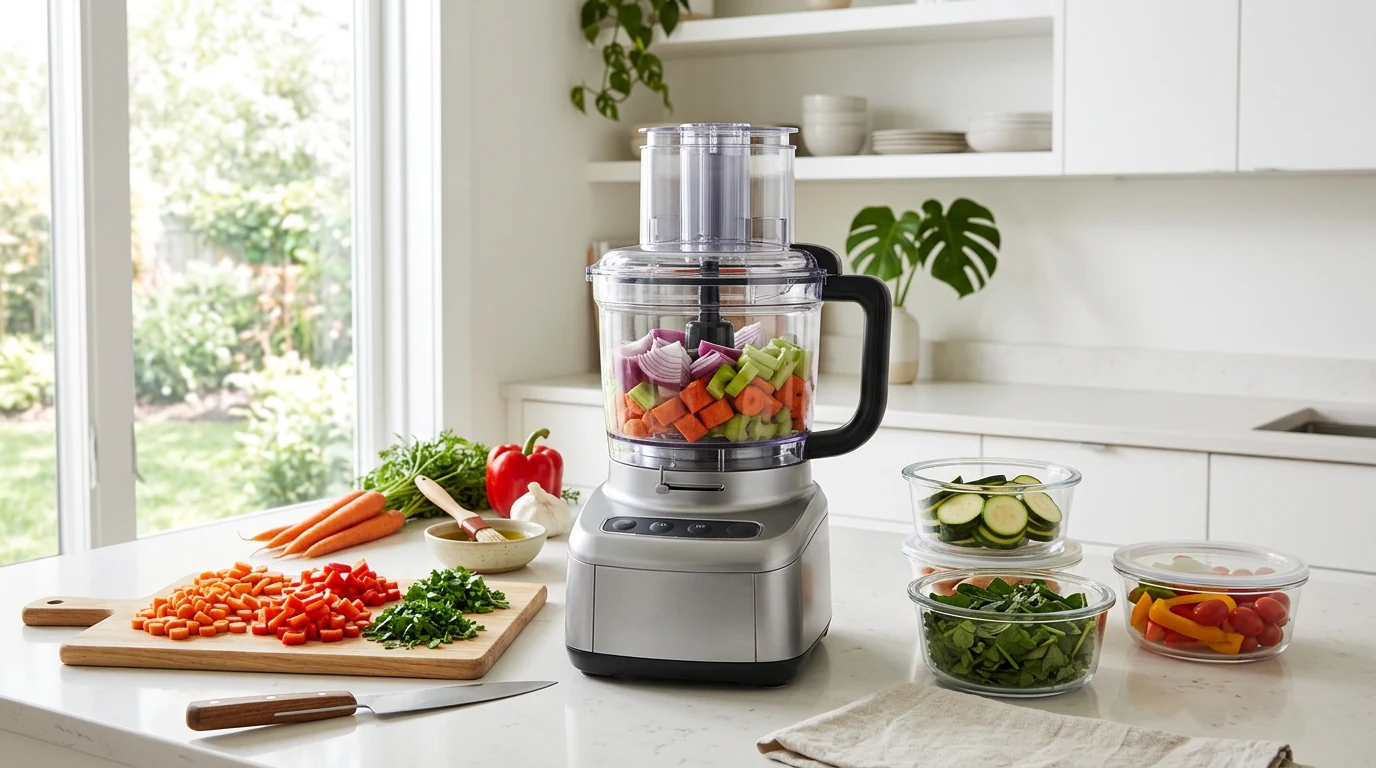
If you are searching for the best food processor for meal prep, you are probably tired of spending too much time chopping, slicing, shredding, and cleaning up before the actual cooking even starts. A good food processor does not magically make dinner healthy, but it can remove enough friction that cooking at home feels more realistic on a busy week.
The right choice depends on what you prep most often. A family that chops vegetables in big batches needs a different machine than someone who makes small sauces, salsa, or weekday lunch bowls. In this guide, I kept the focus on practical kitchen use: capacity, cleanup, storage, buyer fit, and whether each model makes sense for real meal prep rather than just looking impressive in a product photo.
Disclosure: This article may contain affiliate links. If you buy through them, Healthy Kitchen Reviews may earn a commission at no extra cost to you.
Quick Comparison Table
| Rank | Product | Best For | Capacity | Key Feature | CTA |
|---|---|---|---|---|---|
| 1 | Cuisinart Custom 14-Cup Food Processor | Best overall meal-prep workhorse | 14 cups | Large work bowl and 720-watt motor | View on Amazon |
| 2 | Breville Sous Chef 16 Pro | Best premium food processor | 16 cups, with a 2.5-cup mini bowl listed by Breville | Variable slicing disc and 1,200-watt motor | View on Amazon |
| 3 | Ninja Professional Plus Food Processor BN601 | Best value for fast everyday prep | 9 cups listed by major retailer results | Preset programs and 1000 peak watts listed by retailer results | View on Amazon |
| 4 | KitchenAid 13-Cup Food Processor | Best for organized everyday slicing and chopping | 13 cups | Mid-large capacity with KitchenAid food processor styling | View on Amazon |
| 5 | Hamilton Beach Stack & Snap Food Processor | Best budget-friendly option | Not clearly specified in the sources accessible during this run | Stack-and-snap style assembly | View on Amazon |
Our Top Picks
- Best Overall: Cuisinart Custom 14-Cup Food Processor, because it gives meal preppers a roomy bowl and simple controls.
- Best Budget: Hamilton Beach Stack & Snap Food Processor, because it keeps the buying decision simple for lighter prep.
- Best for Families: Cuisinart Custom 14-Cup Food Processor, because larger batches are less annoying in a 14-cup bowl.
- Best Compact-Feeling Full-Size Option: Ninja Professional Plus Food Processor BN601, because the 9-cup size is easier to live with than the biggest machines.
- Best Premium Pick: Breville Sous Chef 16 Pro, because it offers more capacity, slicing control, and accessory depth for serious cooks.
Detailed Reviews of the Best Food Processors for Meal Prep
1. Cuisinart Custom 14-Cup Food Processor
The Cuisinart Custom 14-Cup Food Processor is the easiest first pick for many home cooks because it focuses on the jobs people actually repeat: chopping onions, shredding vegetables, making sauces, and prepping bigger batches without fussing over too many modes. It is not the newest-looking machine in this group, but that simple, durable-feeling approach is exactly why it fits meal prep so well.
Key Features
- 14-cup work bowl, based on Cuisinart product information and retailer listings
- 720-watt motor listed for the Custom 14-Cup model
- Stainless-look base and straightforward controls
- Best suited to batch prep, chopped vegetables, sauces, and dough-style prep within normal home use
What Makes It Stand Out
This is the processor I would point a practical buyer toward first if they want capacity and simplicity more than a long feature list. A roomy bowl matters when you are chopping vegetables for soup, shredding cabbage for slaw, or prepping ingredients for several lunches at once. The trade-off is that it is a full-size appliance, so it asks for real cabinet or counter space.
How It Helps Your Kitchen Routine
For Sunday meal prep, a larger bowl reduces the stop-start rhythm that makes chopping feel like a chore. You can prep more onion, carrot, celery, or cabbage before emptying the bowl, which keeps the job moving. It also suits cooks who would rather have one dependable machine than a drawer full of small gadgets.
How to Use It
Use it for batch chopping, shredding firm vegetables, making salsa-style mixtures, pulsing nuts, or preparing larger sauce bases. Keep the parts dry before storage, avoid overfilling the bowl, and pulse in short bursts when you want texture instead of puree.
Pros and Cons
Pros:
- Large capacity is useful for meal prep
- Simple controls reduce the learning curve
- Strong fit for families and batch cooking
Cons:
- Takes more space than compact processors
- Not the best choice if you only prep tiny portions
- Some attachment details may vary by package or retailer
Customer Feedback Snapshot
Buyer feedback around this style of processor usually centers on reliability, bowl size, and whether the simple controls feel easier than newer touch panels. The most common hesitation is size: if you have a very small kitchen, a 14-cup processor can feel like more machine than you want to move around.
Best For
Best for cooks who prep several meals at a time, cook for more than one or two people, or want one main food processor that can handle bigger jobs. Skip it if your main need is chopping half an onion or making a single small sauce.
2. Breville Sous Chef 16 Pro
The Breville Sous Chef 16 Pro is the premium pick for buyers who want a serious food processor and already know they will use it often. It has the capacity, motor strength, and accessory range to make sense for ambitious home cooks, but it is more machine than a casual buyer needs.
Key Features
- 16-cup main bowl and 2.5-cup mini processing bowl listed by Breville
- 1,200-watt direct-drive induction motor listed by Breville
- Variable slicing disc with 24 settings from 0.3 mm to 8.0 mm listed by Breville
- Multiple included tools and storage box listed by Breville
What Makes It Stand Out
The real advantage is control. If you care about thin cucumber slices, even carrot coins, large-batch chopping, or switching from a big bowl to a mini bowl, this model gives you more room to work. That flexibility is valuable, but it also means more attachments to store and clean.
How It Helps Your Kitchen Routine
This processor is most helpful in a kitchen where prep is already a habit. It can make a big batch of vegetables, slaws, sauces, and dough-like mixtures feel more organized. The included storage box also matters because premium processors can become frustrating when accessories end up scattered across drawers.
How to Use It
Use the large bowl for batch prep and the mini bowl for smaller sauces, herbs, or chopped aromatics. For slicing, start thicker than you think you need, then adjust downward once you see how your produce behaves. Clean the disc and blade carefully after sticky or fibrous foods.
Pros and Cons
Pros:
- Excellent capacity for serious meal prep
- Wide slicing control for precise prep
- Mini bowl improves small-batch usefulness
Cons:
- Premium price category
- Large footprint and more accessories to manage
- Overkill for occasional chopping
Customer Feedback Snapshot
The appeal here is usually performance and control. Buyers who cook often tend to appreciate the power and accessory range, while less frequent users may find the size and storage demands harder to justify.
Best For
Best for serious home cooks, batch preppers, and families who want a high-capacity processor with more slicing control. Skip it if you mainly want a simple budget chopper.
3. Ninja Professional Plus Food Processor BN601
The Ninja Professional Plus Food Processor BN601 is a strong middle-ground choice for people who want a capable food processor without stepping into premium pricing. Its appeal is simple: it is built around fast chopping, shredding, sauces, and dough-style prep, with a size that feels easier to live with than the biggest machines.
Key Features
- 9-cup capacity listed by major retailer results for the BN601
- 1000 peak watts listed by major retailer results for the BN601
- Preset programs for common prep tasks are commonly listed for this model
- Dough blade availability is commonly associated with this model package, but package contents should be checked before buying
What Makes It Stand Out
This is the processor for buyers who want enough power and capacity for weeknight prep but do not want a processor that dominates the kitchen. The 9-cup size is a useful compromise: large enough for many recipes, but less intimidating than a 14- or 16-cup machine.
How It Helps Your Kitchen Routine
For busy cooks, preset-style operation can reduce decision fatigue. It is useful when you want to chop vegetables for tacos, shred cheese for a casserole, or make a quick sauce without pulling out multiple tools.
How to Use It
Use short pulses for chopped vegetables, longer processing for sauces, and avoid packing the bowl too tightly. If you plan to make dough regularly, check the exact package and manual before assuming it fits your preferred recipe size.
Pros and Cons
Pros:
- Good everyday capacity for many homes
- Useful fit for fast weeknight prep
- Often easier to store than larger premium processors
Cons:
- Peak wattage is not the same as continuous operating wattage
- Accessory packages can vary by retailer
- May feel small for large batch cooking
Customer Feedback Snapshot
The typical buyer concern with value-focused processors is whether they feel sturdy enough over time and whether cleanup stays easy. This model is most compelling when you want speed and practical capacity more than premium slicing precision.
Best For
Best for shoppers who want a capable food processor for normal weekly prep without buying the largest option. Skip it if you routinely prep very large batches.
4. KitchenAid 13-Cup Food Processor
The KitchenAid 13-Cup Food Processor makes sense for buyers who want a roomy processor but prefer a slightly more refined, everyday-kitchen feel. It sits between compact processors and the largest premium machines, which makes it a useful size for families, weekly meal prep, and cooks who slice and chop often.
Key Features
- 13-cup capacity indicated by the product name and official product URL pattern
- Designed for common food processor tasks such as chopping, slicing, shredding, and mixing
- Exact accessory package should be checked at the retailer before purchase
- Detailed wattage and all included parts were not clearly verified in this workflow
What Makes It Stand Out
The main reason to consider this model is balance. A 13-cup bowl gives you more room than a compact chopper, but it is not quite as oversized as a 16-cup premium processor. That can be the sweet spot for a home cook who meal preps but still wants the appliance to feel manageable.
How It Helps Your Kitchen Routine
This kind of food processor earns its space when you use it for repeat tasks: slicing vegetables for sheet-pan meals, shredding ingredients for salads, chopping onions and peppers, or prepping sauce bases. It is less about one dramatic feature and more about reducing the manual work that keeps people from cooking at home.
How to Use It
Use it for medium and large prep jobs, then clean the bowl and lid soon after use so food does not dry into the corners. If you are choosing it for slicing or shredding, confirm the included discs in the exact listing before buying.
Pros and Cons
Pros:
- Useful mid-large capacity
- Good fit for regular home meal prep
- Likely easier to justify than a very large premium processor for many homes
Cons:
- Detailed specs were not fully accessible during this run
- May still be too large for very small kitchens
- Accessory contents should be checked carefully before purchase
Customer Feedback Snapshot
For this model class, buyers usually care about whether assembly feels intuitive, whether storage is tidy, and whether the bowl size matches their real cooking habits. It is a good candidate when you want something more substantial than a mini processor but do not need the most powerful machine available.
Best For
Best for home cooks who want a balanced, family-friendly food processor for slicing, chopping, and routine prep. Skip it if you want the smallest possible appliance.
5. Hamilton Beach Stack & Snap Food Processor
The Hamilton Beach Stack & Snap Food Processor is the budget-minded pick for shoppers who want help with basic chopping and prep without committing to a premium appliance. It is not the processor I would choose for the heaviest weekly workload, but it can make sense for simpler kitchens and occasional meal prep.
Key Features
- Stack & Snap product line is designed around easier bowl and lid assembly
- Capacity, wattage, and exact included accessories were not clearly verified in accessible sources during this run
- Best treated as a practical budget processor rather than a premium batch-prep machine
- Check the exact model number and package contents before buying
What Makes It Stand Out
Budget processors often win when they remove one specific annoyance. Here, the appeal is straightforward assembly and a lower-commitment path into food processing. That matters if you are not sure how often you will use a full-size machine.
How It Helps Your Kitchen Routine
This is useful for a cook who wants help with onions, peppers, salsa ingredients, breadcrumbs, or smaller prep jobs. It can reduce knife work, but it is not the best fit if you expect heavy dough work or large weekly batches.
How to Use It
Use short pulses and avoid overloading the bowl. Budget processors tend to perform better when you work in manageable batches and keep expectations realistic. For wet sauces, leave enough room for movement and scrape the bowl as needed.
Pros and Cons
Pros:
- Lower-commitment option for basic prep
- Assembly-focused design may feel easier for beginners
- Good fit for occasional chopping tasks
Cons:
- Key specs were not clearly verified in this workflow
- Not ideal for heavy batch prep
- May require smaller batches than larger processors
Customer Feedback Snapshot
Budget food processor feedback usually comes down to expectations. Buyers tend to be happier when they use the appliance for basic chopping and light prep, and less happy when they expect premium power, heavy-duty slicing, or large-batch performance.
Best For
Best for budget buyers, beginners, and cooks who mainly want help with basic chopping. Skip it if you know you will use a food processor heavily every week.
How These Food Processors Compare
The biggest difference between these food processors is not just power. It is how each machine fits into a normal kitchen week. The Cuisinart and Breville models make the most sense for bigger batches. The Ninja is easier to justify if you want a capable middle-ground processor. The KitchenAid sits in a useful mid-large range. The Hamilton Beach option is better treated as a starter or budget pick.
Capacity matters because meal prep is repetitive. If you chop vegetables for several recipes at once, a larger bowl saves time. If you cook for one or two people, a giant processor may feel annoying to wash and store. That is why the best food processor for meal prep is not always the biggest one; it is the one you will actually pull out and use.
Cleaning is the other deciding factor. Food processors can save time, but only if cleanup does not erase the benefit. Simple controls, fewer awkward crevices, and accessories that store neatly all matter. A premium processor with more tools can be worth it for serious cooks, while a simpler model may be better for someone who wants quick chopping without a long cleanup routine.
How to Choose the Best Food Processor for Meal Prep
Capacity and Household Size
For weekly meal prep, capacity should match the amount of food you actually prepare. A 13- to 16-cup processor makes sense for families, batch cooks, and people who prep vegetables for several meals. A 9-cup processor is often enough for smaller households and still feels manageable. If you mainly chop herbs, garlic, or small sauces, a mini processor may be more practical than any full-size model.
Power and Prep Style
Power matters most when you work with firm vegetables, dense mixtures, or dough-style tasks. But wattage alone does not tell the whole story. Blade design, bowl shape, and how food moves inside the processor also affect results. Use wattage as one clue, not the only deciding factor.
Slicing and Shredding Needs
If your meal prep includes cabbage, carrots, potatoes, cucumbers, or cheese, slicing and shredding accessories become more important. A processor with adjustable slicing gives you more control, but it also adds parts to store. If you rarely slice vegetables in bulk, simple chopping performance may matter more.
Storage and Counter Space
A food processor that is hard to reach usually gets used less. Before buying, think about where the base, bowl, lid, blade, and discs will live. Premium models can be excellent, but they need a storage plan. A smaller model may be the smarter buy in an apartment or crowded kitchen.
Cleanup and Assembly
A food processor should make prep easier, not turn cleanup into another project. Look for a bowl and lid that feel intuitive, parts that are not overly fussy, and a size you are willing to wash regularly. Beginners often underestimate how much assembly and cleanup affect long-term satisfaction.
Value for Money
The best value is the processor that fits your real cooking rhythm. A premium machine is worth considering if you cook often and use slicing discs, large bowls, and attachments. A budget model is better if you only need occasional help with chopping. Buying more machine than you use is not value; it is countertop guilt.
What Makes a Food Processor Useful for Healthy Cooking?
A food processor supports healthier cooking by making ingredient prep less exhausting. It can help you chop vegetables for soups, shred cabbage for slaws, pulse nuts for toppings, prep cauliflower rice, make hummus-style dips, or build sauce bases without spending twenty minutes at the cutting board. The health benefit is indirect but real: when prep feels easier, home cooking becomes easier to repeat.
Still, a food processor is only a tool. It does not make a recipe healthy by itself, and it does not replace good ingredients or sensible portions. The best way to think about it is practical: if a processor helps you cook more at home, waste fewer vegetables, or prep ahead before a busy week, it can support better kitchen habits.
Frequently Asked Questions
What size food processor is best for meal prep?
For most meal prep, a 9- to 14-cup food processor is the most practical range. A 9-cup bowl works well for smaller households and normal weeknight prep. A 13- or 14-cup bowl is better if you regularly cook for a family or prepare several recipes at once. A 16-cup processor is useful for serious batch cooking, but it can feel oversized if you only make small portions.
Is a food processor better than a blender for meal prep?
A food processor is usually better for chopping, slicing, shredding, dough-style prep, and thicker mixtures. A blender is better for smoothies, thin sauces, soups, and drinks. If your main goal is vegetable prep, a food processor is usually the better tool. If your main goal is smoothies or silky purees, a blender makes more sense.
Can a food processor help with healthy cooking?
Yes, it can help by making home cooking easier and faster. A food processor can reduce the work of chopping vegetables, preparing sauces, shredding ingredients, and making meal-prep components ahead of time. It does not make food automatically healthy, but it can make healthier routines easier to keep.
What should beginners look for in a food processor?
Beginners should look for a sensible bowl size, simple controls, easy assembly, and parts they are willing to clean. It is tempting to chase the most powerful model, but the best beginner choice is usually the one that feels easy enough to use on a normal weekday.
Are premium food processors worth it?
Premium food processors can be worth it if you cook often, prep large batches, or care about slicing control and attachment quality. They are less compelling if you only need occasional chopping. A premium model should save enough time and frustration to justify its size, price, and storage needs.
What foods should you avoid putting in a food processor?
Avoid anything your manual warns against, and be careful with very hard foods, hot liquids, and sticky mixtures that exceed the machine’s limits. Food processors are useful, but they are not universal. When in doubt, check the manual for the exact model and work in smaller batches.
Conclusion
The best food processor for meal prep is the one that matches your cooking habits. For most buyers, the Cuisinart Custom 14-Cup Food Processor is the strongest overall pick because it gives you useful capacity without making the decision too complicated. The Breville Sous Chef 16 Pro is the premium choice for serious cooks, while the Ninja Professional Plus BN601 is a practical value pick for everyday prep.
If you cook in larger batches, prioritize capacity and storage. If you cook in a small kitchen, prioritize ease of use and cleanup. A food processor should make healthy cooking feel more doable, not add another appliance you avoid using. Choose the model that fits your real routine, and it will earn its space faster than the flashiest option on the shelf.