Wood vs Plastic Cutting Boards: Which Is Safer and Better?
Wood vs Plastic Cutting Boards: Which Is Safer and Better?
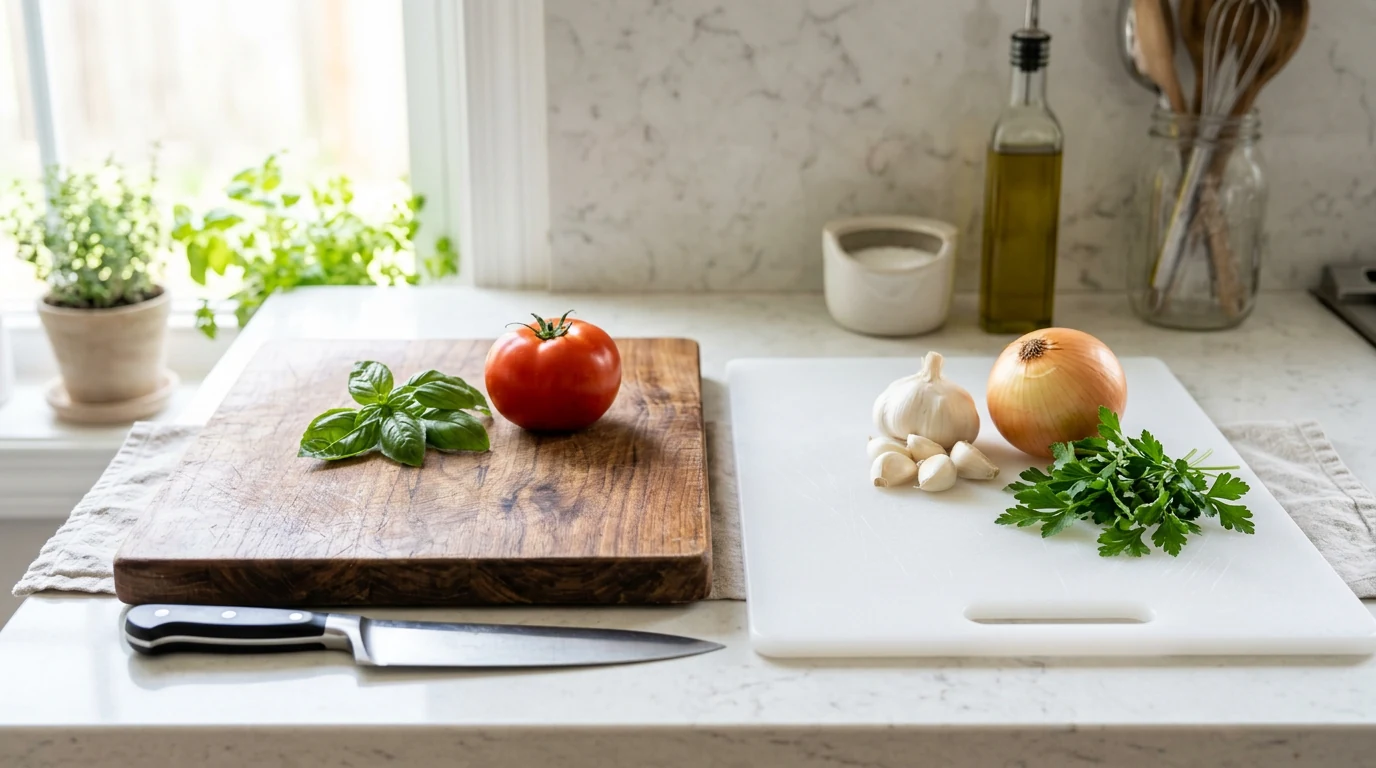
If you are comparing a wood vs plastic cutting board, the safer choice is probably not the one with the louder reputation. Wood and plastic can both be used safely in a home kitchen, but they ask for different habits. The real decision comes down to what you cut most often, how carefully you clean, whether you separate raw meat from produce, and when you are willing to replace a worn board.
That matters because cutting boards live in the messy middle of healthy cooking. They touch raw chicken, onions, berries, bread, and cooked food, sometimes in the same busy evening. A board that looks wholesome but is hard for you to maintain is not automatically better. A plastic board that goes through the dishwasher but is deeply scarred is not automatically safer either.
Disclosure: This article may contain affiliate links. If you buy through them, Healthy Kitchen Reviews may earn a commission at no extra cost to you.
Wood vs Plastic Cutting Board: Quick Verdict
For most home kitchens, the best answer is not wood or plastic. It is both, used for different jobs. A good wood board is excellent for bread, vegetables, fruit, and everyday prep where knife feel matters. A good plastic board is practical for raw meat, poultry, seafood, and dishwasher cleaning.
If you want the simplest food-safety routine, keep at least two boards: one dedicated to raw animal proteins and one for produce and ready-to-eat foods. Replace either type when deep cuts, splitting, odors, or stubborn stains make the board hard to clean confidently.
Side-by-Side Comparison Table
| Factor | Wood Cutting Board | Plastic Cutting Board |
|---|---|---|
| Best everyday use | Vegetables, fruit, bread, herbs, general prep | Raw meat, poultry, seafood, messy prep |
| Cleaning style | Hand-wash, dry thoroughly, oil when needed | Often dishwasher-friendly if the product allows it |
| Knife feel | Usually gentler and more pleasant under the knife | Can feel harder or less stable depending on thickness |
| Replacement signal | Cracks, splitting, warping, lingering odor | Deep grooves, staining, rough scarred surface |
| Main advantage | Durability, stability, attractive countertop use | Easy sanitation routine and lower replacement cost |
| Main trade-off | Needs more care and drying discipline | Can scar deeply and look worn faster |
Food Safety: What Actually Matters
The USDA Food Safety and Inspection Service says consumers may choose either wood or a nonporous cutting surface such as plastic, while noting that nonporous surfaces are easier to clean. That is a useful starting point because it keeps the conversation practical: material matters, but cleaning behavior matters more.
The bigger risk in a real home kitchen is cross-contamination. If raw chicken is cut on a board and that same board is used for salad without proper cleaning, the material is not the main issue anymore. The routine failed. A safer setup is boring but effective: separate boards, hot soapy washing, careful drying, and replacement when surfaces become damaged.
Food-contact surfaces also need to be cleanable and maintained. The FDA food manufacturing rule at 21 CFR 117.40 uses that same basic principle for equipment and utensils: food-contact surfaces should be made from suitable materials and maintained so they can be cleaned and protected from contamination. Home kitchens are not factories, but the logic still helps.
Detailed Comparison by Features
Cleaning and Sanitizing
Plastic usually wins for convenience because many plastic boards can go into the dishwasher. That is useful after raw meat or seafood prep, especially when you do not want to scrub a board by hand and wonder whether you did enough. The caveat is that dishwasher-safe depends on the specific board, so check the manufacturer instructions.
Wood requires more attention. You normally wash it by hand, avoid soaking, and dry it upright so moisture does not sit inside the grain. That is not difficult, but it is less forgiving. If you know you routinely leave dishes stacked in the sink, plastic may be the more realistic safety choice for messier jobs.
Knife Friendliness
A well-made wood board often feels better under a chef knife. It has a steadier, more forgiving surface, especially for longer prep sessions. That can make chopping vegetables, herbs, and fruit feel smoother and less noisy.
Plastic varies more. Thin flexible mats can slide or curl, while thicker plastic boards feel more stable. Plastic can still be perfectly usable, but if you cook often and care about knife feel, wood is usually more satisfying for daily prep.
Durability and Wear
Wood can last for years when it is cared for properly. The trade-off is maintenance. It may need occasional oiling, careful drying, and a little patience. A cracked or split wood board should be retired because damaged areas are harder to clean and can trap moisture.
Plastic is cheaper to replace, which is part of its appeal. The problem is deep knife grooves. Once a plastic board is heavily scarred, those cuts can hold food residue and make the board harder to clean. At that point, the affordable thing to do is replace it instead of trying to make it last forever.
Moisture, Odor, and Staining
Plastic handles wet foods well, but it can stain from ingredients like turmeric, tomato, or chili oil. It may also hold odors if it is old or badly cut. White plastic boards make stains obvious, which can be annoying but also helpful because you can see when the board is no longer fresh.
Wood can absorb moisture if it is soaked or neglected. A good board that is washed quickly and dried well can stay attractive, but it is not the board to leave under a pile of wet dishes. If you want low-maintenance cleaning, that point matters.
Countertop Stability
Wood boards are often heavier, which helps them stay put. That makes chopping feel calmer and safer, especially with larger vegetables. A board that slides around is frustrating and can be risky no matter what it is made from.
Plastic boards can be stable too, especially thicker models with grippy edges. Very thin boards are easier to store, but they may move more during prep. If you choose plastic, stability is worth paying attention to instead of buying only the cheapest option.
Pros and Cons of Each Option
Wood Cutting Boards
- Pros: excellent knife feel, attractive enough to leave out, stable for chopping, durable with proper care.
- Cons: usually hand-wash only, needs thorough drying, may crack or warp if neglected, not ideal for a lazy raw-meat cleanup routine.
Plastic Cutting Boards
- Pros: practical for raw proteins, often dishwasher-friendly, affordable to replace, lightweight and easy to store.
- Cons: deep grooves can develop over time, cheaper boards may slide, can stain or hold odors, less pleasant for long prep sessions.
Who Should Choose Wood?
Choose wood if you prep vegetables often, care about knife feel, and want one board that feels good enough to use every day. It is especially appealing if you cook from scratch and want a stable surface for onions, herbs, fruit, bread, and general meal prep.
Wood also makes sense if the board will live on the counter. A large wood board can become part of the kitchen rhythm because it is always ready. The catch is care. If you are not willing to hand-wash and dry it properly, wood loses much of its appeal.
Who Should Choose Plastic?
Choose plastic if your top priority is an easy sanitation routine. For raw chicken, fish, or meat, a dedicated plastic board is hard to beat because it is inexpensive, easy to replace, and often compatible with dishwasher cleaning.
Plastic is also the better fit for busy households that want a clear color-coded system. For example, one board for raw proteins, one for produce, and one for cooked foods can reduce confusion when several people use the kitchen.
The Best Setup for Most Healthy Home Kitchens
The most practical setup is a two-board system. Use a sturdy wood board for clean everyday prep and a separate plastic board for raw proteins. This gives you the best parts of each material without forcing one board to do every job.
If you cook a lot, a three-board setup is even cleaner: wood for produce and bread, plastic for raw proteins, and a smaller board for quick fruit, snacks, or garnishes. That sounds simple because it is. Healthy kitchen routines usually improve when the system is obvious and easy to repeat.
Buying Recommendation
If you are buying only one cutting board, choose based on your most common task. Mostly vegetables, fruit, bread, and daily prep? Buy a quality wood board and take care of it. Mostly raw meat, seafood, and dishwasher cleanup? Buy a thick plastic board and replace it when grooves become deep.
If you can buy two, that is the smarter recommendation. Pair one wood board with one plastic board and assign them clear jobs. You will get better knife feel, easier sanitation, and fewer moments where you wonder whether the board is clean enough for the next ingredient.
How to Keep Any Cutting Board Safer
- Use separate boards for raw animal proteins and ready-to-eat foods.
- Wash boards with hot soapy water after each use.
- Dry boards thoroughly instead of stacking them wet.
- Replace plastic boards when deep grooves become hard to clean.
- Retire wood boards that crack, split, warp badly, or hold odors.
- Do not rely on appearance alone after raw meat prep; clean immediately.
- Keep boards stable with rubber feet, grippy edges, or a damp towel underneath when needed.
Frequently Asked Questions
Is a wood cutting board safer than plastic?
Not automatically. Wood can be a safe and durable choice when it is cleaned and dried properly. Plastic can also be safe, especially when it is used for raw proteins and replaced once heavily scarred. The safer board is the one you can keep clean in your real routine.
Should I cut raw chicken on wood or plastic?
A dedicated plastic board is usually the more practical choice for raw chicken because cleanup is simpler and replacement is inexpensive. If you use wood for raw meat, clean it promptly and thoroughly, then dry it well. Do not use the same board for salad or cooked food until it has been properly cleaned.
When should I replace a plastic cutting board?
Replace it when it has deep grooves, rough texture, stubborn stains, lingering odors, or areas that no longer seem easy to clean. Plastic boards are not meant to be lifetime tools. Their low replacement cost is part of the safety advantage.
When should I replace a wood cutting board?
Replace or professionally resurface it if it cracks, splits, warps badly, smells unpleasant after cleaning, or develops damage that traps moisture and food. A beautiful board is not worth keeping if you no longer trust the surface.
Are bamboo cutting boards the same as wood?
Bamboo is often discussed alongside wood, but it is technically a grass and can feel harder under the knife. It can still work well for many kitchens, but the same care rules apply: avoid soaking, dry thoroughly, and replace it if it cracks or becomes hard to clean.
Can I put a wood cutting board in the dishwasher?
Usually no. Dishwashers expose boards to heat, water, and long moisture cycles that can cause cracking or warping. Unless the manufacturer clearly says otherwise, hand-wash wood and dry it carefully.
Conclusion
The best answer to wood vs plastic cutting board is practical, not dramatic. Wood is better for daily prep when you want stability, knife feel, and a board you enjoy using. Plastic is better for raw proteins, dishwasher-style cleanup, and easy replacement.
For most healthy home kitchens, use both. A dedicated plastic board for raw meat and a good wood board for produce, bread, and everyday prep gives you a cleaner routine with fewer compromises. The material matters, but your habits matter more.